Left, Right, Down, Up: A History of Which Way Writing Goes
October 9, 2026
Why we read the way we do, and how a single habit can last five thousand years
Open an English novel and a Japanese manga side by side and you'll turn their pages in opposite directions. Pick up a newspaper in Tel Aviv and its first page is what an English reader would call the back. Look up at an old shop sign in Tokyo and you may read its name backwards without realising it.
Around 430 BCE the Greek historian Herodotus noticed the same puzzle. "The Greeks write and calculate from left to right; the Egyptians do the opposite," he wrote, "yet they say that their way of writing is towards the right, and the Greek way towards the left."1 Even the people doing it couldn't agree on what to call it.
Writing direction feels natural, almost physical, to whoever learned it. But it's one of the most arbitrary choices a culture makes, and one of the most stubborn. This article follows that choice from the first clay tablets to the Unicode standard: who turned which way, when, and the surprisingly weak evidence behind most of the popular explanations.
1. Cuneiform: The First Writing Went Down, Then Turned on Its Side
The oldest writing we know, from Uruk in southern Mesopotamia around 3200 BCE, was pressed into clay. Its early signs were still pictures, and they were drawn upright in vertical columns, read from top to bottom, with the columns running from right to left.2
Then something strange happened. At some point the whole script rotated 90 degrees counter-clockwise. The signs ended up lying on their backs, and the text ran in horizontal lines from left to right.3 That's why a modern cuneiform sign list shows, for example, a "head" or a "fish" lying sideways: we're looking at a picture that was knocked over four and a half thousand years ago.
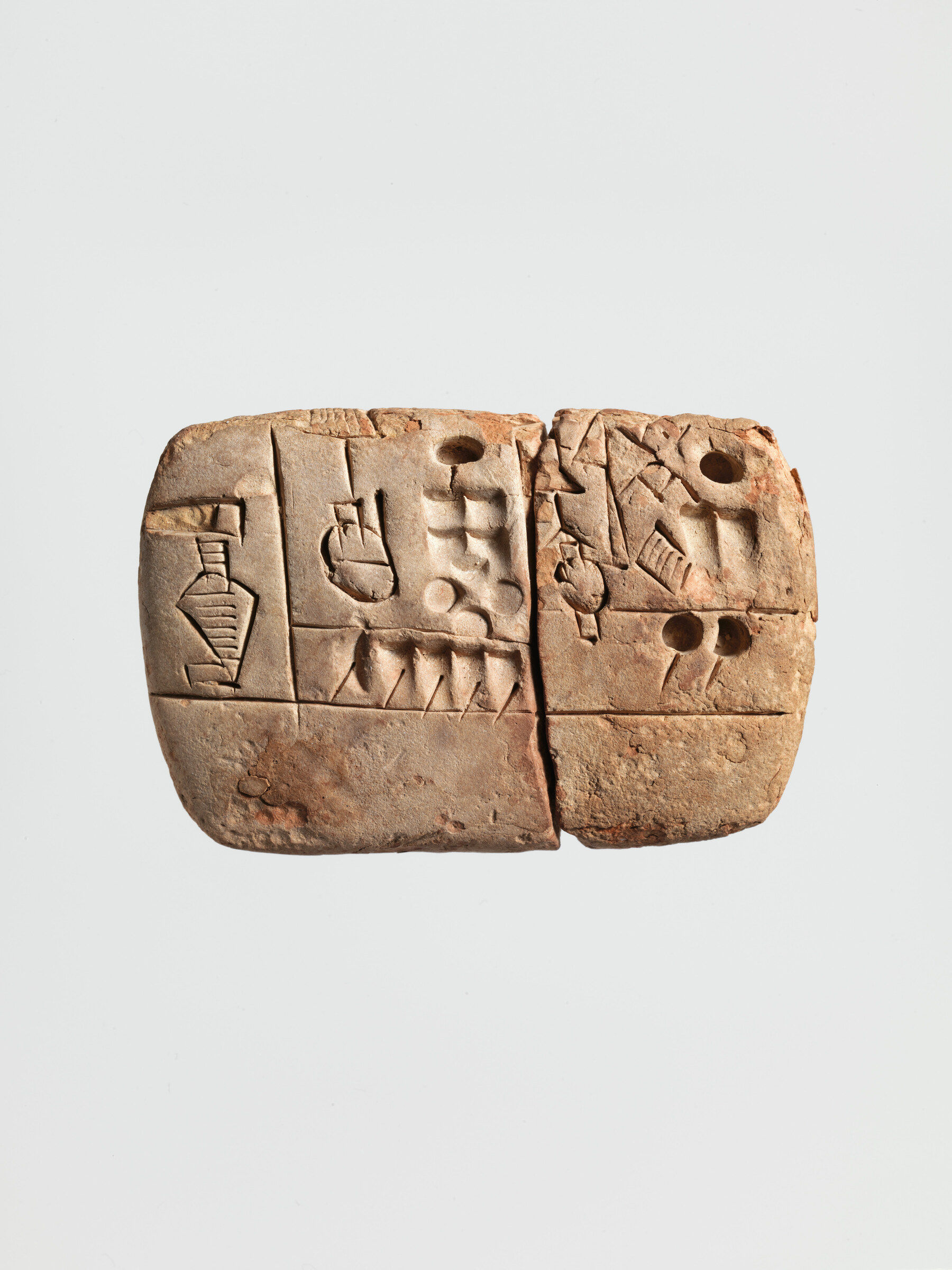
When did it happen? Nobody fully agrees. Wikipedia's summary places the first rotations slightly before the Akkadian period, around the time of the Uruk ruler Lugalzagesi, in the 24th century BCE; it also notes that King Hammurabi was still using vertical cuneiform on monuments around 1750 BCE.4 The Cuneiform Digital Library Initiative calls the dating question one that "has long been debated."5 One study argues that cuneiform was written and read vertically until about 2300 BCE,6 while another, on a school prism from the Sargonic period, shows a single object with the lexical text in the new horizontal orientation and its colophon still vertical.7
Why did it happen? Theories include:
- The tablet tilt. Scholar Adam Falkenstein suggested scribes held the tablet at about 45 degrees in the hand, so the full 90-degree shift was less noticeable than it sounds.5
- The stylus. Another early theory held that it was simply easier to impress wedges horizontally with the reed stylus as it was held.5 A later study tracked reed-fibre patterns in the clay to work out how the stylus was turned, and saw that as the driving force.6
- Two materials, two habits. The "rotation theory" first put forward by Friedrich Delitzsch held that vertical writing stayed in use on hard materials like stone at the same time as horizontal writing was used on clay.5
The lesson starts here: one of the earliest documented changes in writing direction is still not fully explained.
2. Egypt: Follow the Faces
Egyptian hieroglyphs were the most flexible writing system of the ancient world. They could run in rows or columns, left to right or right to left, sometimes both on the same object.8
There was a simple rule for the reader: look for a figure with a face and read toward it. People, birds and animals all face the beginning of the line.9 If the owls look right, you start reading from the right.
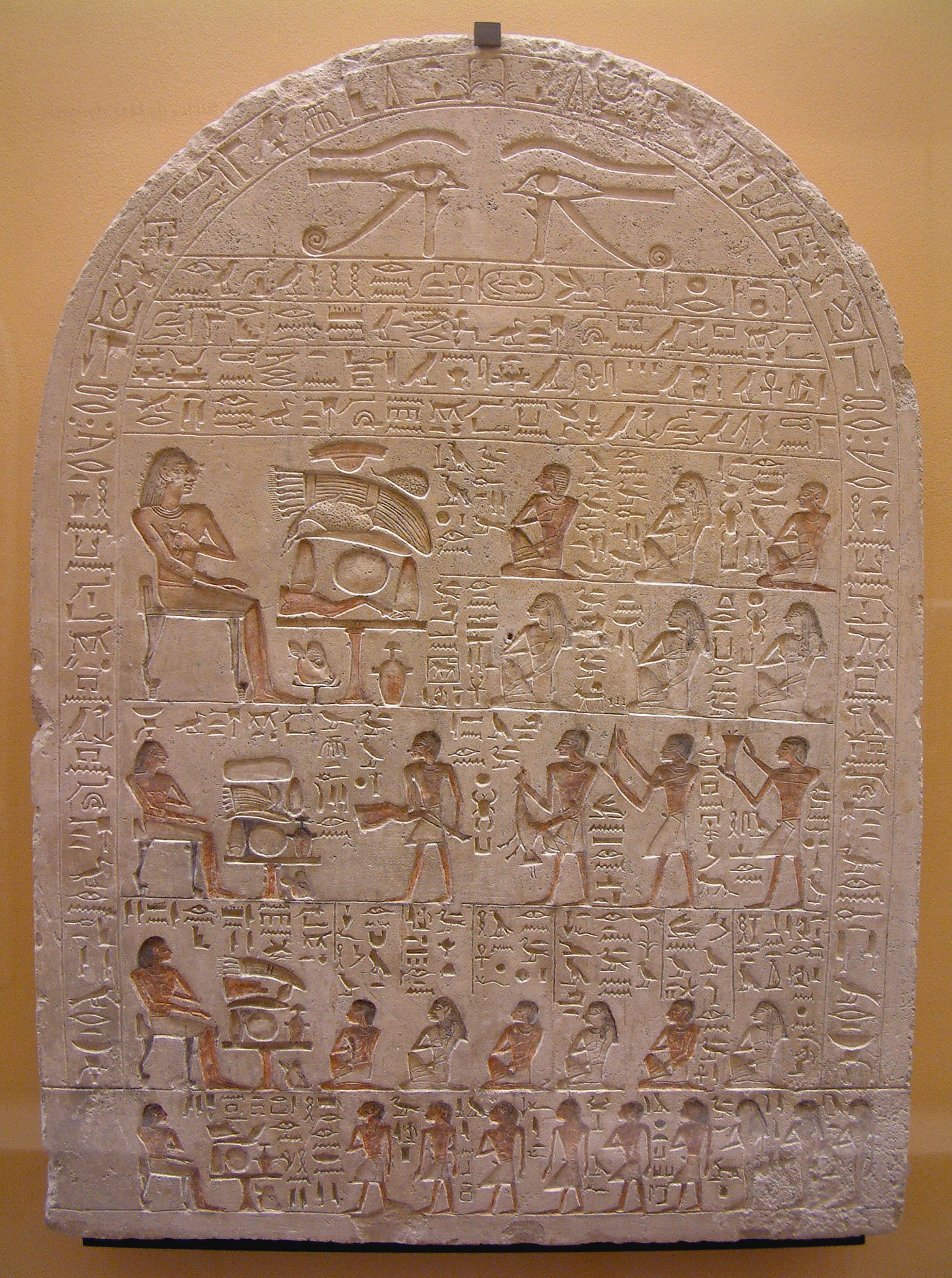
Egyptians preferred right to left. Henry George Fischer's classic study at the Metropolitan Museum of Art begins from the fact that hieroglyphic inscriptions "usually face right and read from right to left," then catalogues the many situations in which that was reversed.10 Usually the reason was art. A text accompanying a figure would face the same way as the figure, so that inscriptions on either side of a doorway or a statue could mirror each other symmetrically.1011
The everyday cursive scripts tell you what the scribes actually preferred. Hieratic and demotic, written quickly with a reed brush and ink on papyrus, always ran right to left.912 Hieroglyphs could be turned around for beauty; ordinary handwriting couldn't.
3. The Alphabet's Journey: From Right-to-Left to "As the Ox Ploughs"
Almost every alphabet in use today descends from one ancestor: the Phoenician script, a consonant-only alphabet of the eastern Mediterranean, written right to left.
The Greeks experiment
When the Greeks adopted Phoenician letters in the 8th century BCE, they took the direction too. The oldest Greek inscriptions run right to left, as in the Semitic scripts.13 Then came a phase called boustrophedon, Greek for "as the ox turns [while ploughing]."14 One line ran right to left; at the end, the writer simply turned around and wrote the next line left to right, like an ox reaching the edge of a field. In the reversed lines, the letters themselves were mirrored.15
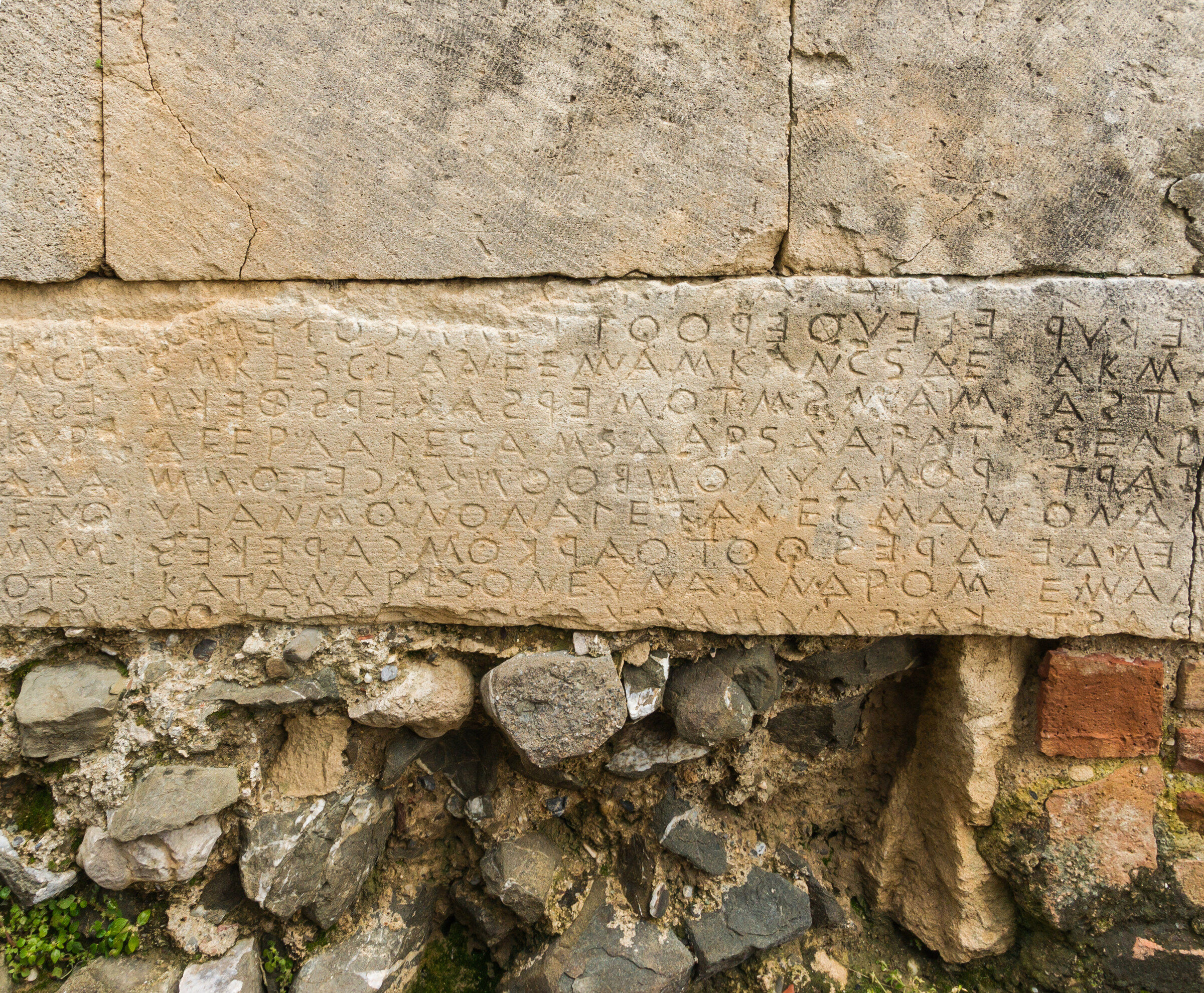
Britannica dates the boustrophedon phase to about the 6th century BCE and says that "after 500 BCE Greek writing invariably proceeded from left to right."13 The Open University puts it slightly later: in the earliest Greek writing both directions are found, sometimes in the same piece, and left to right "began to dominate" during the 5th century BCE.16 In 403 BCE Athens officially adopted the Ionic alphabet, which became classical Greek.17
Why the switch? Nobody knows for certain. A 1989 paper in Perceptual and Motor Skills questioned the simple idea that right-handed Greeks just found left to right easier to write, and proposed that once Greek added vowels, its text may have been more efficient to read from left to right.18 That's a hypothesis, not a settled answer.
Rome inherits the result
The Etruscans, who also took the alphabet from the Greeks, nearly always wrote right to left, with a few boustrophedon inscriptions.19 Latin started out unsettled too. One of the oldest Latin inscriptions, on the stone found under the Lapis Niger in the Roman Forum, is written boustrophedon, and irregularly so: some lines run right to left, others left to right, and a few are upside down.14
By the classical period, Latin had settled on left to right. Every script descended from Greek and Latin, from Cyrillic to the alphabet you're reading now, followed.
4. Hebrew and Arabic: The Right-to-Left Family, and Its Left-to-Right Numbers
The Phoenician alphabet's other descendants never turned. Hebrew, a close relative of Phoenician, still runs right to left;16 so do Arabic, Syriac, and the scripts derived from them, from Persian to Urdu.
There's a curious exception inside the exception: numbers. In Arabic and Hebrew, digits run left to right, even inside right-to-left text. That's true whether the writer uses European digits (1234) or Arabic-Indic ones (١٢٣٤).20 So the word for "three" is read right to left, but the number 1,234 starting with the thousands sits in the line left to right.
This turned into a real engineering problem when computers arrived. The Unicode Standard stores text in logical order, roughly the order you'd type and speak it, and uses a detailed rulebook called the Unicode Bidirectional Algorithm to decide how to display it. As that annex explains, "because these right-to-left scripts use digits that are written from left to right, the text is actually bidirectional."21 Every phone that shows an Arabic text message with a phone number in it is running that algorithm.
5. India: Two Scripts, Two Directions, One Emperor
Around 250 BCE, the Mauryan emperor Ashoka carved his edicts on rocks and pillars across the Indian subcontinent. They're written in four scripts: Brahmi, Kharosthi, Greek and Aramaic.22
The two Indian scripts point in opposite directions:
- Kharosthi, used in the northwest (modern Pakistan and Afghanistan), runs right to left. It's associated with Aramaic, the administrative script of the Persian Achaemenid empire that had ruled the region.2223
- Brahmi, used across most of the subcontinent, runs left to right.24
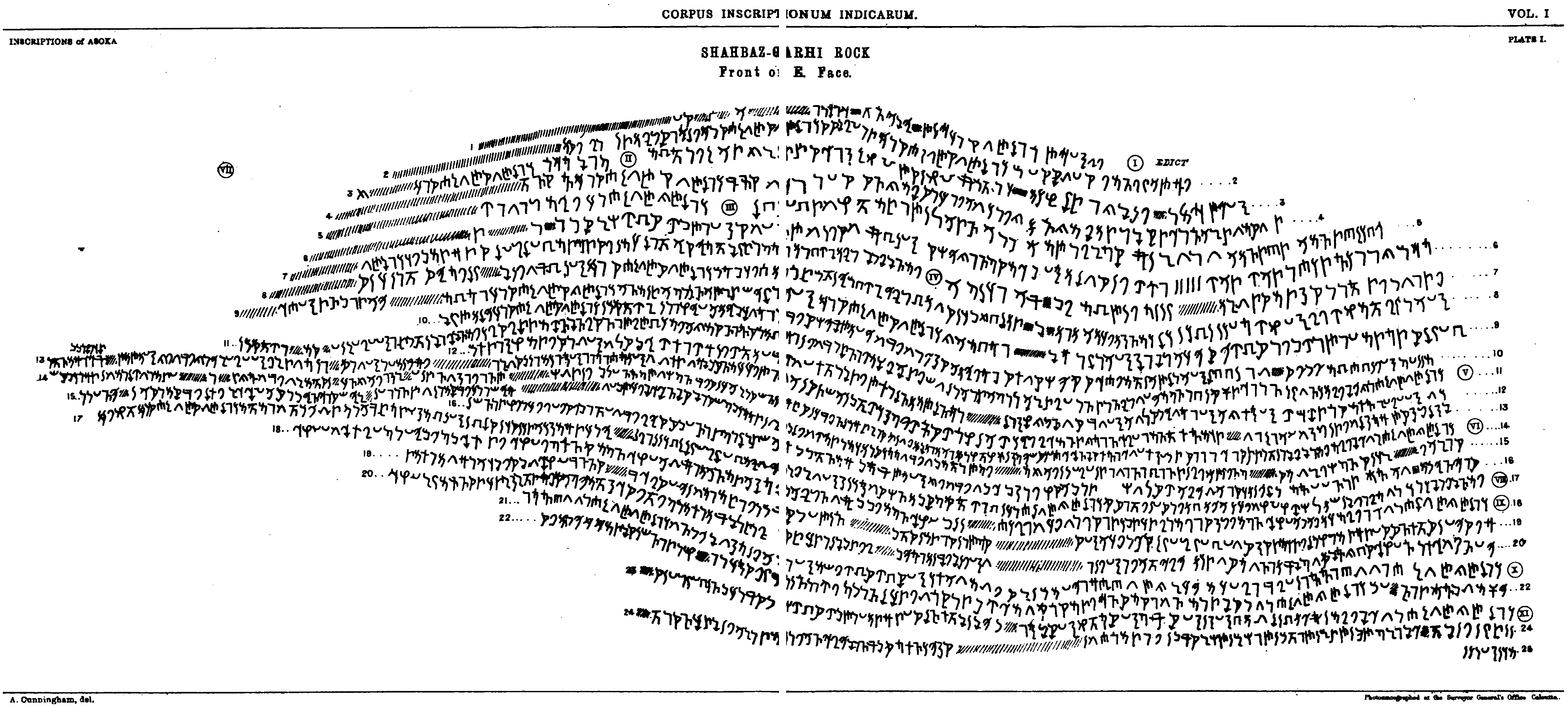
The origin of Brahmi is still argued over. A long-standing view derives it from a Semitic script, probably Aramaic; it's accepted by many script scholars but remains debated.24 Harry Falk has argued that Brahmi was developed deliberately around Ashoka's time, combining features of Greek and Kharosthi, and that writing left to right was adopted for its convenience.25 Richard Salomon notes that most scholars today agree Kharosthi is the older script and may have influenced Brahmi.26
And it wasn't perfectly fixed. An early coin from Eran is inscribed in Brahmi running right to left, as in Aramaic.24 At Erragudi in southern India, some lines of Ashoka's Brahmi minor rock edicts also run right to left, without the mirrored letters of true boustrophedon.27
Kharosthi fell out of use; Brahmi won. Its descendants include Devanagari, Bengali, Tamil, Tibetan, Thai and many of the scripts of Southeast Asia, so a single choice made in ancient India still sets the direction for well over a billion readers.
6. China: Top to Bottom, Right to Left
Traditional Chinese runs in vertical columns from top to bottom, with the columns ordered from right to left. According to one scholar of Chinese text layout, oracle bones, bronze vessels, bamboo and wood tablets, silk and paper scrolls, woodblock printing and movable type "all exhibit this script order with little exception."28
The oldest examples, Shang-dynasty oracle bone inscriptions, show some flexibility. Characters were sometimes arranged in rows to fit around divination cracks, and columns occasionally turned 90 degrees mid-phrase. But inscriptions were never read bottom to top, and the right-to-left order of columns is first found in the Shang era.29
Why down, and why right to left? The most popular explanation is the bamboo slip, or jiandu. Before paper, Chinese books were written on long, narrow strips of bamboo or wood about 0.6 cm wide, each holding one column of characters, then bound together with hemp, silk or leather.30 A strip that narrow can only hold a single vertical line. The Bodleian Libraries in Oxford note that "the constraints of writing on long strips of bamboo appear to have given the Chinese book its traditional format," and that this format carried over into scrolls of silk and later paper.31
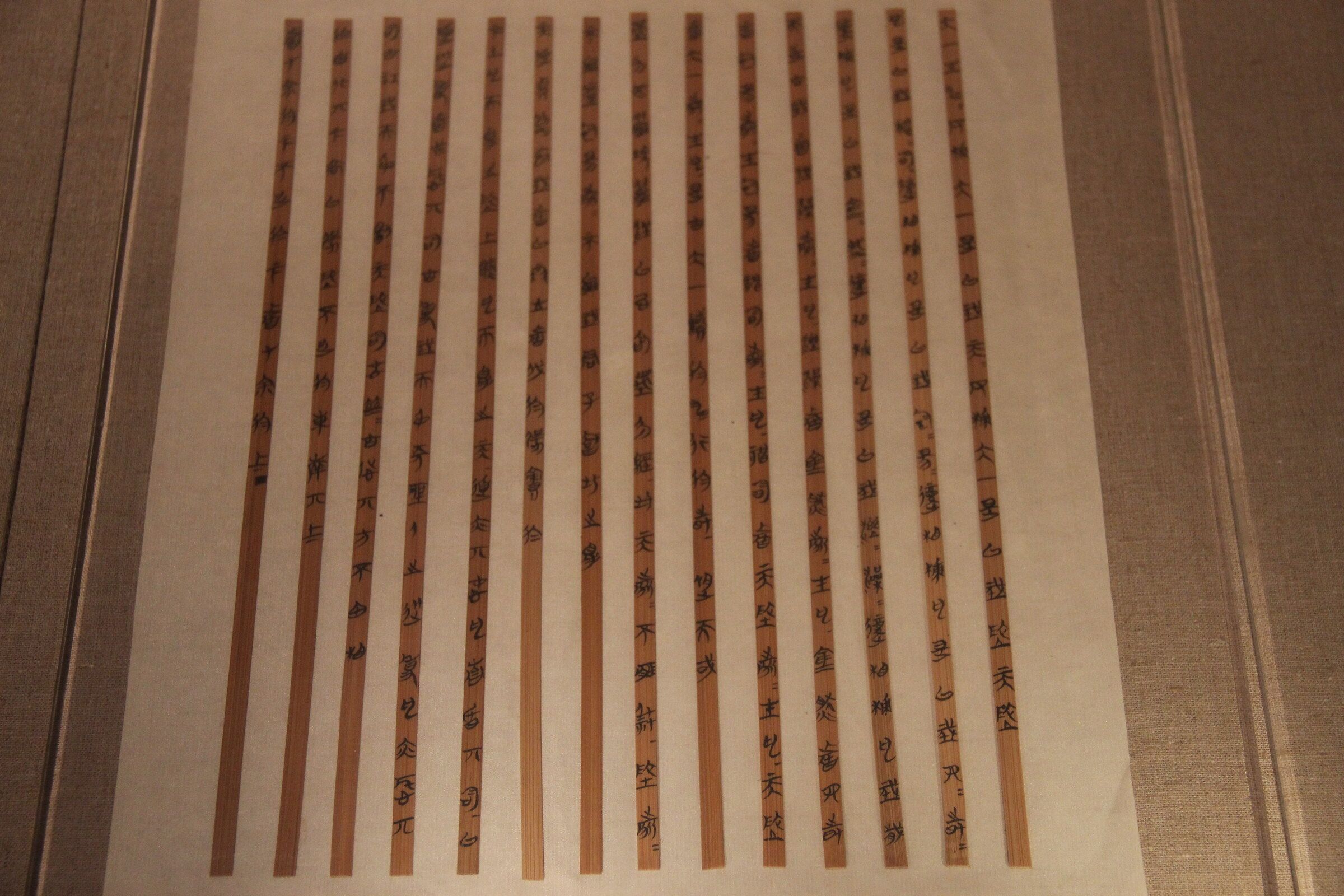
The right-to-left order has a matching explanation. In his classic Written on Bamboo and Silk (1962), Tsuen-hsuin Tsien proposed that "the habit of a right-handed scribe" in laying out finished strips "might have resulted in a right-to-left arrangement in the columns."32 Another version imagines the scribe holding a blank strip in the left hand, writing with the brush in the right, and laying each finished strip down to the left of the previous one.28
There's supporting evidence from the oracle bones themselves: some characters appear rotated 90 degrees, as if they'd been designed to fit on tall, narrow slats, which suggests the style developed on bamboo books before it was carved on bone.29 But a 2007 Chinese study offers a different timeline, arguing that the single top-to-bottom column was fixed by the Shang dynasty because of the materials of bone and shell, and the right-to-left order of whole texts by the early Western Zhou, because of how bronze inscriptions were moulded.33 Like cuneiform's rotation, it's an open question.
7. The Silk Road Twist: How Mongolian Ended Up Running Left to Right
Here's the strangest family story in the history of writing.
Sogdian, the script of a Central Asian trading people, descended from Aramaic and was written horizontally, right to left, like its Semitic ancestors. When the Uyghurs adapted it, they rotated it 90 degrees counter-clockwise to write vertically, probably to imitate Chinese, but without changing the relative orientation of the letters.3435
Do the geometry: lines that ran right to left, turned a quarter-turn anticlockwise, now run top to bottom, with each new column to the right of the last. Around 1204, Genghis Khan's forces captured a Uyghur scribe named Tata-tonga, who adapted that script to write Mongolian.36
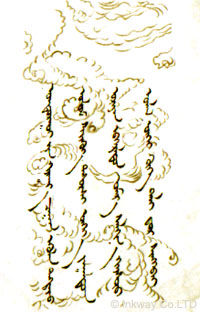
The result is unique. The Old Uyghur script and its descendants, traditional Mongolian, Oirat Clear, Manchu and Buryat, are the only known vertical scripts whose columns run left to right.35 Every other vertical tradition, Chinese, Japanese, Korean, runs its columns right to left. A Mongolian book and a Chinese book, both written top to bottom, are read in opposite directions across the page.
Why the Uyghurs turned their script is not known for sure. The Atlas of Endangered Alphabets lists imitation of Chinese, homage to the sky god Tengri, or some practical convenience as possibilities.37 The traditional script was replaced by Cyrillic in Mongolia in the early 1940s, but it remained in use in Inner Mongolia in China and was revived in Mongolia in the early 1990s.34
8. The Outliers: Bottom to Top, and Upside Down
Most scripts run horizontally or top to bottom. A few took stranger paths.
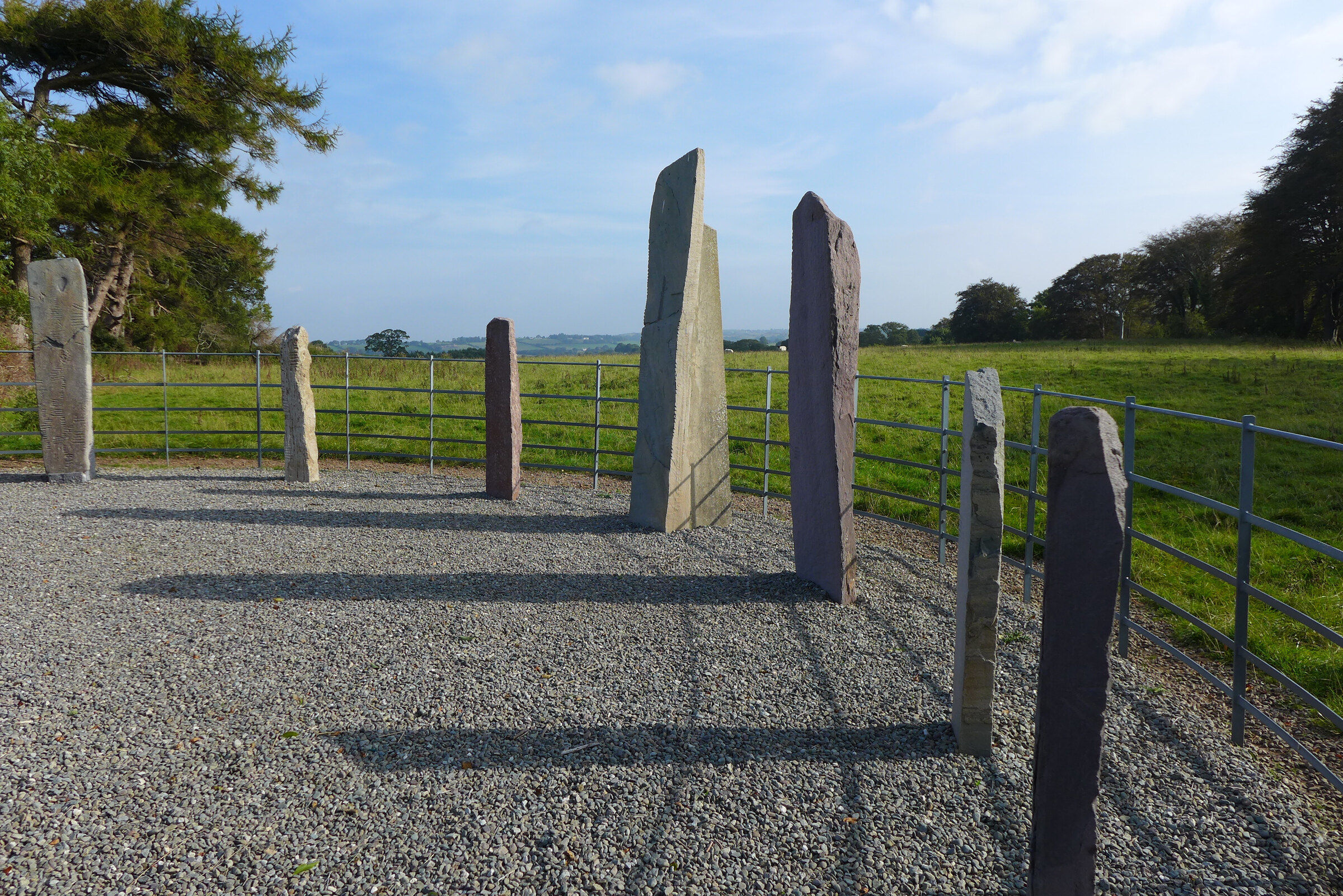
Ogham: climbing a tree. Ogham, the early medieval script of Ireland and western Britain from about the 4th to the 10th centuries CE, looks like a barcode: groups of one to five short lines cut across a central stem line.38 On the earliest standing stones, the stem line was the stone's own edge. Inscriptions are read from the bottom left, up the edge, across the top and down the other side.39 A medieval Irish grammar, the Auraicept na nÉces, puts it beautifully: "Ogam is climbed as a tree is climbed."40
Hanunó'o: away from the body. The Hanunó'o script of the Mangyan people of Mindoro, in the Philippines, is conventionally written from bottom to top in columns that move left to right.41 It's traditionally carved into bamboo with a knife, and the natural motion is to cut away from yourself.42 Left-handed writers often write the whole thing in mirror image.41 One linguist points out that because the glyphs are rotated too, this is really a rotation of the bamboo rather than a different direction of reading.43 It's a good reminder that "direction" depends on what you hold still.
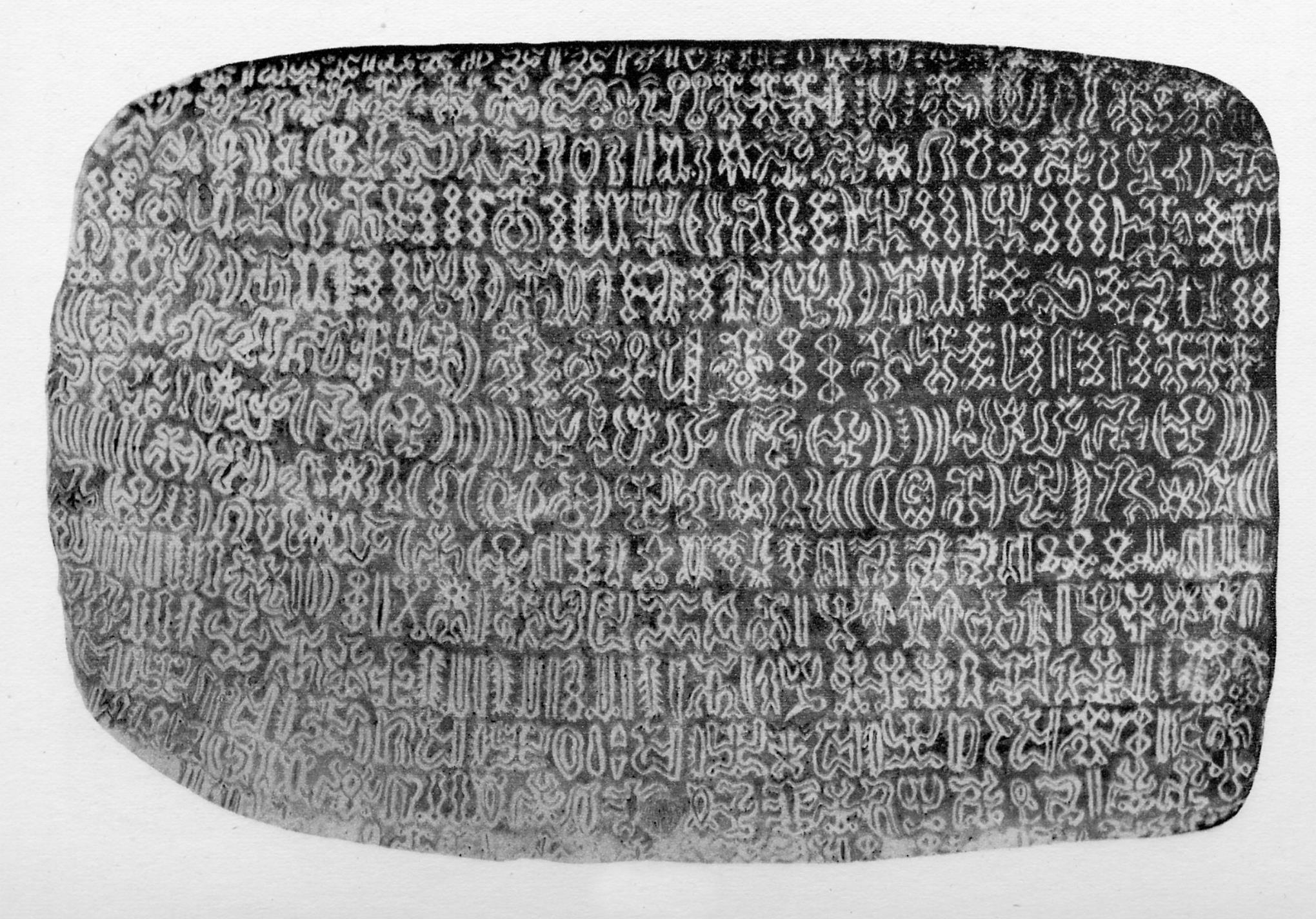
Rongorongo: turn the tablet. The undeciphered rongorongo script of Easter Island (Rapa Nui) uses reverse boustrophedon. The reader starts at the bottom left, reads a line left to right, then rotates the tablet 180 degrees to read the next line, again left to right. While you read any one line, the lines above and below it appear upside down.44
9. The 20th Century: East Asia Lies Down
For most of history, changes in writing direction happened slowly and are barely documented. The 20th century was different. In a few decades China, Japan and Korea, which had written vertically for well over a thousand years, moved most everyday text to horizontal, left to right, and we can date the switch to the day.
China: a newspaper sets the pace
The argument started with the New Culture Movement. In 1917, Qian Xuantong argued in an open letter to Chen Duxiu in New Youth (Xin Qingnian) that Chinese books should be written horizontally, and Chen agreed, but the idea didn't become mainstream.45 New Youth ran a special discussion on "changing Chinese to horizontal lines" in November 1919.46
After 1949, the idea gained state support. On 5 February 1952, at the founding meeting of the Chinese Script Reform Research Committee, the writer and scientist Guo Moruo made a physiological case. The eye, he said, can see about 55 degrees upward and 65 degrees downward, 120 degrees in all, but 90 degrees outward and 60 degrees inward for each eye; allowing for overlap, the two eyes together take in about 250 degrees horizontally. "The horizontal field of view is more than twice the vertical," he concluded, so horizontal text reduces eye strain, "and most modern scientific works are already written horizontally."47 The businessman and philanthropist Tan Kah Kee (Chen Jiageng) also proposed horizontal writing.48
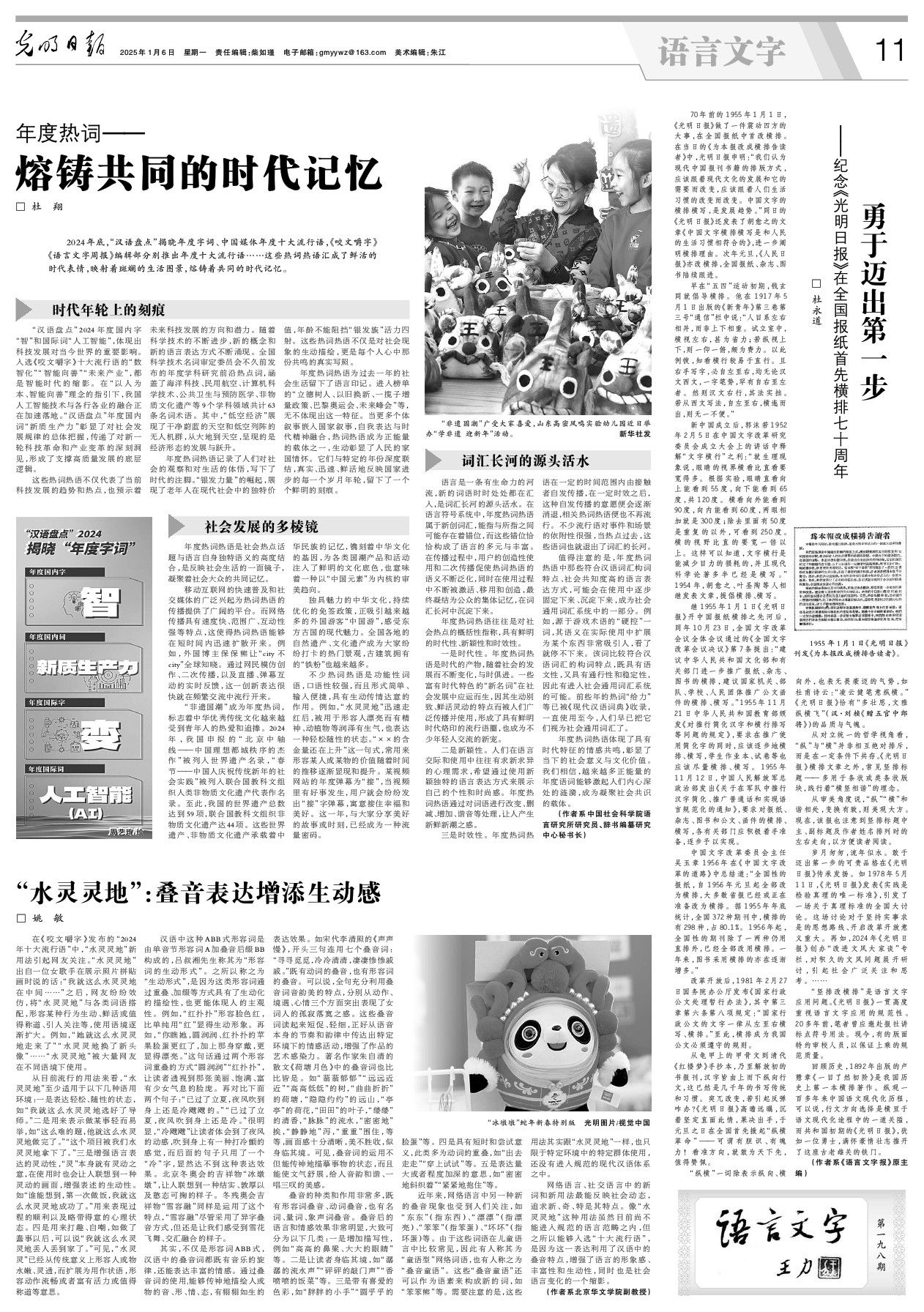
Then a newspaper went first. On 1 January 1955, the Guangming Daily became the first major Chinese newspaper to switch from right-side vertical setting to left-to-right horizontal. Its notice to readers argued that "the horizontal setting and horizontal writing of Chinese characters is the trend of development," and that the change would end the chaos of headlines and text running in mixed directions.49 By November 1955, 13 of China's 17 national newspapers had switched.50 On 1 January 1956, the People's Daily followed, and national and local newspapers across the country changed with it.5152 The New York Times reported the next day that Chinese papers had begun printing "horizontally from left to right instead of vertically from top to bottom."53
Taiwan and Hong Kong: slower, by law and by market
In Taiwan, the shift was legislative. In 2004, the Legislative Yuan amended the rules on official documents so that government documents would be printed horizontally, to support e-government and make it easier to mix Western words and numbers; from 2005, official documents in government agencies and schools changed to horizontal writing by law.45 Many textbooks for literature and history, however, are still set vertically.45
In Taiwan, Hong Kong and Macau, newspapers moved gradually from the 1990s, and by the early 2000s most had switched to horizontal text entirely or combined vertical articles with horizontal headlines.54 One charming leftover: Hong Kong's Ming Pao went fully horizontal in 2003 but kept the page-turning order designed for vertical text.45
Japan: the "right-to-left" signs that weren't
Old Japanese signs, banknotes and shop boards are often written in a single horizontal row from right to left. It looks like Arabic-style right-to-left writing, but Japanese scholars point out it usually isn't. It's vertical writing with one character per column. When a sign is only one character tall, each column holds one character, and moving from column to column takes you leftward. Put the same words on a taller board and they'd be written in normal vertical columns.55
Modern left-to-right horizontal writing arrived with Western dictionaries in the Meiji era.54 For decades, right-horizontal and left-horizontal styles coexisted, and left-horizontal writing faced strong resistance during the war years. A study of newspaper advertisements by the Fukui Prefectural Archives found that right-horizontal text made up nearly 90 percent of horizontal ads between 1941 and 1945, rising further in 1945.56
After the war, the tide turned quickly. Japan's national archive of historical records dates the switch newspaper by newspaper: the Yomiuri Hochi changed to left-to-right horizontal on 1 January 1946, the Mainichi on 16 November 1946, the Asahi on 1 January 1947, and the Nihon Keizai Shimbun on 25 July 1950.57 The Yomiuri announced it would appear "as the most progressive newspaper, symbolising a newborn Japan."58
Yet Japan never fully gave up vertical writing. Novels and many newspapers still use tategaki, while textbooks and websites use yokogaki.59 An Asahi Shimbun column observed that in Japanese pictures the four seasons have always been portrayed from right to left, which the language scholar Makoto Yanaike attributes to the vertical, right-to-left habit of Japanese writing.60
Korea: North by decree, South by competition
North Korea switched by rule. Its 1948 orthography guidelines stated that "all documents shall be written horizontally from left to right."61
South Korea moved slowly, and the newspapers were the last holdouts. By the 1980s most books, including textbooks, were already horizontal; only newspapers stuck to vertical setting.62 Sports Seoul went fully horizontal in 1985.63 The Hankyoreh, founded on 15 May 1988 by journalists from the democracy movement, became the first major national daily to be printed horizontally, and the first to use only Hangul.64 The JoongAng Ilbo went fully horizontal on Hangul Day, 9 October 1995.65 The Chosun Ilbo was the last mainstream paper to go: its issue of 1 March 1999 was the last vertical one, and it switched the next day.66
Was horizontal really easier to read? A study by Korea University professor Lim Sang-won, reported in 1995, had high school students read the same amount of newspaper text for five minutes. In Hangul-only text they read 1,824 characters set horizontally against 1,707 set vertically; in mixed Hangul and Chinese characters, 1,660 against 1,613.67 A modest advantage, measured in readers who'd grown up with horizontal textbooks.
10. A Script Invented in 1949 Still Had to Choose
Most scripts inherit their direction. Occasionally, someone gets to pick.
In 1949 the Guinean scholar Solomana Kanté invented N'Ko, an alphabet for the Manding languages of West Africa. According to a widely told story, he was spurred by a writer's claim that African languages were "like those of the birds, impossible to transcribe."68 N'Ko is written right to left.6869 It has spread at the grassroots level across West Africa, from the Gambia to Nigeria, without government support.70
Why right to left? Accounts collected among N'Ko supporters say Kanté asked a group of people who couldn't read or write to draw lines in the dirt, and since seven out of ten drew theirs from right to left, he chose that direction.71 Other popular versions give different reasons. Treat it as a founding legend rather than an experiment. But it shows something important: even a brand-new script, designed from scratch in the 20th century by one person, didn't simply copy the left-to-right direction of the colonial alphabet around it.
11. So Why? The Theories, and What's Wrong With Them
The question everybody asks: why does a script go one way and not the other? The popular answers are tidy. The evidence is not.
Theory 1: the hammer and chisel
A carver holds the chisel in the left hand and the hammer in the right, so the argument goes, which makes it natural to work from right to left. That supposedly explains early right-to-left scripts carved in stone, like Egyptian hieroglyphs or Phoenician.7273
The problem: the Egyptians' own ink scripts, hieratic and demotic, also ran right to left.9 So did Phoenician, Aramaic and later Arabic, all widely written with pens. The chisel theory doesn't explain why those scripts stayed right to left long after carving stopped being the main way of writing.
Theory 2: ink smudging
For a right-handed person writing in wet ink, moving left to right keeps the hand off the words just written.72 It's a real effect. The best-known example of its mirror image is Leonardo da Vinci, a left-hander who wrote most of his private notes from right to left in mirror script. His contemporary Luca Pacioli described it, and Giorgio Vasari wrote that "he wrote notes in curious characters, using his left hand, and writing from right to left, so that it cannot be read without practice, and only at a mirror."74 The V&A notes that the most likely reason is simply that he was left-handed and found it easier, rather than a secret code.75 (Intriguingly, a 1473 drawing studied by the Uffizi in 2019 has a mirror-written date on the front and a normal left-to-right note on the back, suggesting he could write with either hand.76)
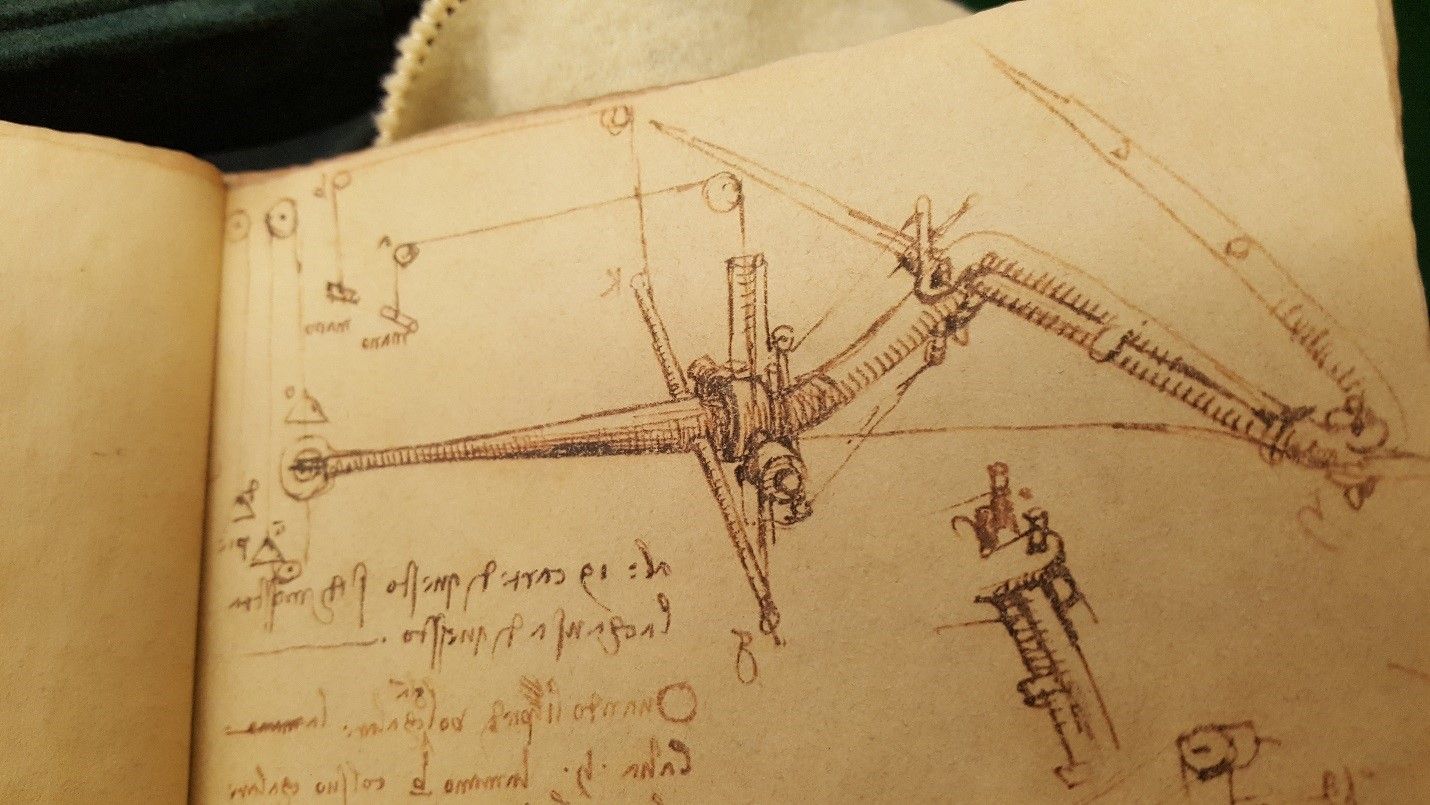
The problem: if smudging decided direction, Arabic, Hebrew and Syriac, all written in ink by a mostly right-handed population for well over a thousand years, should have flipped. They didn't. Smudging is a pressure, not a law.
Theory 3: the material
This one has the strongest case, but only for vertical scripts. Narrow bamboo slips almost certainly encouraged single vertical columns in China,31 and Ogham's direction follows the edge of a standing stone.39 Hanunó'o's bottom-to-top direction follows the way a knife moves on bamboo.42 Materials can explain a script's starting position. They don't explain why it survives when the material changes, as Chinese did on paper for nearly two thousand years.
What the evidence actually shows: inheritance
The most persuasive answer comes from looking across many scripts at once. In a study of 116 writing systems published in Cognitive Science, the anthropologist Olivier Morin found that direction of reading is "highly preserved, with more than 95% of scripts staying in line with their ancestor."77 By contrast, the basic visual features of letter shapes that make them easy to read weren't strongly inherited at all.77
In other words, a script's direction is mostly determined by its parent. Latin goes left to right because Greek did; Greek did because, after a century or two of experiment, it settled that way. Arabic goes right to left because Aramaic and Phoenician did. The few big changes in history, Greek's switch, cuneiform's rotation, the Uyghurs' quarter-turn and East Asia's 20th-century move, are memorable precisely because they're rare.
And habit really does come from learning, not biology. In a 2007 study, German and Israeli preschoolers who heard simple sentences about one character acting on another and were asked to draw or arrange the scene showed no left-right bias. Adults showed a bias that matched their own writing system.78
12. Does Writing Direction Shape How We Think?
Here's where the story turns from history to psychology. If you read left to right your whole life, does your mind start running left to right too?
Time. In 1991, Barbara Tversky and colleagues asked English, Hebrew and Arabic speakers to place stickers for events like breakfast, lunch and dinner on a page. English speakers lined them up left to right; Arabic speakers mostly right to left; Hebrew speakers were mixed.79 In 2010, Orly Fuhrman and Lera Boroditsky tested this more strictly in Cognitive Science. English speakers arranged picture sequences left to right and Hebrew speakers right to left. And when people had to judge quickly whether one picture showed an earlier or later moment than another, English speakers were faster when "earlier" was the left key; Hebrew speakers showed exactly the reverse.80
Vertical time. Mandarin speakers, who use more vertical metaphors for time and have a tradition of vertical writing, were faster in one study when the "earlier" key was on top.81 A study by Benjamin Bergen and Ting Ting Chan Lau found that English speakers always laid time cards out left to right; mainland Chinese participants mostly did too, with a small portion arranging them top to bottom; and Taiwanese participants, who encounter much more vertical text, were just as likely to go top to bottom as left to right, with a large minority going right to left.79
Reading or writing? A 2025 study in Language and Cognition went a step further and concluded that it's the direction of reading, not of writing, that shapes these concepts of time. The authors suggest that writing involves too many small movements in different directions to train a consistent timeline.82
None of this means a Hebrew speaker experiences time differently in any deep sense. But it does mean that a choice made by a Phoenician scribe three thousand years ago may still set which button your thumb finds faster today.
13. Five Lessons From Five Thousand Years
- Direction is inherited far more than invented. More than 95% of scripts keep the direction of their ancestor.77 Ask "which script did it come from?" before "why is it this way?"
- Materials set the starting position. Bamboo slips, stone edges and clay tablets all left their mark. But once a habit forms, it outlives the material that made it.
- Changes are rare, and often follow a turn of the page rather than a new way of writing. Cuneiform and the Uyghur script didn't change the order of the signs; they rotated the whole page. Japan's "right-to-left" signs are vertical writing one character tall.
- In the modern era, direction became policy. China's 1955–1956 switch, Taiwan's 2004 law and North Korea's 1948 rules turned a cultural habit into a decision, made at a known moment for stated reasons.
- The habit goes deeper than the page. Our sense of which way time flows, and which side a story starts on, quietly follows the direction we learned to read.
14. Quick Reference Table
| Script | Direction | When / where | Note |
|---|---|---|---|
| Early cuneiform | Vertical columns, top to bottom, columns right to left | Mesopotamia, from c. 3200 BCE | Later rotated 90° to horizontal, left to right |
| Egyptian hieroglyphs | Usually right to left; any direction possible | Egypt, c. 3200 BCE–4th century CE | Read toward the faces of the signs |
| Hieratic, demotic | Right to left | Egypt | Everyday ink scripts |
| Phoenician, Aramaic, Hebrew, Arabic | Right to left | Levant onward, from c. 1000 BCE | Numbers run left to right |
| Archaic Greek | Right to left, then boustrophedon | 8th–6th century BCE | Left to right after c. 500 BCE |
| Etruscan | Usually right to left | Italy, from c. 8th century BCE | A few boustrophedon inscriptions |
| Latin and descendants | Left to right | From classical Rome | Earliest inscriptions sometimes boustrophedon |
| Kharosthi | Right to left | Northwest South Asia, from c. 3rd century BCE | Linked to Aramaic |
| Brahmi and descendants | Left to right | South Asia, from c. 3rd century BCE | Devanagari, Tamil, Thai, Tibetan and more |
| Traditional Chinese, Japanese, Korean | Top to bottom, columns right to left | From the Shang dynasty | Mostly horizontal today |
| Old Uyghur, Mongolian, Manchu | Top to bottom, columns left to right | From c. 8th century CE | Sogdian rotated 90° anticlockwise |
| Ogham | Bottom to top | Ireland and Britain, 4th–10th century CE | Along the edge of a stone |
| Hanunó'o | Bottom to top, columns left to right | Mindoro, Philippines | Carved on bamboo |
| Rongorongo | Reverse boustrophedon | Easter Island | Undeciphered |
| N'Ko | Right to left | West Africa, invented 1949 | Created by Solomana Kanté |
Dates are approximate. Most scripts allowed exceptions, especially in their early years.
Footnotes
-
Herodotus, Histories 2.36, as quoted in Pharaoh.se, "Script and Language of Ancient Egypt." https://pharaoh.se/ancient-egypt/hieroglyphs ↩
-
Scuola Normale Superiore, Mnamon, "Sumerian Cuneiform." https://mnamon.sns.it/index.php?id=28&lang=en&page=Scrittura ↩
-
Encyclopaedia Britannica, "Cuneiform." https://www.britannica.com/topic/cuneiform ↩
-
Wikipedia, "Cuneiform." https://en.wikipedia.org/wiki/Cuneiform ↩
-
Cuneiform Digital Library Initiative, "pisan dub-ba and the Direction of Cuneiform Script," Cuneiform Digital Library Bulletin 2003:2. https://cdli.earth/articles/cdlb/2003-2 ↩ ↩2 ↩3 ↩4
-
"Three Problems in the History of Cuneiform Writing: Origins, Direction of Script, and Literacy," Visible Language. https://journals.uc.edu/index.php/vl/article/view/5328 ↩ ↩2
-
"The Prism of Lugal-ušumgal: Didactic Methods and the Orientation of Cuneiform in the Sargonic Period" (2020). https://www.academia.edu/44319797/The_Prism_of_Lugal_u%C5%A1umgal_Didactic_Methods_and_the_Orientation_of_Cuneiform_in_the_Sargonic_Period ↩
-
Bibliotheca Alexandrina, "Arrangement and Direction of Writing." https://www.bibalex.org/learnhieroglyphs/Lesson/LessonDetails_En.aspx?l=57 ↩
-
Collombert, P., "Form, Layout, and Specific Potentialities of the Ancient Egyptian Hieroglyphic Script," Oxford Handbooks (preprint, University of Geneva). https://www.unige.ch/lettres/application/files/7616/3240/3272/qdr_collombert_lectures.pdf ↩ ↩2 ↩3
-
Fischer, H. G., The Orientation of Hieroglyphs: Part 1. Reversals, The Metropolitan Museum of Art (1977). https://www.metmuseum.org/met-publications/the-orientation-of-hieroglyphs-part-1-reversals ↩ ↩2
-
Cambridge University Press, "1. Language and Writing" (excerpt). https://assets.cambridge.org/97811070/53649/excerpt/9781107053649_excerpt.pdf ↩
-
The British Museum, "Hieroglyphs: unlocking ancient Egypt," large print guide (2022). https://www.britishmuseum.org/sites/default/files/2022-10/Hieroglyphs_unlocking_ancient_Egypt_large_print_guide_The_British_Museum_2.pdf ↩
-
Encyclopaedia Britannica, "Alphabet: Greek alphabet." https://www.britannica.com/topic/alphabet-writing/Greek-alphabet ↩ ↩2
-
Wikipedia, "Boustrophedon." https://en.wikipedia.org/wiki/Boustrophedon ↩ ↩2
-
Wikipedia, "Greek alphabet." https://en.wikipedia.org/wiki/Greek_Alphabet ↩
-
The Open University, OpenLearn, "7 The direction of Greek writing." https://www.open.edu/openlearn/mod/oucontent/view.php?id=114207§ion=7 ↩ ↩2
-
Britannica Kids (Scholars), "Greek alphabet." https://kids.britannica.com/scholars/article/Greek-alphabet/37912 ↩
-
"Reading Efficiency and the Development of Left-to-Right Writing by the Ancient Greeks," Perceptual and Motor Skills (1989). https://journals.sagepub.com/doi/10.1177/00315125890693-234 ↩
-
Britannica Kids (Scholars), "alphabet." https://kids.britannica.com/scholars/article/alphabet/110478 ↩
-
W3C, "Unicode Bidirectional Algorithm basics." https://www.w3.org/International/articles/inline-bidi-markup/uba-basics/uba-basics-data/mirrored_chars ↩
-
Unicode Consortium, "UAX #9: Unicode Bidirectional Algorithm." https://unicode.org/reports/tr9 ↩
-
Wikipedia, "Edicts of Ashoka." https://en.wikipedia.org/wiki/Edicts_of_Ashoka ↩ ↩2
-
Indira Gandhi National Centre for the Arts, "Asoka's Edicts" (PDF). https://ignca.gov.in/Asi_data/5282.pdf ↩
-
Wikipedia, "Brahmi script." https://en.wikipedia.org/wiki/Ashokan_Brahmi ↩ ↩2 ↩3
-
Wikipedia, "Brahmi script" (section on Harry Falk's 2018 view). https://en.wikipedia.org/wiki/Brahmi ↩
-
"The Introduction of Writing into Achaemenid Gandhāra and the Origin of Pāṇini's Grammar" (2024), citing Salomon (1998). https://exa.ai/library/publication/h2fjb8h7j8k ↩
-
Jignashi, "Minor Rock Edicts at Erragudi" (2012). https://jignashi.blogspot.com/2012/06/minor-rock-edicts-at-erragudi-by.html ↩
-
Chor, L., "Online Vertical Layout: Chinese Characters, Images and the Web," Journal of East Asian Libraries. https://scholarsarchive.byu.edu/cgi/viewcontent.cgi?article=2324&context=jeal ↩ ↩2
-
Wikipedia, "Oracle bone script." https://en.wikipedia.org/wiki/Oracle_bone_script ↩ ↩2
-
Wikipedia, "Bamboo and wooden slips." https://en.wikipedia.org/wiki/Bamboo_and_wooden_slips ↩
-
Bodleian Libraries, University of Oxford, "Chinese books before paper." https://www.cabinet.ox.ac.uk/chinese-books-paper ↩ ↩2
-
Tsien, T.-H., Written on Bamboo and Silk: The Beginnings of Chinese Books and Inscriptions, 2nd ed., University of Chicago Press (2004), p. 204, as quoted in "Tablets (Du) and Passages (Zhang)" (2024). https://exa.ai/library/publication/cg62h9nt90g ↩
-
"A Textual Research of Writing Pattern of Ancient Chinese Words" (2007). https://exa.ai/library/publication/3frj5drb7xm ↩
-
Unicode Consortium, "13.5 Mongolian" (Unicode 12 Mongolian block). https://www.unicode.org/mwg/mwg3docs/mwg3-2UnicodeV12MongolianBlockR.pdf ↩ ↩2
-
Wikipedia, "Mongolian script." https://en.wikipedia.org/wiki/Mongolian_script ↩ ↩2
-
Wikipedia, "Mongolian writing systems." https://en.wikipedia.org/wiki/Mongolian_alphabet ↩
-
Atlas of Endangered Alphabets, "Mongolian." https://www.endangeredalphabets.net/alphabets/mongolian/ ↩
-
Dublin Institute for Advanced Studies, Ogham in 3D, "About Ogham." https://ogham.celt.dias.ie/about ↩
-
The Heritage Council (Ireland), "Ogham Stones" (PDF). https://www.heritagecouncil.ie/content/files/Ogham-Stones.pdf ↩ ↩2
-
University of California, Riverside, "Ogam (Ogham) Writing System & Ogam Alphabet," quoting McManus. https://faculty.ucr.edu/~legneref/bronze/ogamscri.htm ↩
-
Wikipedia, "Hanunoo script." https://en.wikipedia.org/wiki/Hanunoo_script ↩ ↩2
-
The Language Closet, "Yet another vertical writing system" (2022). https://thelanguagecloset.com/2022/11/19/hanunoo-script ↩ ↩2
-
Ishida, R. (r12a), "Hanunó'o orthography notes." https://r12a.github.io/scripts/hano/hnn ↩
-
Wikipedia, "Rongorongo." https://en.wikipedia.org/wiki/Rongorongo ↩
-
维基百科, "纵书与横书." https://zh.wikipedia.org/zh-hans/%E7%B8%B1%E6%9B%B8%E8%88%87%E6%A9%AB%E6%9B%B8 ↩ ↩2 ↩3 ↩4
-
网贝建站, "排版什么时候用横向,我国从什么时候开始实施横排版." http://m.netbei.com/soft/other/17339.html ↩
-
光明网, "勇于迈出第一步——纪念《光明日报》在全国报纸首先横排七十周年" (2025). https://news.gmw.cn/2025-01/06/content_37778831.htm ↩
-
人民政协网, "陈嘉庚建议'汉字横写横排'" (2023). http://www.rmzxw.com.cn/c/2023-08-03/3388407.shtml ↩
-
光明日报网上报史馆, "率先由文字直排版改为横排版" (2009). https://www.gmw.cn/history/2009-06/01/content_933696.htm ↩
-
维基文库, "中共中央关于文字改革工作问题的指示." https://zh.wikisource.org/wiki/%E4%B8%AD%E5%85%B1%E4%B8%AD%E5%A4%AE%E5%85%B3%E4%BA%8E%E6%96%87%E5%AD%97%E6%94%B9%E9%9D%A9%E5%B7%A5%E4%BD%9C%E9%97%AE%E9%A2%98%E7%9A%84%E6%8C%87%E7%A4%BA ↩
-
中华人民共和国教育部, "新中国初期语言文字工作重要大事." http://www.moe.gov.cn/s78/A18/s8357/moe_808/tnull_14054.html ↩
-
人民网, "《人民日报》1956年改版述议" (2012). http://media.people.com.cn/n/2012/1128/c194310-19728769.html ↩
-
The New York Times, "Peiping Press Adopts Horizontal Typesetting" (2 January 1956). https://www.nytimes.com/1956/01/02/archives/peiping-press-adopts-horizontal-typesetting.html ↩
-
Wikipedia, "Horizontal and vertical writing in East Asian scripts." https://en.wikipedia.org/wiki/Horizontal_and_vertical_writing_in_East_Asian_scripts ↩ ↩2
-
大阪ガスネットワーク エネルギー・文化研究所 (CEL), "鬼っ子「右横書き」とその時代" (2020). https://www.og-cel.jp/search/1285020_16068.html ↩
-
福井県文書館, "戦時中は右横書き?戦後は左横書き?" https://www.library-archives.pref.fukui.lg.jp/bunsho/category/column/42455.html ↩
-
アジア歴史資料センター (JACAR), "日本語の表記はどう変わったの?" https://www.jacar.go.jp/english/exhibition/glossary_en/tochikiko-henten/qa/qa23.html ↩
-
科学技術のアネクドート, "戦後の新聞、右横書きから左横書きへ(下)" (2015). https://sci-tech.jugem.jp/?eid=3616 ↩
-
Breen, J., EDRDG, "Japanese Writing." https://www.edrdg.org/~jwb/mondir/jwriting.html ↩
-
The Asahi Shimbun, "VOX POPULI: Vertical writing an indispensable part of thinking in Japanese" (2024). https://www.asahi.com/ajw/articles/15221957 ↩
-
Korean Language Stack Exchange, "When did writing Hangul left-to-right become more common?" (citing the 1948 조선어 신철자법). https://korean.stackexchange.com/questions/2862/when-did-writing-hangul-left-to-right-become-more-common ↩
-
Peace News, "Voice of the People: An interview with the Hankyoreh." https://peacenews.info/node/6346/voice-people-interview-hankyoreh ↩
-
공정뉴스, "스포츠서울, 15년 앞서간 신문 가로쓰기 혁명" (2021). http://www.fairn.co.kr/news/articleView.html?idxno=62528 ↩
-
Wikipedia, "The Hankyoreh." https://en.wikipedia.org/wiki/The_Hankyoreh ↩
-
중앙일보, "[중앙일보 제2창사 1주년] 섹션·가로쓰기" (2000). https://www.joongang.co.kr/article/3885517 ↩
-
Wikipedia, "The Chosun Ilbo." https://en.wikipedia.org/wiki/Chosun_Biz ↩
-
중앙일보, "중앙일보 전면가로쓰기 앞으로 15일 학계도 대환영" (1995). https://www.joongang.co.kr/article/3134245 ↩
-
Wikipedia, "N'Ko script." https://en.wikipedia.org/wiki/N%27Ko_script ↩ ↩2
-
"Linguistic and Civic Refinement in the N'ko Movement of Manding-Speaking West Africa," Signs and Society (2025). https://www.cambridge.org/core/journals/signs-and-society/article/linguistic-and-civic-refinement-in-the-nko-movement-of-mandingspeaking-west-africa/22BCE1074BD8F08FD5F998BB259E3E60 ↩
-
"The N'ko Alphabet as a Vehicle of Indigenist Historiography," History in Africa. https://www.cambridge.org/core/journals/history-in-africa/article/abs/nko-alphabet-as-a-vehicle-of-indigenist-historiography1/D095250EBB95F2CF3F237D12A7AB6710 ↩
-
Kanjamadi, "N'ko and oral tradition," citing Oyler's interviews. http://kanjamadi.com/n'ko&oraltradition.html ↩
-
The Children's Museum of Indianapolis, "Why Do We Write from Left to Right?" https://www.childrensmuseum.org/blog/why-do-we-write-left-right ↩ ↩2
-
International Journal of Pure and Applied Mathematics (2010), vol. 61, no. 3, citing Kondo (2004). https://ijpam.eu/contents/2010-61-3/9/9.pdf ↩
-
"The handedness of Leonardo da Vinci: A tale of the complexities of lateralisation," Brain and Cognition. https://www.sciencedirect.com/science/article/abs/pii/S0278262604000612 ↩
-
Victoria and Albert Museum, "Leonardo da Vinci's notebooks." https://www.vam.ac.uk/articles/leonardo-da-vincis-notebooks ↩
-
Smithsonian Magazine, "Was Leonardo da Vinci, a Famous Lefty, Actually Ambidextrous?" (2019). https://www.smithsonianmag.com/smart-news/was-leonardo-da-vinci-famous-lefty-actually-ambidextrous-180971938/ ↩
-
Morin, O., "Spontaneous Emergence of Legibility in Writing Systems: The Case of Orientation Anisotropy," Cognitive Science (2018). https://onlinelibrary.wiley.com/doi/10.1111/cogs.12550 ↩ ↩2 ↩3
-
Dobel, C. et al., "How Writing System and Age Influence Spatial Representations of Actions: A Developmental, Cross-Linguistic Study," Psychological Science (2007). https://journals.sagepub.com/doi/10.1111/j.1467-9280.2007.01926.x ↩
-
Bergen, B. K. & Chan Lau, T. T., "Writing Direction Affects How People Map Space Onto Time," Frontiers in Psychology (2012). https://pmc.ncbi.nlm.nih.gov/articles/PMC3322406/ ↩ ↩2
-
Fuhrman, O. & Boroditsky, L., "Cross-Cultural Differences in Mental Representations of Time: Evidence From an Implicit Nonlinguistic Task," Cognitive Science (2010). https://onlinelibrary.wiley.com/doi/10.1111/j.1551-6709.2010.01105.x ↩
-
Fuhrman, O., "Mental time lines across the world: how do people think about time in Hebrew, Mandarin, and English?" Stanford Digital Repository. https://purl.stanford.edu/cz142gh0899 ↩
-
Crossley & Bylund, "Direction of reading, not writing, shapes concepts of time," Language and Cognition (2025). https://www.cambridge.org/core/journals/language-and-cognition/article/direction-of-reading-not-writing-shapes-concepts-of-time/E6EF809D0235A311468C83167059623E ↩