Why End Credits Keep Getting Longer?
October 17, 2026
In April 2019, before Avengers: Endgame opened, the distributor sent projectionists a technical sheet. The film ran 3 hours 0 minutes 57 seconds. The credits began at 2:48:56 with a montage of the principal cast and creators, and the "classic scroll" started at 2:53:17. In other words, the last twelve minutes or so of the film were credits. Asked about the running time, the director Joe Russo said the film came in just over three hours: "We just sped up the credits is what we did."1
Projectionists need to know where the credits start because cinemas have to clear the house and set up the next show. More than twenty years earlier, a Hollywood publicist had joked that long credits had no downside: they cue patrons to run to the restrooms, and the six or seven minutes of names "provide nice background music for the ushers to clean the theater."2
One timing study measured 6,515 films from the first frame of the end credits to the last. The median for films of the 1930s was 25 seconds, and for the 1960s 34 seconds. It more than doubled in the 1970s, doubled again in the 1980s, reached about four minutes in the 1990s, and stands at 5 minutes 43 seconds for releases of the 2020s. Today's end credits run almost thirteen times longer than those of the 1950s. Across all films the median is 4 minutes 26 seconds, with half falling between three and six minutes; animated films have the longest credits, documentaries about a third as long, and superhero films a median of 7 minutes 9 seconds.3
The end titles of The Wizard of Oz (1939) listed eleven names, and one of them was a dog.4 Avengers: Infinity War (2018) has 5,109 people in its cast and crew listing on IMDb, 2,659 of them in visual effects.5 The two figures aren't the same kind of thing. One is what appeared on screen, the other a database entry, and Infinity War did not roll five thousand names past its audience. But what happened between eleven names and several thousand is more complicated than "films now need more people." Actors wanted to be known, freelancers needed their next job, directors wanted the opening back for the story, unions protected their members, states wanted advertising, lawyers wanted to head off lawsuits, and some of the names have nothing to do with making the film at all.
1. When the actors had no names
The earliest films credited almost no one. The shorts that played in nickelodeons at the start of the twentieth century carried only a title.6 The most visible "credit" on screen was the company trademark: Vitagraph's winged V, Lubin's bell, Biograph's AB, Pathé's rooster, Kalem's sun. To fight piracy, studios began around 1907 to build their trademarks into the sets as props. The Motion Picture Patents Company licence of early 1909 required, in its seventh article, that licensees photograph their trademark "in each picture of at least one scene of each subject"; on 6 June 1912 the rule changed to require it on the title instead. Before that, in IMP's The Penniless Prince, shot in Cuba in 1911, the heroine has to lift her skirts and step around a large IMP trademark stuck in the grass.7
Leaving actors nameless was deliberate. Biograph's most popular actress, Florence Lawrence, appeared in most of the shorts D. W. Griffith directed for the company in 1908, yet audiences knew her only as "the Biograph Girl." A common explanation is that the company feared she would demand more than her $25 a week if her real name got out.8
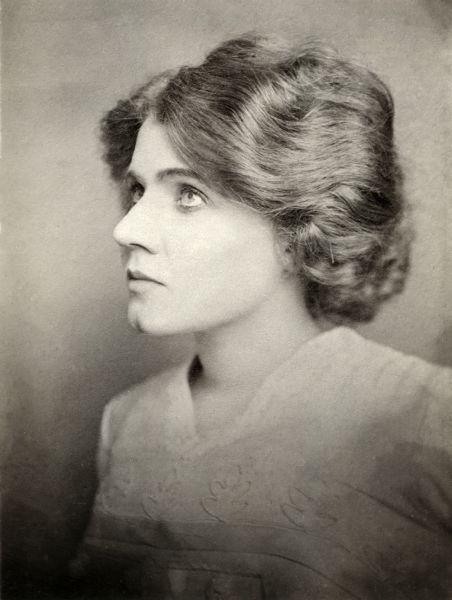
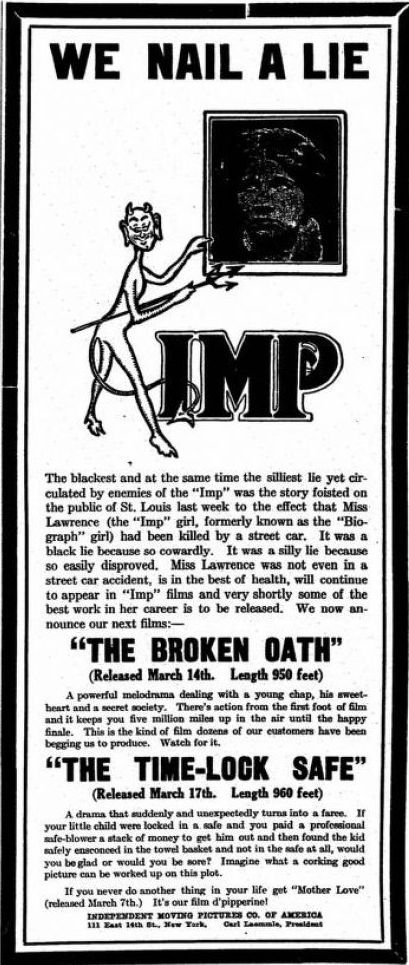
In 1910 Lawrence moved to Carl Laemmle's IMP company. On 12 March that year IMP ran an advertisement in the trade press under the headline "We Nail a Lie": "The blackest and at the same time the silliest lie yet circulated by enemies of the 'Imp' was the story foisted on the public of St. Louis last week to the effect that Miss Lawrence (the 'Imp' girl, formerly known as the 'Biograph' girl) had been killed by a street car. It was a black lie because so cowardly. It was a silly lie because so easily disproved. Miss Lawrence was not even in a street car accident, is in the best of health, will continue to appear in 'Imp' films."9 On 25 March Lawrence went to St. Louis in person and appeared at two theatres of more than two thousand seats each, an appearance often described as the first publicity tour in film history.89
Who started the rumour is still unsettled. The most widely repeated version comes from a 1926 history of early Hollywood, which says Laemmle planted it himself. A later search of old newspapers turned up only two reports before the advertisement, both linked to St. Louis cinemas, which points instead to a local showman, Frank Talbot, with Laemmle merely amplifying the story. Laemmle's 1931 biography said the rumour came "from ill-disposed quarters." The title of "first named film star" is also overstated. Florence Turner, "the Vitagraph Girl," was being publicised at almost the same moment; Lawrence's name had already appeared in IMP advertisements by late 1909, and Edison and Kalem were promoting their players by early 1910.89
Once a name could sell tickets, it went up on the screen. In 1911 some producers began running credit titles at the start of a film, naming the actors and sometimes the author or director. That same year Pathé's American company had its actors bow before a curtain at the start of the picture, with their names and roles beside them. Critics weren't used to it. Reviewing Pathé's A Close Call, one wrote, "It is hard to understand why he was chosen for this honor among the others." The trade papers also argued over whether actors should take their bows at the end, as in the theatre. Gaston Méliès came up with another device, an actor in street clothes dissolving into costume, applied for a patent on it, and in one film put the trick in reverse at the end.7 Whether credits belong at the beginning or the end is a question almost as old as credits themselves.
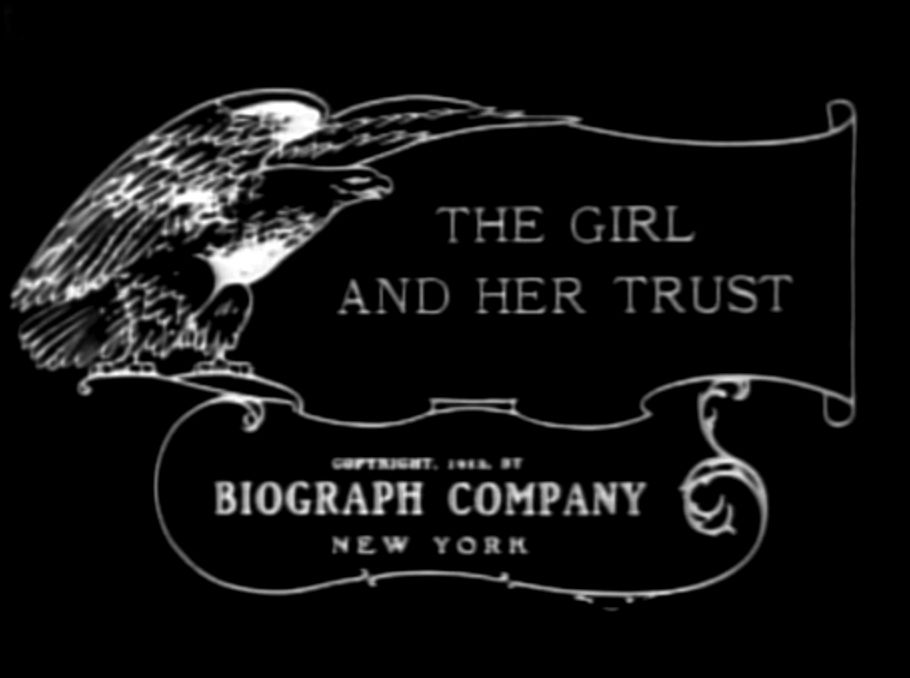
By 1913 and 1914 stars were the selling point, and the titles grew grand. Tess of the Storm Country (April 1914) opened with "Daniel Frohman presents America's Foremost Film Actress Mary Pickford…" Universal's Damon and Pythias (December 1914) "used up the best part of a reel introducing its cast." In 1915 Moving Picture World observed that it had "for some time been customary… to introduce the characters upon the screen one at a time prior to the beginning of the action."7 But these introductions were still only of actors. For one Kalem short of 1910, the full cast list appeared only in a trade advertisement, not on screen.7 By 1922, Murnau's Nosferatu named just sixteen people, and got through them in ninety seconds.10
2. Three or four cards
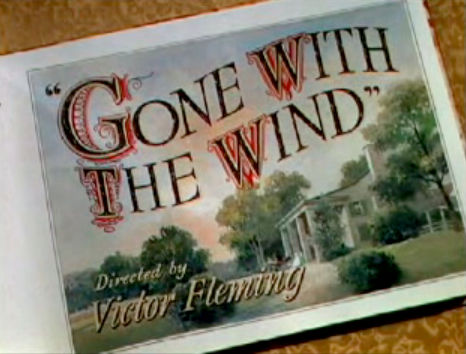
At the height of the Hollywood studio system, credits usually came at the start: three or four title cards for the main cast and a few principal technical people.6 The end was often a single "The End," or a reprise of the cast. The closing credits of Gone with the Wind (1939) consisted of six words: "The end. A Selznick Intl. picture."2 Of the 391 people IMDb records as having worked on The Wizard of Oz that same year, only 50 received an on-screen credit.11
Most crew didn't even get a card of their own. The editor John D. Dunning remembered the early talkies: "Nobody got a very prominent screen credit, even the writers were down in the corner… You didn't get a separate card. You got mixed up with the cameraman, art director, makeup in various orders." Not much had changed by 1959. On Anatomy of a Murder the editor Louis R. Loeffler shared a card with the script supervisor, music editor, set dresser and sound; on Imitation of Life the editor shared with gowns, makeup, hair, the assistant director and a special photographer; on North by Northwest George Tomasini shared with the colour consultant, recording supervisor, hair, makeup and assistant director; on Rio Bravo the editor shared with the cinematographer, art director, set decorator and sound. Studio department heads, meanwhile, were credited by custom, even if they had never touched the picture.12
In many theatres the credits ran before the curtain had even opened. In the 1930s and 1940s it was the convention in many cinemas to keep the curtains closed during the opening titles.13 The credits were not meant to be studied.
The short lists had a structural cause. Under the studio system most crew were salaried staff whose next job was on the same lot; they didn't need a name on the screen to prove anything. The Supreme Court's Paramount decision of 1948 broke up the studios' vertical integration. Studios shed their permanent staff, and filmmaking gradually became freelance work hired project by project. From then on, a screen credit mattered more and more for getting the next job.3 Independent actors sometimes came to crave prominent credits more than money.14 Between the 1930s and the 1960s the median end credit grew only from 25 to 34 seconds. The real growth came in the 1970s.
3. Moving the names to the end
The first major production to move its entire credit list to the end was Around the World in 80 Days (1956). At the close Robert Morley says, "This is the end," the picture fades, and only then does the title sequence begin. Saul Bass designed an animated sequence that replays the whole film, with the names woven into the drawings.15 Accounts of its length vary, from six minutes to eight; and the animation was actually directed by Bill Hurtz of UPA, though only Bass was credited.1617 The film had dozens of star cameos, and who came first and whose name was bigger was the producer Mike Todd's worst headache. An animator later wrote: "Bass solved Mike Todd's predicament about the pecking order of all the stars involved by making a series of caricatures. The drawings delighted the audience, mollified the paranoiac feelings of the actors and actresses, and a new field was opened to the animation profession."15 The first big appearance of end credits was a solution to the politics of billing.
West Side Story (1961) went further. Credits for both the Broadway original and the film had to be included, so the list moved to an epilogue. Saul Bass and Elaine Makatura, soon to be his wife, wrote the names as graffiti on New York walls, fences, doors and street signs, and the camera drifts past them. "The epilogue is a recapitulation of the environment within which the film's story takes place," Bass said. "As the camera moves over these walls, fences, doors and signs, it discovers, among the graffiti on them, different credits… Look out for SB & EM in a heart — that's Elaine Makatura, of course — we had just got engaged! And I put the credit 'Music by Leonard Bernstein' on a 'No Left Turn' sign." He likened the ending to a decompression chamber.18 By the 1960s the unions had gained enough power to get more of their members' names on the screen.6
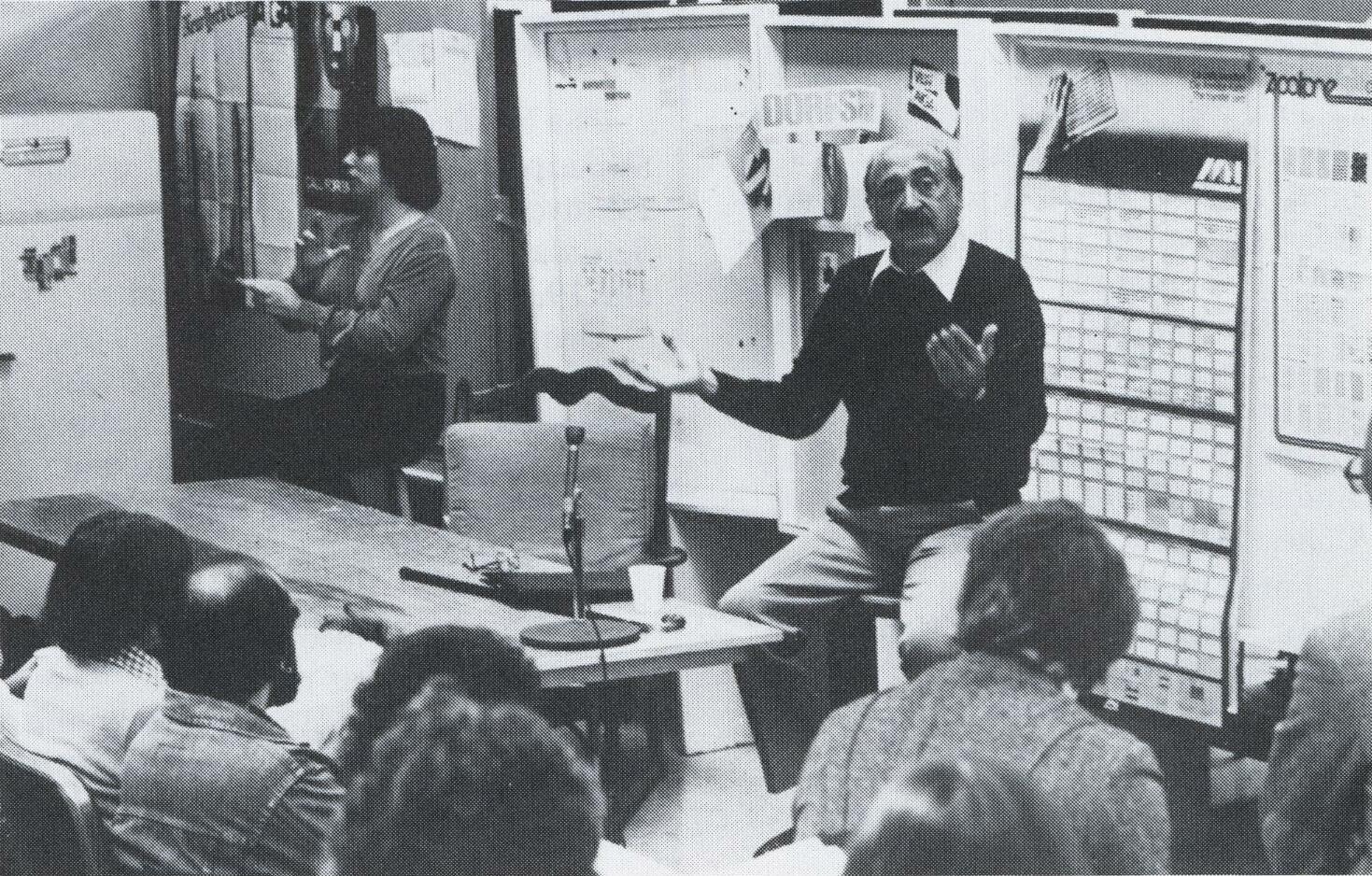
The strongest resistance to moving names to the end came from the Directors Guild. Its Basic Agreement requires the director's credit to be no smaller than half the size of the title, with no other credit on the same card, and to be "on the last title card appearing prior to principal photography." That rule is still in the agreement. Television may instead use the first card after the last scene; theatrical features have no such option.19 To put a director's name at the end, a production had to ask the guild for a waiver. When Peter Bogdanovich made The Last Picture Show in 1971 he insisted on putting all the credits at the end, believing it would mean more to the audience to see the names after the performances, and he wanted the actors' names to roll before his own. "After much struggle I was able to have the credits at the end and not have my card first. But they resisted. And I was the director."20
He wasn't the only one who tried. William Friedkin and the writer William Peter Blatty originally agreed that The Exorcist would have no opening credits at all. "But then he chickened out and insisted that he have his name at the top. So we both did. I thought not having opening credits would get the audience in the film faster. Once people sit in the theater, they expect something to happen. There's no immediacy if it begins with credits."20
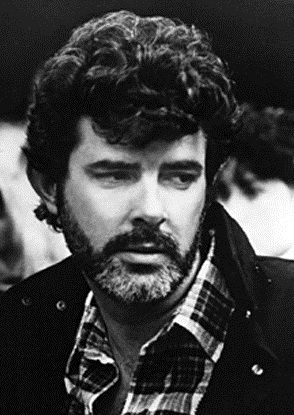
The real fight came with Star Wars. In 1977 George Lucas gave the opening to the company logos and the famous crawl, and put his own director's credit at the end.21 The guild let it go. The Empire Strikes Back (1980) was directed by Irvin Kershner, and Lucas again put the director's card at the end while the Lucasfilm logo appeared at the start. Lucas and Kershner applied for a waiver, explaining that creatively the credits only worked at the end. The guild allowed corporate titles to precede the director's credit, but said that didn't apply to Lucas's private company, and refused. Lucasfilm wasn't a signatory and couldn't be fined, so the guild fined Kershner $25,000, which Lucas paid. In 1981 Lucas left the Directors Guild.2021 The often-repeated story that Lucas was fined $250,000 over the first Star Wars gets both details wrong: the fine concerned the second film, and $250,000 was what the guild had sought, not what it levied.20
By the early 1990s waivers were easier to get. Spielberg put the key credits of Schindler's List and Jurassic Park at the end; Jerry Molen, who co-produced both, said, "It's becoming a common creative choice. It's a way for filmmakers to start the work very simply." Lethal Weapon 2 opened with an action scene that opening credits would have slowed, so its key credits moved to the end; Last Action Hero used end credits only because its film-within-the-film rolled opening credits of its own. Clint Eastwood's Unforgiven and A Perfect World opened with no credits, and he persuaded the makers of In the Line of Fire to do the same. Each needed its own waiver from the Directors Guild. The Writers Guild, faced with so many applications, wrote a clause into its contract in 1988 allowing key credits to be placed at the end. Eastwood's producer David Valdes said: "Clint feels very strongly that credits have reached an absurd extreme. There are so many at the beginning of a film that it prevents the storytelling. We think it's cleaner without them. We've done it religiously for the last four or five pictures… He doesn't want to see his name up there fifteen times."20
As the opening shrank, the end became the place where every name could go. 2001: A Space Odyssey (1968) closed with 39 actors and 38 technicians. For decades the longest roll call at a film's end had been a dozen or so actors; then, in the late 1970s, Star Wars, Close Encounters and Superman arrived and the end rolls suddenly grew.2 Superman (1978) ran twelve minutes of credits, five at the start and seven at the end, sharing Guinness's record for the "longest credit sequence" with Once Upon a Time in the West (1968).22 A 1982 New York Times report counted Hollywood films whose technical credits were six to eight times as long as their casts: Star Trek II had 20 actors and 127 people behind the scenes; Tron, 44 actors and nearly 300.14
The names didn't arrive by themselves. In 1975 the sound editor Peter Berkos won an Oscar for The Hindenburg, a film that didn't carry his name. That same year George Roy Hill gave him a credit on The Great Waldo Pepper, and Universal recalled the prints. "In some cases, they sent an editor to projection rooms around the country just to take off that little six-frame shot!" Berkos remembered. "'That's a negotiable item and we will not let you take it away from us by setting precedent.'" Dede Allen, cutting Bonnie and Clyde in 1967, was among the first editors to get a card of her own; editors' separate front credit did not become contractual until the Motion Picture Editors Guild's 1979 negotiations. In 1978 Lawrence Carow, president of the Motion Picture Sound Editors, said sound editors could now "hold their heads high… with screen credit recognition."12
4. What the contracts actually say
This leads to a fact that's easy to overlook. American union contracts say very little about the long list at the end.
The actors' agreement requires every theatrical feature to end with at least one card listing performers and their roles, all in the same size and style of type and in "a readily readable color, size and speed." If the cast is fifty or fewer, everyone must be listed; otherwise, at least fifty. Stunt performers need not be identified by role. The rule was already in the 1977 Screen Actors Guild agreement, which makes it one of the oldest contractual drivers of end credits.23
The directors' and writers' guilds govern their own few cards. The directors' agreement prescribes the form "Directed by," with those words at least half the size of the director's name, and bars anyone else from a credit containing the word "Director," with exceptions only for assistant directors, directors of photography and art directors.19 Possessory "A Film By" credits are, by guild policy, generally not allowed on a director's first feature unless the director brought the project to the studio.24 The writers' credit rules go down to a single character: "&" denotes a writing team, "and" writers who worked separately; and if any personal names appear in the opening titles, the writing credit must appear there too, immediately next to the director's card.25
As for lighting, props, drivers, accountants and caterers, the 2024–2027 Basic Agreement of IATSE, which covers most crew crafts, contains no general screen-credit clause, and neither did the 2018 version. Only a few crafts, such as camera, art direction and editing, have department-head credit rules in their own local agreements; a director of photography, for instance, must be credited "in a prominent place," at least on a card shared by no more than three names.26 Some Canadian locals go further. Local 849 in the Maritimes requires screen credit for all heads of department, plus the line "Filmed on location in Maritime Canada with crew from the I.A.T.S.E. Local 849."27
A company that makes end-credit software put it bluntly: below the line, "virtually everything is a courtesy—common practice, but a courtesy nonetheless." Digital imaging technicians report that "every start work packet makes it very clear that on-screen credit is at the producer's discretion."4 One entertainment lawyer said the key words in a credit contract are usually "size, style and duration." On visual effects, she said: "If the production company received 100 names from a visual-effects company, they may say, no you'll have to whittle that down to 20."6 No body anywhere caps the total length of end credits.3
If nothing forces them, why do the names keep multiplying? Jon Landau, producer of Titanic (1997), gave a plain answer: "Credits are cheap and they mean a lot to people… It's recognition of a job well done." To purists who balked at honouring "parking coordinators" or "helicopter pilots," Landau's reply was practical: "There are so many data bases out there if you don't name them, people won't get credit for the work they do." Studios make a big deal of running time, he said: "They'll say 'It should be X minutes.' But if it takes 30 seconds more to include 50-100 people, I think you should include them."2 Titanic's end credits listed 93 actors, 67 companies and 1,294 crew.2
Putting a name on screen has also become cheaper. In the film era every extra minute of credits meant extra stock on every print; with digital projection that cost all but disappeared. The names have grown denser too: Face/Off (1997) showed 13 names per screen, 300 (2006) 22, and Deadpool (2016) 34. The average feature made with that software company's system has 381 credits and renders to 3 minutes 47 seconds.4
Budget is the best predictor. The correlation between credit length and budget was 0.08 in the 1960s, 0.07 in the 1970s, 0.33 in the 1990s, 0.39 in the 2000s and about 0.5 today. Crew size explains credit length far better than cast size, 0.44 against 0.18; once crew is accounted for, the size of the cast tells you almost nothing.3
5. Title inflation
Among the two hundred top-grossing American films each year, average crew size rose 77% between 1997 and 2016, from 350 to 620. Pre-production and production jobs rose 53%, post-production jobs 129%. Directors went from an average of 1.03 to 1.13, cinematographers barely changed, and writers went from 2.4 to 3.3; producers, meanwhile, went from 6.1 to 11.9, and executive producers rose 168%.28
The Butler (2013) carried 39 producer credits: 5 producers, 17 executive producers, 6 co-executive producers, 4 co-producers and 7 associate producers.29 Since 1998 the Academy has limited the Best Picture award to three producers; however long the list, only three can collect the statue.29
The Writers Guild caps credited writers on live-action films at three writers or teams. Animation is exempt, which is how Mulan (1998) came to credit 32 writers and The Lego Movie (2014) 31.28
Streamers joined in. In 2018, Netflix's vice-president of original content, Cindy Holland, was appearing among the executive producers of Stranger Things and other series, a practice dating back to Hemlock Grove in 2013. Producers worried that padding the scroll devalued the traditional producer's role. "There is a difference between executive producers and network executives," said a spokesperson for the Television Academy.30
Sometimes the longest part of the credits is the thanks. Of everyone credited on the micro-budget horror film Paranormal Activity, 40% appeared in the "Thanks" section.29 Crowdfunded films go further: one project thanked all 10,003 of its donors by name.4
6. Strange names in the credits
With more names came the pleasure of reading them closely. In 1998 a Variety columnist went through a batch of end rolls. Species II honoured a "Quadruped Splitting Head Design" and a "Chrysalis Boy Supervisor"; Lost in Space had eight "Blawp Puppeteers"; The Fifth Element a "Leeloo talent scout"; Twister a "Weather consultant." Eddie Murphy's The Nutty Professor credited four people for "Fat suit," one for "Body bladders," and two "Hamster caretakers." Dante's Peak credited four people for the "3D Pyroclastic Cloud." George of the Jungle had a "Gorilla choreographer," which recalled a 1958 credit from South Pacific: "Boar's Tooth Ceremonial Number choreographed by LeRoy Prinz."2
Some credits read like adverts. Amistad noted "Fine china dinnerware provided by Spode U.S.A."; Mad Dog Time, "Mr. Goldblum's hair stylist: Patrick Jagaille c/o Jose Eber Salon." Primary Colors listed one "exec assistant to Mr. Travolta" and three "assistants to Mr. Travolta"; its director, Mike Nichols, had one executive assistant and two assistants, barely more attention than the hamsters in The Nutty Professor.2
Filmmakers joked in the credits too. Zucker, Abrahams and Zucker liked to list actors by their lines; in The Naked Gun 2½, one actor is credited as "You're on my groin." Alan Parker's Evita includes a scene of the young Eva Duarte trying to act in front of the cameras, and the closing credits list "Tormented film director … Alan Parker."2 Hot Shots! (1991) ended with a recipe for brownie topping.3
7. The visual-effects department
Among the fifty top-grossing American films of each year from 1994 to 2013, the average film had 588 crew credits, and more than half had fewer than five hundred. Iron Man 3 (2013) had 3,310, the only one of the thousand films over three thousand; Avatar (2009) had 2,984. The average film had 3.5 writers, 7 producers, 55 people in the art department, 32 in sound, 55 in camera and electrical, and 156 in visual effects.29 Across American live-action theatrical releases, the average film in 2018 hired four times as many visual-effects crew as the average film in 2000.31
Visual effects made up less than 0.5% of crew credits in the 1970s and about 12% today, roughly one crew name in eight.3 Of those thousand films from 1994 to 2013, 57 had more effects artists than everyone else combined. On Harry Potter and the Deathly Hallows – Part 2 (2011), effects artists were 62.0% of the crew; on Avatar, 61.8%.29
These people are scattered around the world. Avengers: Endgame had about 2,700 shots, 2,496 of them effects shots, divided among thirteen or fourteen effects houses: Weta Digital in New Zealand, ILM in San Francisco, Digital Domain in Los Angeles, Framestore and DNEG in London, and others including Cinesite, Scanline and Lola.3233 Weta Digital's core team in Wellington alone was 570 people, working from August 2018 to April 2019.32 Introducing Infinity War's record, Guinness World Records notes that the film's total workforce may have been as high as 10,000 people, and that "the question of how (or whether) to credit a person who, for example, edited mesh files for background objects in a 3D rendering, is still being discussed by Hollywood Unions, studios and advocacy groups."34

More names don't mean everyone gets one. Studios commonly cap the names each effects house can submit, and forty is the figure insiders cite, even for houses that delivered a large share of the shots.11 John Knoll, visual effects supervisor at ILM, said: "The restrictions get tighter as the crews get bigger… I oppose that. I don't think it's fair or equitable to do to our department, especially considering the contribution we make." He called the placement of effects credits at the very end "an anachronism": "We out-number and outlast the live-action crews by a pretty substantial margin." An ILM film typically runs around eighteen months with three to four hundred people. Matt Fox of Framestore said: "Artists want validation from the production, but the studio executives are stymied by rules and regulations… I think the rules surrounding credits in VFX are fairly immovable. We have tried for years and years." Richard Edlund, an effects veteran, recalled: "Every movie, I had to go and fight for 120 credits. Every contract would end up costing me $50,000 to negotiate."14
One more story makes the point. An effects vendor agreed to halve its rate for weekend shots in exchange for a company card in the credits, and was then refused: the studio said the contract's dollar value fell below its threshold for a credit.14
Across 4,113 films on IMDb from 2006 to 2015, 7.5% of crew credits and 24.6% of cast credits were marked "uncredited," meaning the person did not appear on screen. For stunts the figure was 25%, for casting 15%, for visual effects 9%.11 In July 2017 the British union Bectu launched a petition asking the studios to credit every effects artist. Its example was Fantastic Beasts and Where to Find Them: 600 people worked on the film at the lead vendor, DNEG, and 277 were credited. "Talented visual effects professionals go uncredited even though they may end up working for months, or even years, on these visually stunning and astonishingly profitable films," said Bectu's Paul Evans. American colleagues, he added, had told him effects were easy to sideline because effects artists are less likely to be unionised than other crafts.35
8. The microphone at the Dolby Theatre
On 24 February 2013 the 85th Academy Awards were held at the Dolby Theatre in Los Angeles. Life of Pi won Best Visual Effects, and Bill Westenhofer went up to speak. He began with a graceful line: "The irony is not lost on any of us up here that in a film whose central premise is to ask the audience what they believe is real or not real, most of what you see is, well, it's fake. That's the magic of visual effects." He thanked Fox, Ang Lee, the engineers who built the wave tank, his wife. As he reached "To my children," the music started: the theme from Jaws. He kept going: "Finally, I want to thank all the artists who worked on this film for over a year, including Rhythm & Hues. Sadly Rhythm & Hues is suffering severe financial difficulties right now. I urge you all to remember..." The microphone was turned off.36
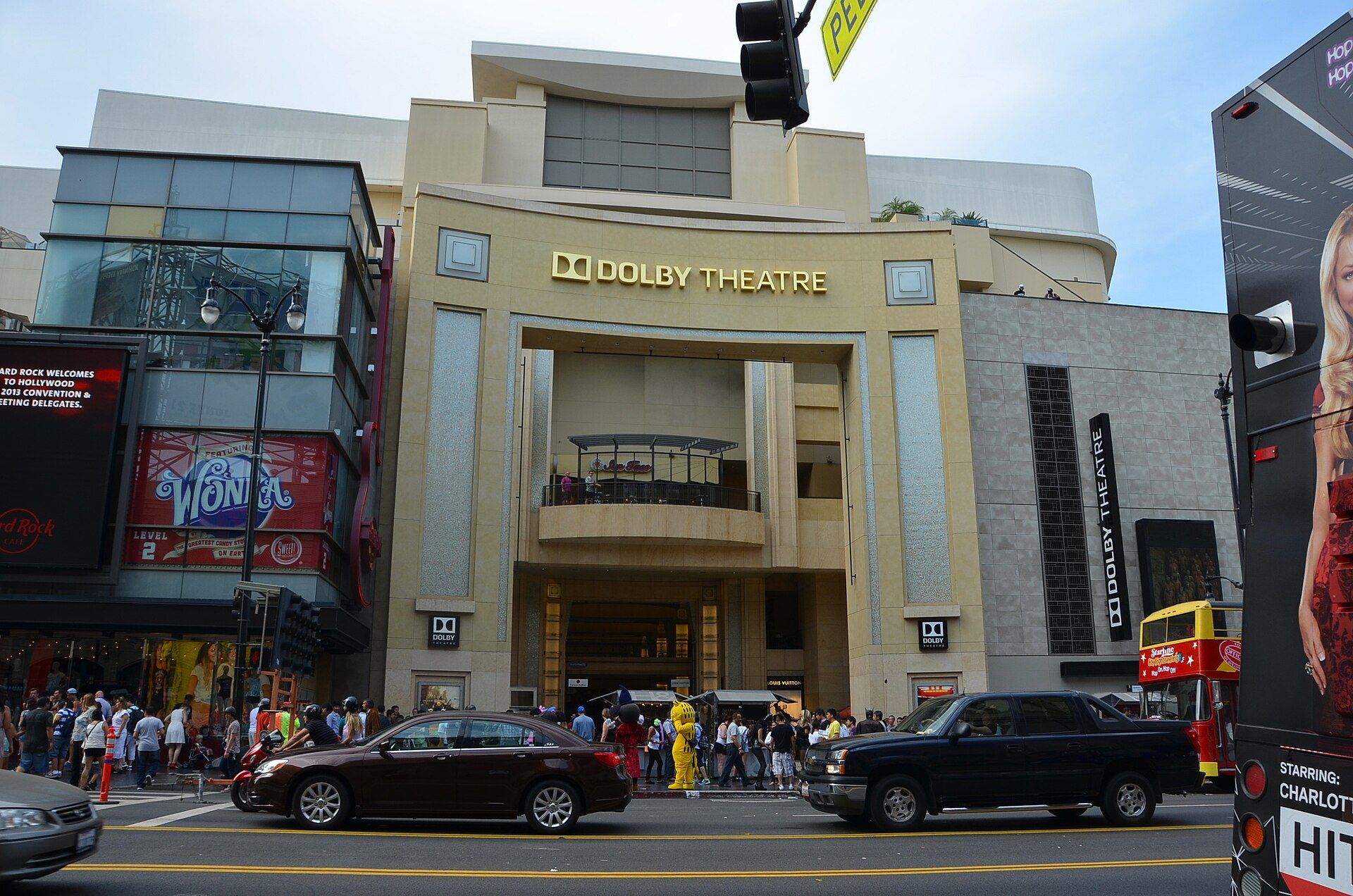
Rhythm & Hues was the main effects contractor on Life of Pi. Eleven days earlier, at 10:48 p.m. on 13 February, it had filed for Chapter 11 protection in federal bankruptcy court in Los Angeles, having already laid off about 250 people.3738 One effects artist told the Los Angeles Times: "'Life of Pi' is up for best picture and best visual effects, yet the company that did most of the show is in Chapter 11 and the artists haven't been paid in five weeks."38
On the day of the ceremony, four to five hundred effects workers gathered at Hollywood and Vine, not far from the Dolby. Their signs read "Will matte paint for food" and "We want a piece of the Pi." A plane overhead towed a banner: "BOX OFFICE + BANKRUPT = VISUAL EFFECTS."3940

A decade later, in September 2023, Marvel Studios' in-house visual effects staff voted unanimously in a National Labor Relations Board election to join IATSE, the first unit made up solely of effects workers to do so in the nearly half-century since modern visual effects began. Walt Disney Pictures' effects staff had already begun voting. One coordinator said: "I grew up dreaming of working on Marvel films, so when I started my first job at Marvel, I felt like I couldn't complain about the unpaid overtime, the lack of meal breaks, and the incredible pressure put on VFX teams to meet deadlines because I was just supposed to be grateful to be here at all."41 These were the studios' own small in-house teams; most shots are still made by employees of effects houses in many countries.
Even with credits running past ten minutes, people are still left out. Effects names are the fastest-growing part of the list, and also the part most often cut.
9. Five seconds written into law
Some of what appears in the end credits is there less for the audience than for a government.
Georgia passed its Entertainment Industry Investment Act in 2005, giving productions shot in the state a 20% tax credit with a minimum local spend of $500,000. In 2008 it added a further 10% for productions that include a "qualified Georgia promotion," which the statute defines as "a five-second long static or animated logo that promotes Georgia in the end credits before the below-the-line crew crawl for the life of the project and which includes a link to Georgia on the project's web page." In place of the logo, a production may offer alternative marketing of "equal or greater promotional value."42 That logo is the peach. Five seconds of screen time is worth 10% of the production's qualified Georgia spending. Television follows slightly different rules: the five-second logo may go in the opening titles, as a bumper, or in a prominent position in each episode's end credits "with no less than a half screen exposure and not over content."43 A 2022 report by Georgia's state auditors found that the economic development department did not ensure that every project receiving the uplift had met all its requirements.44
Canada's federal production tax credit requires the "Canada" wordmark and the words "Canadian Film or Video Production Tax Credit" in the end credits of every domestic and international version. Ontario requires productions that began principal photography after 24 August 2023 to carry the provincial and Ontario Creates wordmarks and the line "Produced with film and television tax credit assistance from the Government of Ontario," foreign productions included, and on every episode of a series.4546 New Zealand's 2017 rules for international productions said every applicant "must" include the credit "The filmmakers acknowledge the assistance of the New Zealand Government's Screen Production Grant" and the Film Commission logo, waivable only "in exceptional circumstances"; a later version softened "must" to "should."47 Britain's film tax relief itself carries no such requirement, but the BBC's production guidelines note that "end credits for the providers of tax breaks and location incentives are generally a mandatory requirement of funders."48
In 2012 Fox's Taken 2 added a line to its end roll: "The making and legal distribution of this film supported over 14,000 American jobs and involved over 600,000 work hours." Fox's Life of Pi, released the same year, used the exact same sentence and the same numbers.31
Two other lines have more specific origins. During the 1939 filming of the western Jesse James, a terrified horse was forced off a cliff and killed. The following year the American Humane Association opened an office in Hollywood. In 1972 the first "No Animals Were Harmed" end credit was issued, to The Doberman Gang.49 The line is not always to be trusted. A 2013 investigation by The Hollywood Reporter listed productions that received it anyway, Life of Pi among them: the Bengal tiger, used whenever computer effects fell short, nearly drowned on set.50
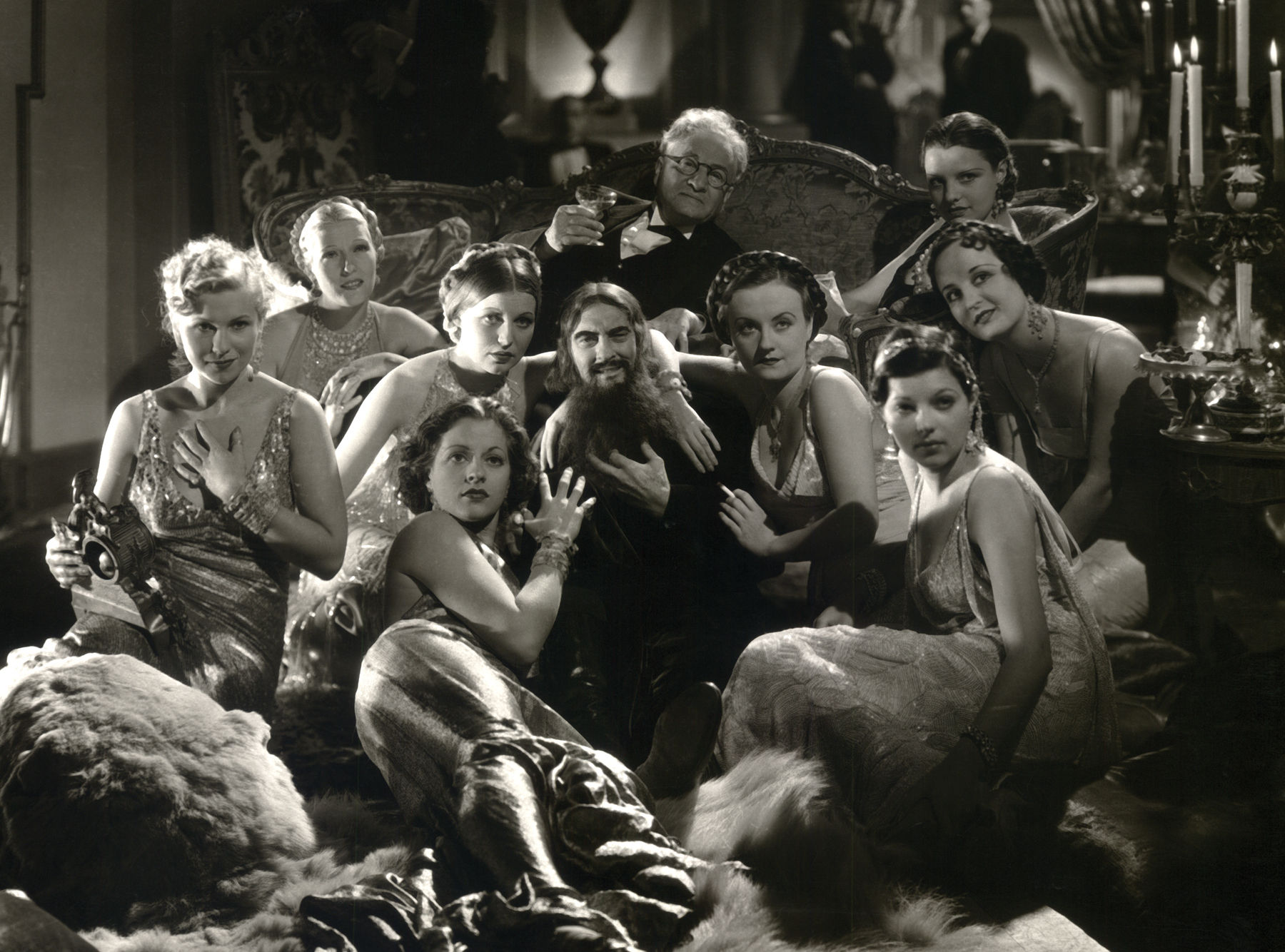
The other is the familiar "All persons fictitious" disclaimer. MGM's Rasputin and the Empress (1932) included a princess assaulted by Rasputin. Princess Irina, wife of Prince Felix Yusupov, one of the men who actually killed Rasputin, took the character to be her and sued MGM in London. MGM's lawyer wrote to the US Secretary of State asking for American diplomats as witnesses; the State Department declined. The 1934 trial lasted two and a half hours and awarded her £25,000, about $125,000 at the time; Prince Felix testified about how he had killed Rasputin. The case pushed the studios to start adding disclaimers to their films.51
10. Credits elsewhere
A cap on the opening and none on the end is not a Hollywood peculiarity. China's 2003 regulations on credits for domestic films state that "the net length of opening credits should generally not exceed 28 metres, about one minute," while "all persons and organisations directly involved in a film's creation and production may be listed in the end credits; the items and names are decided by the production company."52 Chinese credit lists are growing too, mostly among investors: the average number of co-producers on Chinese films grossing over 100 million yuan rose from 3.8 in 2012 to 11.9 in 2023.53 For the 2023 science-fiction film The Wandering Earth II, the visual effects supervisor Xu Jian said more than sixty effects companies were credited, and apologised to "third- and fourth-tier subcontractors who didn't make it onto the credits."54
Japanese anime credits keep another kind of record. Anime is usually financed by a "production committee," and the order of companies roughly follows the size of their investment.55 Key animation and in-betweening are outsourced layer upon layer. In June 2024 the production committee of Dahlia in Bloom issued a statement: part of the work had been passed from Typhoon Graphics to a Japanese company, then to a Chinese company, then to another Chinese company; one company refused to submit a "staff list," and the portions that might have involved a North Korean studio had been "entirely redone by domestic staff."56 The handful of outsourcing companies named in the credits became the trail investigators followed.

11. The name as payment
The credits grow for another reason: for many people the name is part of what they're paid.
Raphael Bob-Waksberg, creator of BoJack Horseman, put it this way: "The deal that [crew members] agreed to is to work partially for pay and partially for credit."57 For freelancers, a name in the credits, and the IMDb entry that mirrors it, is often the only proof they worked on a film; the industry treats IMDb as its site of record, and people left off the screen have to send in pay stubs or residual cheques to be added.11 The contract SAG-AFTRA signed after its 2023 strike includes a clause requiring producers to "make reasonable efforts" to help performers correct or add credits on IMDb.58
Some names have nothing to do with the work and are still solemnly recorded. Starting with its first feature, Toy Story (1995), Pixar has listed the "production babies" born during the making of each film; A Bug's Life (1998) listed 34 and WALL-E (2008) 58.359 The extended edition of The Lord of the Rings: The Return of the King ends with roughly eleven minutes of names of charter members of the official fan club, who paid for their places.60
12. The shrinking window
It took half a century for the names to fill the end of the film. On streaming platforms, they were pushed into a corner within a few years.
Netflix's researchers found that about 15% of the time, members were manually skipping ahead within the first five minutes of an episode. So they built a button, testing names including "Jump Past Credits," "Skip Credits," "Jump Ahead," "Skip Intro" and simply "Skip." It was tried on the web in 2017 for 250 series in the US, UK and Canada, reached television in August 2017 and mobile in May 2018. In 2022 Netflix said the button was pressed 136 million times a day, saving members 195 years of cumulative time. One engineer said, "I'm not sure that if you put a button that said 'free cupcake' that it would get more clicks than Skip Intro."61 When a film ends on Netflix, "we minimize the credits into a smaller window and suggest what to watch next"; to see the full credits you have to click the small window, and once you choose anything else, the option is gone.62
In 2022 the Los Angeles Times reported that closing credits "have been shrinking, speeding up and, in some cases, disappearing entirely." An unnamed television executive said: "Our networks are employing 'the squeeze,' because the credits have become so much longer now, particularly for movies." The editor Mark Boszko started a Change.org petition, "Netflix, We Want to Watch the Credits," which drew more than 13,500 signatures. "I feel like it's a little disrespectful to just shrink the credits down into this tiny box," he said.57 Bob-Waksberg asked networks and streamers not to "distort, shrink, cover up or automatically skip the credits," and "they say, 'No, we will not guarantee that.'" The Writers Guild contract doesn't require credits to be visible either.57
In Britain the actors' union Equity has campaigned against broadcasters squeezing credits since 2004; its research found that 89% of viewers got "very annoyed" by the practice, and a Sky survey found 77% wanted to know who the actors were. In 2012 the BBC pledged to show full credits on at least one episode of every series.63 At the 2020 Writers Guild Awards, Amy Sherman-Palladino, creator of The Marvelous Mrs. Maisel, said from the stage: "I don't really understand why the guild aren't talking about credits getting cut off at the end. You work for those credits… The actors and the crew, their credits are cut off."64
In May 2023, on day 22 of the Writers Guild strike, Warner Bros. Discovery launched its new streaming service, Max, with directors, writers and producers all lumped together under "Creators." The president of the Directors Guild called it "a grave insult to our members and our union"; the president of the Writers Guild West called it "disrespectful and insulting," adding, "Day 22 of our strike." Max apologised for "an oversight in the technical transition."65
13. Who stays to watch
As the credits grew longer, some people were working out how to make audiences stay.
Which film first put a scene after its credits is disputed. One account points to the 1966 spy spoof The Silencers; another to The Muppet Movie (1979), in which Animal turns to the audience after the credits and shouts "Go home!" Airplane! (1980) added a last gag with an abandoned taxi passenger.66 In Ferris Bueller's Day Off (1986), Ferris comes out after the credits and tells the audience: "You're still here? It's over! Go home! Go."67
After the credits of Iron Man (2008) came a 36-second scene: Nick Fury appears in Tony Stark's house and says, "I'm here to talk to you about the Avenger initiative." Kevin Feige, head of Marvel Studios, traced the habit to Ferris Bueller: "It was like a little reward for me for sitting through the credits." Since then nearly every Marvel film has had a post-credits scene; Endgame is a rare exception.67 A 2019 Fandango poll of users planning to see Endgame found 97% said they always stay for Marvel's post-credits scenes, though the sample was self-selected fans.68
Those scenes have changed some people's habits. In an October 2024 YouGov survey of 1,134 American adults, 86% said leaving before the credits finish is acceptable and 9% that it isn't. Among 18-to-29-year-olds, though, only 69% called it acceptable and 19% unacceptable; among those aged 45 to 64, and those 65 and older, just 4% called it unacceptable.69 The younger the viewer, the more likely they are to think leaving early is wrong.
Many cinemas bring the house lights up as soon as the credits begin, and the cleaners walk in. A 2017 spot check of twenty cinemas in Beijing found that most did exactly that; screenings were usually spaced about fifteen minutes apart, and one cinema manager reckoned that shaving five minutes off the gap would allow one more show a day.70
14. The notice at the Goldwyn Theater
No one ever decided to make end credits longer. Actors' names went on screen first because they sold tickets. When the studio system broke up, freelancers needed proof of their work. Directors moved the names to the end to give the opening back to the story, and the end became a place without a limit. Digital projection made each extra line nearly free. Effects shots went from hundreds to thousands and were subcontracted around the world. States and provinces wrote their logos into law. Producer titles multiplied and the thank-you lists grew. Every step had a particular person behind it and a reason that made sense, and no one was ever responsible for setting a total length for the list.
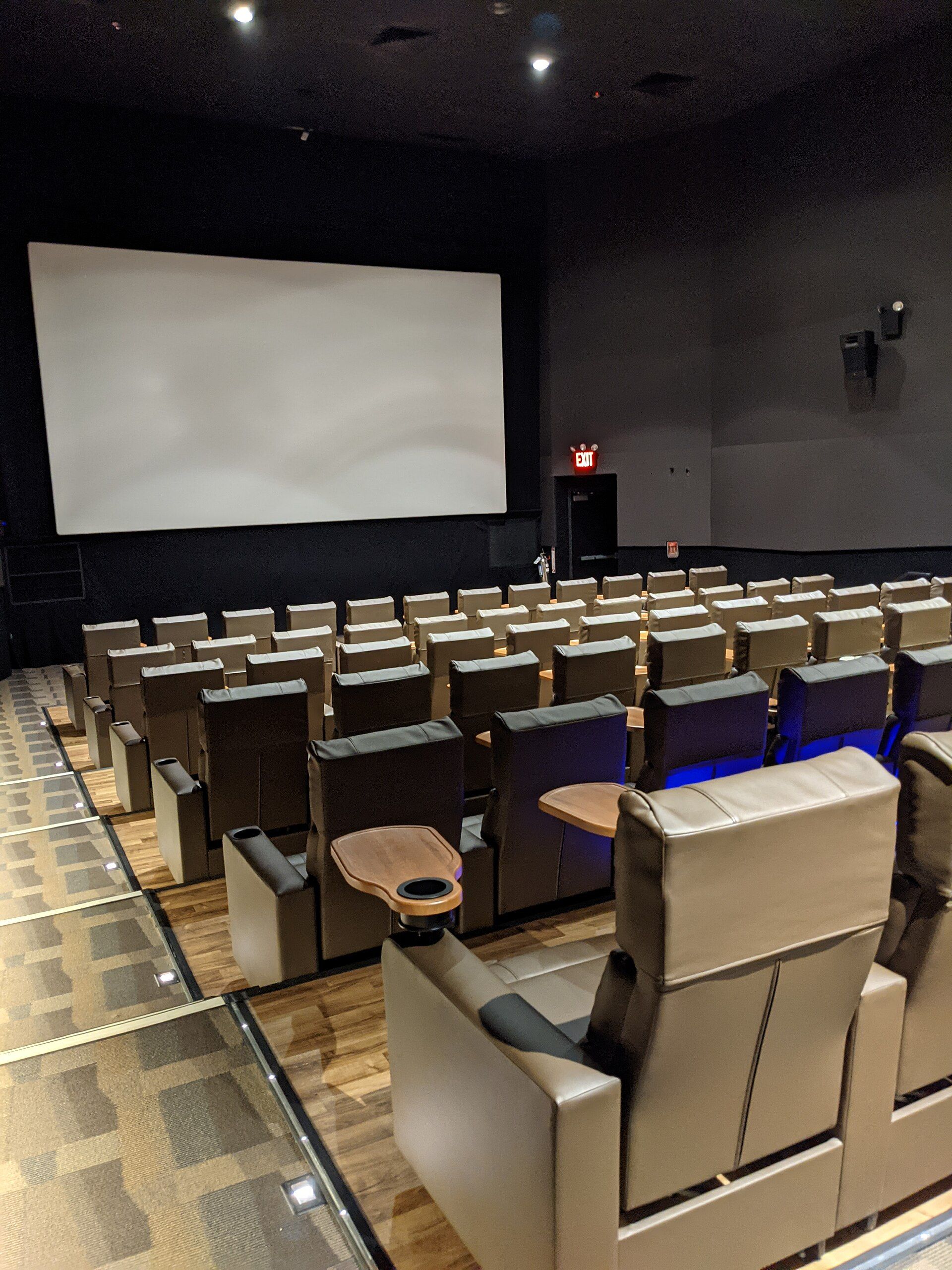
In early 1994, as opening without credits was catching on in Hollywood, Variety mentioned a small detail. At recent screenings in the Academy of Motion Picture Arts and Sciences' own Samuel Goldwyn Theater, a stark message at the front of the film admonished the audience not to leave during the credits.20
It was the Academy's own theatre. Even there, the audience had to be reminded.
Footnotes
-
Report on Avengers: Endgame running time and credits, ComicBook.com, 19 April 2019, https://comicbook.com/marvel/news/how-long-avengers-endgame-without-credits/ ↩
-
Tim Gray, "H'wood movies extend their credit lines," Variety, 24 April 1998, https://variety.com/1998/voices/columns/h-wood-movies-extend-their-credit-lines-1117470114/ ↩ ↩2 ↩3 ↩4 ↩5 ↩6 ↩7 ↩8
-
Stephen Follows, "Are movie end credits getting longer?", 17 August 2026, https://stephenfollows.com/p/are-movie-end-credits-getting-longer ↩ ↩2 ↩3 ↩4 ↩5 ↩6 ↩7
-
John "Pliny" Eremic, "How To Get The On-Screen Credit You Deserve," Endcrawl, 1 October 2016, https://endcrawl.com/blog/how-to-get-your-on-screen-credit/ ↩ ↩2 ↩3 ↩4
-
Guinness World Records, "Most credited individuals for a movie," https://www.guinnessworldrecords.com/world-records/764436-most-credited-individuals-for-a-movie ↩
-
Mekado Murphy, "Waiting for the Credits to End? Movies Are Naming More Names," The New York Times, 26 May 2017, https://web.archive.org/web/2017/https://www.nytimes.com/2017/05/26/movies/why-end-credits-in-movies-are-so-long.html ↩ ↩2 ↩3 ↩4
-
Eileen Bowser, The Transformation of Cinema, 1907–1915 (History of the American Cinema, vol. 2), ch. 9, "Trademarks, Titles, Introductions," via Encyclopedia.com, https://www.encyclopedia.com/arts/culture-magazines/trademarks-titles-introductions ↩ ↩2 ↩3 ↩4
-
Kelly Brown, "Florence Lawrence," Women Film Pioneers Project, Columbia University Libraries, 2013, doi:10.7916/d8-2jnw-2x82, https://wfpp.columbia.edu/pioneer/ccp-florence-lawrence ↩ ↩2 ↩3
-
Joe McClintock, "Florence Lawrence and the Truth Behind 'We Nail a Lie'," Bright Lights Film Journal, 12 September 2017, https://brightlightsfilm.com/florence-lawrence-truth-behind-we-nail-a-lie-famous-ads-1910/ ↩ ↩2 ↩3
-
Michael Osborn, report on film-credit lengths, BBC News, 13 January 2004, http://news.bbc.co.uk/2/hi/entertainment/3392435.stm ↩
-
Stephen Follows, "Uncredited movie credits," 24 October 2016, https://stephenfollows.com/p/uncredited-movie-credits ↩ ↩2 ↩3 ↩4
-
Peter Tonguette, "Give Them Some Credit!", CineMontage, 1 November 2012, https://cinemontage.org/give-credit-post-production-practitioners-received-screen-acknowledgment/ ↩ ↩2
-
Emily King, "Taking Credit: Film title sequences, 1955–1965," Typotheque, 2004, https://www.typotheque.com/articles/taking-credit-film-title-sequences-1955-1965-9-conclusion ↩
-
Debra Kaufman, "VFX Screen Credits: The Quest for Recognition and Respect," VFX Voice, January 2018, https://vfxvoice.com/vfx-screen-credits-the-quest-for-recognition-and-respect/ ↩ ↩2 ↩3 ↩4
-
Art of the Title, "Around the World in 80 Days (1956)," https://www.artofthetitle.com/title/around-the-world-in-eighty-days ↩ ↩2
-
"A Survey of Great Animated Title Sequences," Cartoon Brew, https://www.cartoonbrew.com/classic/a-survey-of-great-animated-title-sequences-241193.html ↩
-
"Making a Fuss Over Opening Credits," The New York Times, 22 April 2000, https://www.nytimes.com/2000/04/22/movies/making-fuss-over-opening-credits-film-titles-offer-peek-future-more-ways-than.html ↩
-
Art of the Title, "West Side Story (1961)," https://www.artofthetitle.com/title/west-side-story/ ↩
-
Directors Guild of America, Basic Agreement of 2023, Article 8, "Directors' Credits," https://edge.sitecorecloud.io/directorsguf4d4-dga2c79-dgaprod1615-f6e3/media/Files/Contracts/Agreements/2023-Basic-Agreement/DGA_BA2023_08_Article008.pdf ↩ ↩2
-
Paul Young, "Credit 'Kane' with another film trend," Variety, 3 January 1994, https://variety.com/1994/film/news/credit-kane-with-another-film-trend-117094/ ↩ ↩2 ↩3 ↩4 ↩5 ↩6
-
Iain Macdonald, article on the Star Wars title sequence, The Conversation, 18 December 2015, https://theconversation.com/how-famous-star-wars-title-sequence-survived-imperial-assaults-52547 ↩ ↩2
-
Guinness World Records, "Longest credit sequence," https://www.guinnessworldrecords.com/world-records/73875-longest-credit-sequence ↩
-
SAG-AFTRA, 2014 Codified Basic Agreement, Section 25, "Screen Credits," https://amptp.org/wp-content/themes/amptp/assets/pdf/SAG-AFTRA/2014%20Codified%20Basic%20Agreement%20(%E2%80%9CCBA%E2%80%9D).pdf; for 1977 precedent, "Screen Credit in the Entertainment Industry," Loyola of Los Angeles Entertainment Law Review 10 (1990), https://digitalcommons.lmu.edu/elr/vol10/iss1/2 ↩
-
Directors Guild of America, "Credits" (department page, possessory credit policy), https://www.dga.org/The-Guild/Departments/Credits ↩
-
Writers Guild of America, "Theatrical Credits Procedures Guide," https://www.wga.org/contracts/credits/manuals/theatrical-credits-procedures ↩
-
2024–2027 IATSE Basic Agreement (Producer–IATSE and MPTAAC), https://www.editorsguild.com/Portals/0/2024-2027-IA-Basic-Agreement-FULLY%20EXECUTED.pdf ↩
-
IATSE Local 849, 2026–2027 Standard Agreement, §2.15, https://www.iatse849.com/images/documents/standardagreements/2026-2027_IATSE_Local_849_Standard_Agreement.pdf ↩
-
Stephen Follows, "How has the average Hollywood movie crew changed?", 19 March 2018, https://stephenfollows.com/p/how-has-the-size-of-hollywood-movie-crews-changed ↩ ↩2
-
Stephen Follows, "How many people work on a Hollywood film?", 24 February 2014, https://stephenfollows.com/p/how-many-people-work-on-a-hollywood-film ↩ ↩2 ↩3 ↩4 ↩5
-
Report on Netflix executives' producer credits, The Hollywood Reporter, 25 September 2018, https://www.hollywoodreporter.com/tv/tv-news/netflix-faces-backlash-shared-credits-1145253/ ↩
-
Stephen Follows, "Which are the largest departments on a movie set?", 17 October 2021, https://stephenfollows.com/p/which-are-the-largest-departments-on-a-movie-set ↩ ↩2
-
Interview with Avengers: Endgame VFX supervisor Dan DeLeeuw, Post Magazine, May–June 2019, https://www.postmagazine.com/Publications/Post-Magazine/2019/May-June-2019/-I-Avengers-Endgame-I-VFX-supervisor-Dan-Deleeuw.aspx; Weta team size: CG Record interview with Matt Aitken, September 2019, https://www.cgrecord.net/2019/09/exclusive-weta-digitals-vfx-supervisor.html ↩ ↩2
-
Report on Avengers: Endgame VFX (SIGGRAPH 2019), The Hollywood Reporter, https://www.hollywoodreporter.com/movies/movie-news/avengers-endgame-200-aging-de-aging-vfx-shots-1227747/ ↩
-
Guinness World Records, "Most visual effects credits for a movie," https://www.guinnessworldrecords.com/world-records/764480-most-visual-effects-credits-for-a-movie ↩
-
Report on Bectu's VFX credits campaign, Broadcast, 12 July 2017, https://www.broadcastnow.co.uk/bectus-campaign-to-get-more-vfx-artists-on-screen-credits/5119855.article ↩
-
Academy of Motion Picture Arts and Sciences, Acceptance Speech Database, 85th Academy Awards, Visual Effects (Life of Pi), 24 February 2013, https://aaspeechesdb.oscars.org/link/085-23 ↩
-
In re Rhythm and Hues, Inc., Chapter 11 petition, U.S. Bankruptcy Court, C.D. Cal., Case No. 2:13-bk-13775, filed 13 February 2013; see ABI, https://www.abi.org/feed-item/rhythm-and-hues-inc-files-chapter-11-bankruptcy- ↩
-
Report on the VFX protest and Rhythm & Hues, Los Angeles Times, 22 February 2013, https://www.latimes.com/entertainment/envelope/la-xpm-2013-feb-22-la-et-ct-visual-effects-oscar-protest-rhythm-hues20130222-story.html ↩ ↩2
-
Report on the VFX artists' protest, Entertainment Weekly, 25 February 2013, https://ew.com/article/2013/02/25/oscars-visual-effects-protest-life-of-pi/ ↩
-
Report on the VFX protest at the 85th Oscars, Deadline, 24 February 2013, https://deadline.com/2013/02/oscars-2013-life-of-pi-vfx-rhythm-hues-bankruptcy-438552/ ↩
-
IATSE, "Marvel Studios VFX Workers Unanimously Vote to Unionize with IATSE, Marking Historic First," 13 September 2023, https://iatse.net/marvel-studios-vfx-workers-unanimously-vote-to-unionize-with-iatse-marking-historic-first ↩
-
Official Code of Georgia Annotated § 48-7-40.26 (Georgia Entertainment Industry Investment Act), via Justia, https://law.justia.com/codes/georgia/title-48/chapter-7/article-2/section-48-7-40-26/ ↩
-
Ga. Comp. R. & Regs. 159-1-1-.07, via Cornell LII, https://www.law.cornell.edu/regulations/georgia/Ga-Comp-R-Regs-R-159-1-1-.07 ↩
-
Georgia Department of Audits and Accounts, evaluation of the film tax credit (2022), https://www.audits.ga.gov/ReportSearch/download/28397 ↩
-
Canadian Heritage (CAVCO), "Screen credit – Canadian Film or Video Production Tax Credit," https://www.canada.ca/en/canadian-heritage/services/funding/cavco-tax-credits/canadian-film-video-production/screen-credit.html ↩
-
Ontario Creates, "Ontario Production Services Tax Credit (OPSTC) Guidelines," https://www.ontariocreates.ca/tax-incentives/opstc/opstc-guidelines ↩
-
New Zealand Film Commission, New Zealand Screen Production Grant – International: Criteria (2017), cl. 35, https://www.nzfilm.co.nz/assets/resources/NZSPG_2017_International_Criteria_FINAL.pdf; later wording in OIA response (2024), https://fyi.org.nz/request/28069/response/107552/attach/2/C%20O%20Neil%20OIA%20Final%20Response.pdf ↩
-
BBC Editorial Guidelines, "Location and Production Incentives," http://downloads.bbc.co.uk/guidelines/editorialguidelines/pdfs/location-production-incentives.pdf ↩
-
American Humane, "History," https://www.americanhumane.org/about-us/history ↩
-
"Why the 'No Animals Were Harmed' movie disclaimer doesn't mean much," PBS NewsHour, 26 November 2013 (summarising The Hollywood Reporter's investigation), https://www.pbs.org/newshour/nation/why-the-no-animals-were-harmed-movie-disclaimer-doesnt-mean-much ↩
-
Max Korn, "When a Russian Princess Sued MGM," Text Message (U.S. National Archives blog), 21 January 2025, https://text-message.blogs.archives.gov/2025/01/21/when-a-russian-princess-sued-mgm ↩
-
国家广播电影电视总局电影局,《国产电影片字幕管理规定》(广影字〔2003〕第669号),2003年10月27日,https://www.chinafilm.gov.cn/xxgk/zcfg/gfxwj/dyzpsc/200310/t20031027_1477.html ↩
-
中新经纬,国产电影出品方数量报道,2025年8月17日,https://m.dzplus.dzng.com/share/general/0/NEWS2649814IKYXGNAFMRECS ↩
-
徐建(MORE VFX),关于《流浪地球2》视效的知乎回答(授权转载),影视工业网,2023年2月9日,https://cinehello.com/stream/147729 ↩
-
"What is an Anime's Production Committee?", Sakuga Blog, 2 May 2017, https://blog.sakugabooru.com/2017/05/02/what-is-an-animes-production-committee/ ↩
-
『魔導具師ダリヤはうつむかない』製作委員会,声明,2024年6月7日,https://dahliya-anime.com/2024/06/07-2/ ↩
-
Meg James, The Wide Shot newsletter on end credits, Los Angeles Times, 30 August 2022, https://www.latimes.com/entertainment-arts/business/newsletter/2022-08-30/wide-shot-newsletter-end-credits-the-wide-shot ↩ ↩2 ↩3
-
SAG-AFTRA, 2023 TV/Theatrical Contracts Summary Agreement, https://www.sagaftra.org/sites/default/files/sa_documents/TV-Theatrical_23_Summary_Agreement_Final.pdf ↩
-
"Pixar delivers, babies get credit," San Francisco Chronicle, https://www.sfchronicle.com/entertainment/article/Pixar-delivers-babies-get-credit-3185717.php ↩
-
DVDMG, "The Lord of the Rings: The Return of the King – Extended Edition" review, http://www.dvdmg.com/returnofthekingextended.shtml ↩
-
Netflix, "Looking Back on the Origin of Skip Intro Five Years Later," 17 March 2022, https://about.netflix.com/en/news/looking-back-on-the-origin-of-skip-intro-five-years-later ↩
-
Netflix Help Center, "How to watch credits," https://help.netflix.com/en/node/114058 ↩
-
Report on BBC end-credit policy and Equity's campaign, BBC News, 6 December 2012, https://www.bbc.co.uk/news/entertainment-arts-20624980 ↩
-
Report on the WGA Awards ceremony, Deadline, 2 February 2020, https://deadline.com/2020/02/wga-awards-strike-amptp-talks-netflix-residuals-1202848852/ ↩
-
Report on the Max "Creators" credits controversy, Deadline, 24 May 2023, https://deadline.com/2023/05/max-credits-controversy-directors-writers-guilds-1235378437/ ↩
-
Alex Suskind, "'You're Still Here?': A Brief History of the Movie Post-Credits Sequence," Vulture, 8 April 2014, https://www.vulture.com/2014/04/brief-history-of-movie-post-credits-sequences.html ↩
-
Article on the history of Marvel's post-credits scenes, Vox, 26 January 2022, https://www.vox.com/22893634/marvel-post-credits-scene-history ↩ ↩2
-
Report on Fandango's Avengers: Endgame survey, We Got This Covered, 2019, https://wegotthiscovered.com/movies/97-of-marvel-fans-plan-to-stay-for-the-avengers-endgame-post-credits/ ↩
-
YouGov, survey on movie theater etiquette, 9–12 October 2024, https://yougov.com/en-us/articles/50978-americans-rules-for-movie-theater-etiquette ↩
-
《新京报》调查(中国新闻网转载),2017年2月16日,https://www.chinanews.com.cn/yl/2017/02-16/8151043.shtml ↩