Why Unreasonable Things Persist?
October 13, 2026
In August 2020 the HUGO Gene Nomenclature Committee (HGNC) published new guidelines for naming human genes. Over the previous year or so it had quietly renamed twenty-seven of them: MARCH1 became MARCHF1, SEPT1 became SEPTIN1. The reason had nothing to do with biology. Typed into Microsoft Excel, those names were read as dates—MARCH1 turned into "1-Mar", SEPT2 into "2-Sep"—and there was no way to switch the conversion off for good.12
Elspeth Bruford, the committee's coordinator, told a reporter it was the first time the rules had been rewritten because of a piece of software. She was blunt about why: geneticists are a small corner of Excel's users, and "there is very little incentive for Microsoft to make a significant change to features that are used extremely widely by the rest of the massive community of Excel users."1 The Verge ran the story under the subhead "Sometimes it's easier to rewrite genetics than update Excel."
There were no villains in this story: automatic conversion is a convenience for nearly everyone who uses Excel, geneticists knew about the problem and complained about it, and journal editors, reviewers, and database curators could all see it. In 2016 three researchers in Melbourne screened supplementary files from eighteen journals published between 2005 and 2015. Of 3,597 papers with gene lists attached, 704—19.6 percent—had gene names mangled by Excel, and the higher a journal's impact factor, the worse the rate.2 The problem had first been reported in 2004.2 It took sixteen years to get from that report to the renaming, and three more before Microsoft, in October 2023, added a switch that let users turn the conversion off.3 Even the renaming did not finish the job. A follow-up study in 2021 found errors in 30.9 percent of papers with Excel gene lists published between 2014 and 2020, along with new varieties: on a Finnish-language system, TAMM41 becomes "Jan-41" because the Finnish word for January is tammikuu.4
People often say unreasonable things survive because someone profits from them, or because everyone is too stupid or too lazy to change them. Sometimes that is right. More often, something everyone finds awkward stays put because the reasons for keeping it are spread across many people, each reason small, the total too heavy to move.
1. An Accidental Four Feet Eight and a Half
On 17 July 1846 the House of Lords debated railway gauges. The Earl of Dalhousie said something that would be quoted for the next century and a half. The gauge of 4 feet 8½ inches, he said, "had not been originally adopted upon any fixed principle, or from any proofs of its superiority, but solely from the accidental circumstance that that was the usual width of the waggons which ran on tram roads at the period when railways were first introduced."5
The width came from the horse-drawn wagonways of the coalfields in north-east England. George Stephenson kept it when he built railways, and later railways kept Stephenson's.67 Where the last half inch came from, no one can say for certain.
Isambard Kingdom Brunel had given the Great Western Railway (GWR) a broad gauge of 7 feet ¼ inch, which made for steadier carriages and faster trains. Even a peer who argued for the narrow gauge admitted it. Lord Redesdale conceded that "as far as increased speed was concerned, the advantage was decidedly in favour of the broad gauge," and feared that England, the birthplace of the railway, "would present nothing to future ages but a bungling and complicated system."5
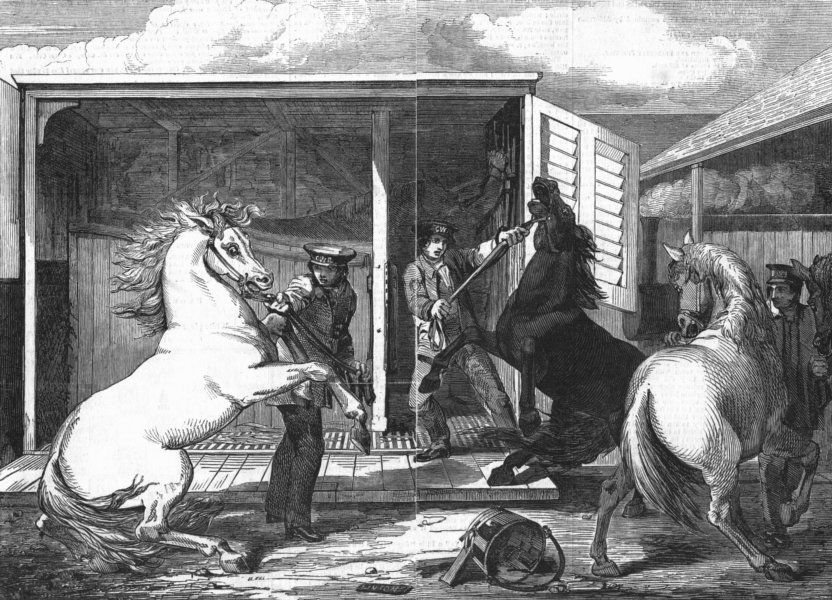
The trouble came where the two gauges met: at Gloucester broad and narrow gauge met in a single station, and passengers had to change trains while goods were carried by hand from one wagon to another. The Illustrated London News drew the scene on 6 June 1846: porters shoving past each other with crates, horses led from one truck to the next.8 The Royal Commission on gauges found "that a break of gauge was a very serious evil; and further, that there were no mechanical means of mitigating that evil."5
So which gauge should win? Dalhousie gave the figures. At the end of 1844 Britain had about 1,900 miles of narrow-gauge railway and about 300 miles of broad. Converting the existing broad-gauge lines would cost "not less than about one million sterling"; converting the narrow would cost far more.5 On 18 August 1846 the Gauge Act received Royal Assent: no new passenger railway in Great Britain could be built to any gauge "other than Four Feet Eight Inches and Half an Inch" (5 feet 3 inches in Ireland). Existing broad-gauge lines could stay.9
The broad gauge ran for another four decades, until The Times wrote its obituary in August 1891: "in the abstract the broad gauge was a magnificent conception worthy of the brilliant genius and uncompromising originality of Brunel; but, practically and commercially it was a failure as has long been acknowledged."10
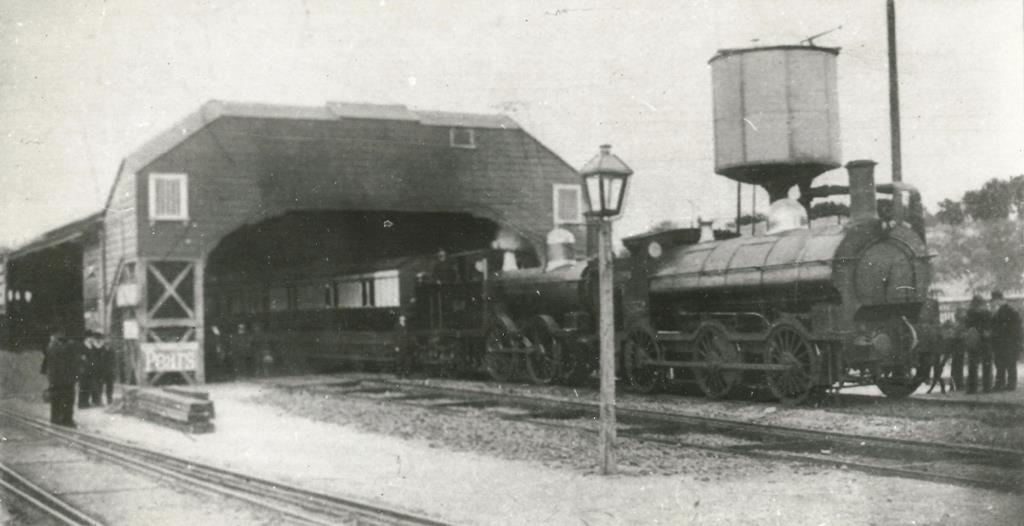
The end came on the morning of Friday 20 May 1892: at 10:15 The Cornishman, the last through broad-gauge train to Penzance, pulled out of London Paddington, and crowds packed the platforms at Swindon, Bristol, Exeter, and Plymouth. At Teignmouth in Devon, the last broad-gauge trains in each direction stood side by side; passengers opened their windows, stood up, joined hands with strangers in the other train, and sang "Auld Lang Syne."10
That weekend the GWR brought in about 4,200 platelayers and labourers (another account says 5,000). They slept in waiting rooms, goods sheds, and tents, and lived on a thin porridge of oatmeal, water, and sugar; no alcohol was provided or allowed. Over Saturday and Sunday they converted more than 170 miles of broad-gauge line to standard gauge.1011 On Monday 23 May the full passenger service resumed, and no worker had been injured. Afterwards each platelayer received a two-ounce pouch of tobacco from William Henry Wills, a GWR director and tobacco manufacturer.10
A better-sounding version circulates online. Standard gauge, it says, equals the distance between the wheels of a Roman chariot: Roman roads were rutted to that width, English cart-builders followed the ruts, railway builders followed the carts, and when the Space Shuttle's solid rocket boosters had to travel by rail, their diameter was fixed by Roman chariots too. The tale was already in Popular Mechanics in 1905.7 The first half has a grain of truth: a cart pulled by two horses side by side naturally has an axle of about that width, and Romans and English miners faced the same limit. The second half is false. The boosters' designers did have to plan for rail transport, but they did not change the design to fit any tunnel.7 The House of Lords in 1846 had it clearer than later storytellers: the trail goes back to the colliery wagon and stops there, at an "accidental circumstance."
2. The Platform at Albury
Australia's colonies built their own railways their own way: New South Wales used 4 feet 8½ inches, Victoria 5 feet 3 inches. In 1883 the two lines met at Albury, a border town on the Murray River, and did not connect. The colonies could not even agree where passengers should change. Travellers from Victoria changed at Albury; travellers from New South Wales changed across the river at Wodonga; each side built its own facilities.12
In 1895 Mark Twain took the train from Sydney to Melbourne and was woken at the border to change. In Following the Equator he wrote: "Now comes a singular thing: the oddest thing, the strangest thing, the most baffling and unaccountable marvel that Australasia can show. At the frontier between New South Wales and Victoria our multitude of passengers were routed out of their snug beds by lantern-light in the morning in the biting-cold of a high altitude to change cars on a road that has no break in it from Sydney to Melbourne! Think of the paralysis of intellect that gave that idea birth." He added that unnecessary expense, delay, and annoyance were imposed on everybody concerned, "and no one is benefitted."13
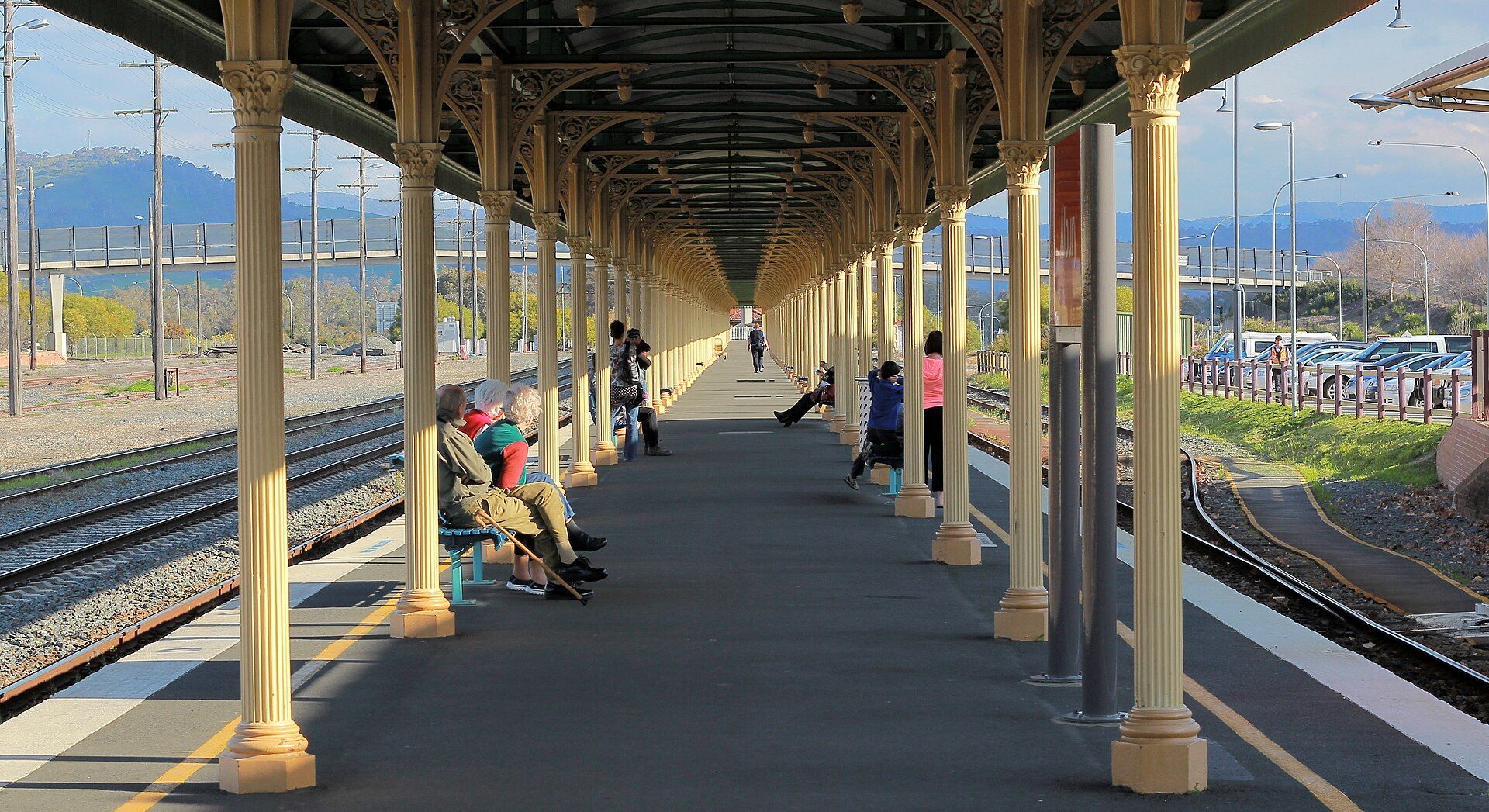
Albury's platform kept growing. It was extended in 1892, 1902, and 1907, and by another 66 metres during the Second World War, until it was roofed along its whole length of roughly 450 metres, one of the longest platforms in Australia.12 In 1890 the station opened a booking office just for sleeping berths, sold to passengers stepping off Victorian trains. During the war, passenger numbers trebled in three years, the defence forces virtually commandeered the station, and the painter Russell Drysdale painted its platforms and yards.12
The break lasted until 1962—between 1957 and 1961 a standard-gauge line was laid through Victoria alongside the broad-gauge track, and on 16 April 1962 the Southern Aurora began running straight through between Sydney and Melbourne.1214 The long platform stayed.
3. The Keyboard: A Story Told Crooked
If you want an example of "something everyone uses that may not be the best," most articles start with the keyboard. QWERTY, the story goes, was designed to slow typists down so the typewriter would not jam; later the more scientific Dvorak keyboard came along, but everyone was used to QWERTY and could not switch.
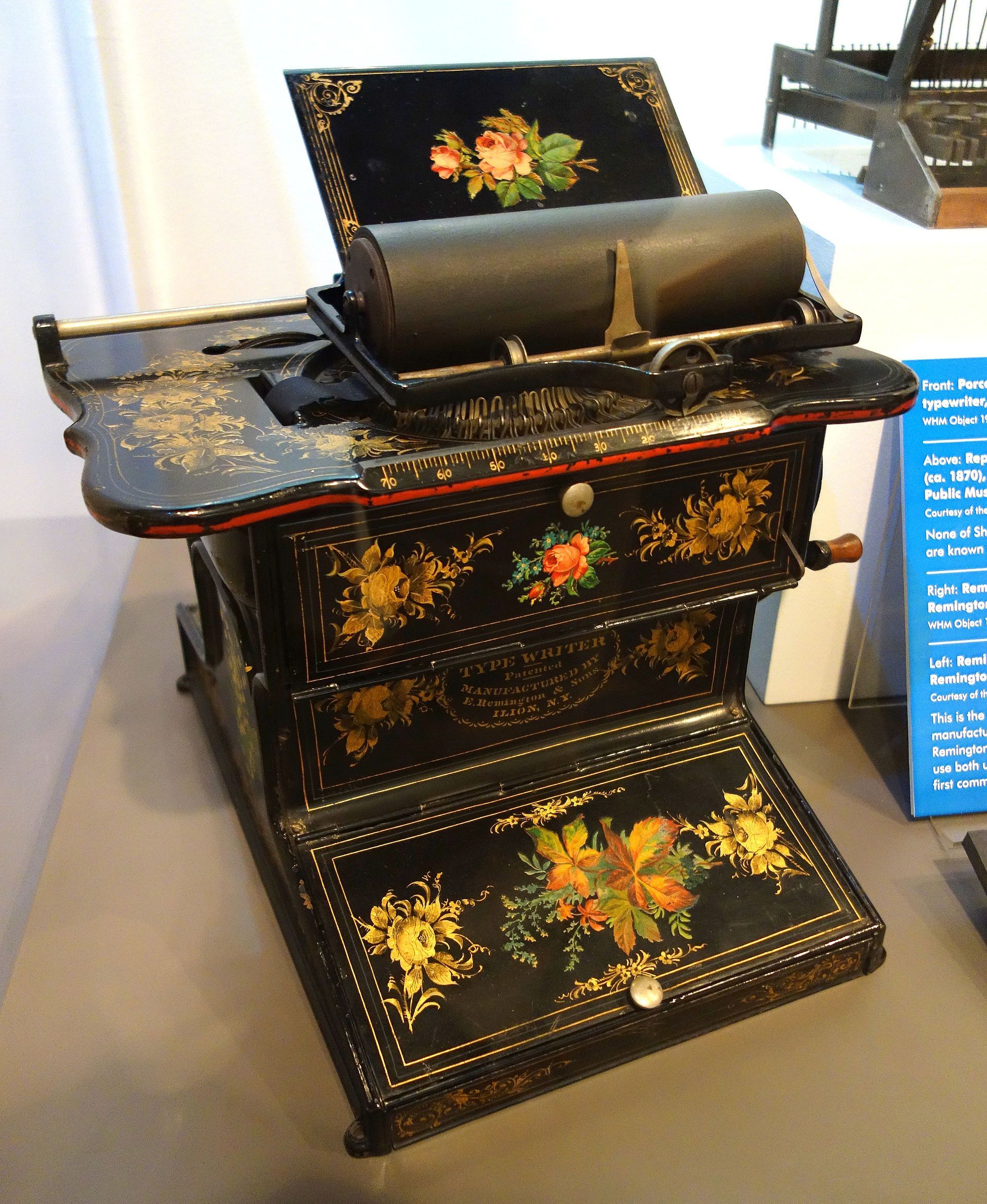
In March 1873 James Densmore placed the typewriter invented by Christopher Latham Sholes and his partners with the arms maker E. Remington & Sons. In 1874 the Sholes & Glidden Type-Writer went on sale for $125. It typed only capitals, sat on a sewing-machine stand, used a foot treadle for the carriage return, and was decorated with flowers like Remington's sewing machines.15 Sales were poor, and by 1878 the venture was "teetering on the edge of bankruptcy."16 Then touch typing caught on, and it was taught on Remington's QWERTY layout. Once typists learned it, employers bought it; once employers bought it, manufacturers built machines to fit typists' hands. In 1893 Remington and four other makers formed the Union Typewriter Company, and by 1898 QWERTY was the de facto standard.1617
August Dvorak and William Dealey filed their patent for a simplified keyboard in 1932; it was granted in 1936.18 The strongest evidence that it was faster was a 1944 US Navy report: fourteen typists retrained on Dvorak went from an average of 32 net words a minute to 56.19 But the report could not be found in Navy records, the Library of Congress, or the National Archives. The only known copy was held by an organisation promoting the Dvorak keyboard, and the naval officer in charge of the experiment was Lieutenant Commander August Dvorak, the patent holder. In 1956 the US General Services Administration ran its own test. Ten government typists needed more than twenty-five days of four-hour training just to get back to their old speed, and afterwards they improved more slowly than a control group given extra QWERTY practice.19
The slowing-down story does not hold up either: the earliest users were telegraph operators taking down messages, who had to keep pace with the sender; a keyboard built to slow them down would have left them behind. The positions of the letters came partly from the needs of operators transcribing Morse code, partly from long compromises between inventors and manufacturer, and partly from the need to get around other people's patents.17 Another popular claim—that the letters of TYPE WRITER were all put on the top row so salesmen could show off—falls apart too. The brand name had been settled before R moved to the top row, and neither SHOLES nor GLIDDEN fits on one row.17
So one view is that the industry locked in too early on an inferior system that no one could later dislodge; another is that the evidence for Dvorak's superiority is "both scant and suspect," and QWERTY, if not the best imaginable, is good enough.1619 What is certain is the weaker claim. The layout was not an optimum worked out by anyone. It was built up in layers—telegraphy, patents, the factory, the typing school—and it has outlived the machine it was made for by a long way. The keyboard on a phone screen has no typebars to jam, and the letters are in the same order.
4. The Extra Second
Some unreasonable things were added in the first place to make something else reasonable.
The Earth does not rotate perfectly evenly, while atomic clocks keep near-perfect time. To keep atomic time roughly in step with the sun, an international rule adopted in 1972 said that when the gap approaches 0.9 seconds, a second is inserted at the end of a chosen day. Clocks read 23:59:59, then 23:59:60, then 00:00:00. Twenty-seven have been added so far, all of them positive.2021
In 1972 the fix was clean and simple; in a networked world it started causing trouble. Leap seconds come every few years, so the code that handles them almost never runs and is almost never really tested. During the leap second of 30 June 2012, a timing subsystem in the Linux kernel got confused and servers running Java locked up their CPUs. Reddit was all but unusable for thirty to forty minutes and fully offline for about an hour and a half.22 In Australia, where it was Sunday morning, 1 July, the Amadeus reservations system failed; Qantas check-in, bookings, and load calculations went down, and the Sydney Morning Herald reported more than 400 flights delayed by over two hours. At Perth the baggage belts broke under the backlog.23 The bug had been patched three months earlier, but many systems had not been updated.22
Linus Torvalds, the creator of Linux, said at the time: "Almost every time we have a leap second, we find something… It's really annoying, because it's a classic case of code that is basically never run, and thus not tested by users under their normal conditions."22 Big companies came up with their own workarounds, such as "smearing" the extra second across many hours by stretching each second a tiny bit. In 2022 Meta's engineers wrote that the smears differ from company to company: "There is no universal way to do this."20
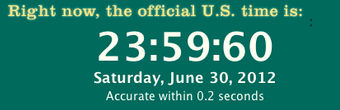
In November 2022 the General Conference on Weights and Measures (CGPM) passed Resolution 4, deciding that the permitted difference between atomic and astronomical time "will be increased in, or before, 2035," so that leap seconds would no longer be needed. The resolution also flagged something nobody had foreseen or tested: the Earth has lately been spinning faster, and the first-ever negative leap second may be needed.21 The 28th CGPM meets at Versailles from 13 to 15 October 2026. The draft resolution before it proposes that "continuous UTC will become effective on 20 May 2027," with the permitted difference raised to one hour, "ensuring the long-term continuity for UTC for several centuries."24 The draft estimates that preparing for a negative leap second would cost industry about as much as preparing for the millennium bug.24
Leap seconds are not the only casualty: in April 2020, as the pandemic sent unemployment claims soaring, New Jersey received more than 362,000 applications in two weeks. They were processed on mainframes more than forty years old, running COBOL, a language that dates from 1959. Governor Phil Murphy publicly appealed for COBOL programmers: "Literally, we have systems that are 40-plus-years-old… There'll be lots of postmortems and one of them on our list will be how did we get here where we literally needed COBOL programmers?"25
5. Doing Nothing Is Also a Choice
In the 1980s two economists gave a questionnaire to 486 business-school students. In one question, you have inherited money from a great-uncle and can invest it in a moderate-risk company, a high-risk company, treasury bills, or municipal bonds. Another group got a slightly different version: what you inherit is a portfolio already invested in one of the four, and the tax and broker commission consequences of any change "are insignificant." Whenever an option was presented as the way things already were, more people chose it.26
They also looked at Harvard's own employees: in 1980 Harvard offered four health plans, and Blue Cross Blue Shield had 62 percent of enrollees. New plans arrived over the next few years; by 1986, 9,185 employees were spread across eight plans and Blue Cross's share had fallen to 30.4 percent. Yet only about 3 percent of employees switched plans in any year. Comparing new and old employees of the same age: among those aged 52 to 61, only 24.7 percent of people hired in 1985–86 chose Blue Cross, while 50 percent of those hired before 1980 were still in it. In every age group the old hands chose it two to four times as often.26
The paper has a small aside. A colleague of the authors ate a ham-and-cheese sandwich on rye every working day for twenty-six years; on 3 March 1968 he switched to chicken salad and had eaten chicken salad every day since. "The lunchtime diner's relationship with his chosen sandwich," the authors wrote, "has outlasted several marriages."26
On 1 April 1998 a large US company changed its 401(k) retirement plan from sign-up to automatic enrollment with the option to leave. Nothing else about the plan changed. Among employees with three to fifteen months' tenure, participation jumped from 37 percent to 86 percent. But the force worked both ways. Sixty-one percent of the automatically enrolled stayed at exactly the company's default contribution of 3 percent, with all the money in a money-market fund; among earlier employees who had chosen for themselves, only 1 percent had picked that combination.27 The default pulled people into saving and then left them sitting in a low-return corner.
A short paper in Science in 2003 listed "effective consent rates" in European countries: 12 percent in Germany, where people must opt in, and 99.98 percent in Austria, where people are presumed to consent unless they opt out.28 The contrast is often retold as "nearly every Austrian donates organs," but 99.98 percent is only the share who had not opted out. Actual donations differ far less. In the same authors' analysis a year later, after controlling for other factors, opt-out countries had 16.4 deceased donors per million people and opt-in countries 14.1.29 In 2024, researchers at the Max Planck Institute tracked five places that had switched from opt-in to opt-out—Argentina, Chile, Sweden, Uruguay, and Wales—and found that, on average, donation rates did not rise.30
Spain is often held up as proof that presumed consent works: its opt-out law dates from 1979, but in practice doctors always ask the family, and the family has the final veto. Donation rates barely moved for a decade after the law. Then in 1989 the nephrologist Rafael Matesanz set up the National Transplant Organisation, which put a transplant coordinator in every hospital—mostly intensive-care doctors reporting to hospital management—audited every death in hospital, and trained more than ten thousand staff. Donors per million rose from 14.3 in 1989 to 21.7 in 1992, and to 33–35 by the late 2000s.31 The default written in law changed little. What changed things was work that somebody did every day.
6. The Penny's Accounts
On the afternoon of 12 November 2025, on the factory floor of the Philadelphia Mint, US Treasurer Brandon Beach said, "God bless America, and we're going to save the taxpayers $56 million," and pressed the button that struck the last circulating one-cent coins. During the final pressing, an Associated Press reporter wrote, the workers stood quietly as if bidding farewell to an old friend; when the last coins came out, they broke into applause and cheered one another.3233 The penny had been made for 232 years.
The penny had been losing money for years: according to the US Mint's annual report for fiscal 2024, each one cost 3.69 cents to make, the nineteenth consecutive year its cost exceeded its face value; a nickel cost 13.78 cents.34 On the night of 9 February 2025, just after the Super Bowl, President Trump posted that pennies "literally cost us more than 2 cents" and that he had instructed the Treasury Secretary to stop producing them.35 No act of Congress was needed: the Treasury Secretary simply determined that the coin was "no longer necessary," and the roughly 300 billion pennies in circulation remain legal tender.32
Canada announced the end of its penny in 2012, struck the last one at its Winnipeg plant on 4 May that year, and stopped distributing them to banks on 4 February 2013.36 The United States kept minting at a loss for another twelve years and more. Among the voices defending the coin was a group called Americans for Common Cents, whose main sponsor was Jarden Zinc of Tennessee, the sole supplier of penny blanks to the Mint. The Center for Public Integrity counted $1.5 million that Jarden spent lobbying on "issues related to the one-cent coin" from 2006 to early 2014; the group's head did not mention, when testifying to Congress, that he was also lobbying for the company.37
Economics described this pattern long ago: unless a group is quite small, or there is coercion or some other special device, "rational, self-interested individuals will not act to achieve their common or group interests."38 The extra tax each American paid for pennies was too small to be worth anyone's lobbying. For the sole supplier, it was a contract worth tens of millions of dollars a year.
Sugar is the bigger account: the United States protects domestic sugar with import quotas and price supports, a structure set in 1981 and still in place. A report by the Government Accountability Office in October 2023 estimated that the program costs consumers $2.5 billion to $3.5 billion a year—about $3 to $10 per person—while some 14,000 sugar farms gain an average of $100,000 to $190,000 each a year. In 2022 American consumers and food manufacturers paid twice the world price for sugar.39 The GAO has been writing reports saying much the same thing since the 1990s.39 The industry's answer is that the policy "is designed to cost taxpayers $0," which is literally true: the money does not come out of the federal budget. It is paid at the supermarket checkout.40

7. Why Free Tax Filing Is So Hard
In Denmark, Sweden, and Estonia, most people find their tax return already filled in by the tax agency; they only need to confirm it. Estonia's e-Tax system says a one-click return takes less than a minute.41 By 2020 at least thirty-six countries used some kind of return-free or pre-filled system.42 Americans spend an estimated 1.7 billion hours and $31 billion a year on their taxes.43
In 2019 ProPublica followed one thread behind this. In 2003 the IRS made a "Free File" deal with tax-software companies: the companies would offer free online filing to lower- and middle-income taxpayers, and in exchange the IRS promised not to build its own government filing system. Seventy percent of taxpayers were eligible, yet only about 3 percent used Free File in a given year—2.8 million people in 2019.4344 Intuit, maker of TurboTax, had added code to its Free File page telling search engines not to index it. A 2007 board presentation obtained by reporters read: "For a decade proposals have sought to create IRS tax software or a ReturnFree Tax System; All were stopped."43 The company's stated value was "integrity without compromise"; employees joked that the real motto was "compromise without integrity."43 From 2003 to 2023 Intuit spent more than $46.2 million on federal lobbying.45
In 2024 the IRS finally tried it itself. The Direct File pilot ran in twelve states and accepted more than 140,000 returns. In a survey of more than 11,000 users, 90 percent rated it "excellent" or "above average," and one user said filing taxes had been "fun."46 The next year it expanded to twenty-five states. On 3 November 2025 an IRS product manager emailed those states: "IRS Direct File will not be available in Filing Season 2026. No launch date has been set for the future."47 A Treasury report released two days later used the word "suspend" and cited high costs and low uptake: in the pilot year, each accepted return had cost more than $200.48 Supporters pointed out that the pilot had been deliberately kept small, and that a deliberately small pilot will always produce a high cost per return.
8. Two Wards in Vienna
In the 1840s the maternity department of the Vienna General Hospital was the largest in the world. It had two clinics. Doctors and medical students delivered babies in the First Clinic, midwives in the Second, and women were admitted to them on alternate days without selection. From 1840 to 1846 the First Clinic lost 98.4 mothers per thousand births; the Second, 36.2.49 Most died of childbed fever. The women of Vienna knew it; they dreaded the First Clinic and tried desperately to avoid being admitted there.50
In March 1847 Ignaz Semmelweis's friend Jakob Kolletschka, a professor of forensic medicine, was cut by a scalpel during an autopsy and died of sepsis, with the same signs as the dying mothers. "Day and night I was haunted by the image of Kolletschka's disease," Semmelweis later wrote. He realised that doctors and students often came straight from the dissecting room to examine women in labour.50 In May he ordered everyone to wash their hands in a solution of chlorinated lime before examinations. By 1848 the First Clinic's death rate had fallen to 12.7 per thousand, almost the same as the midwives' 13.3.49
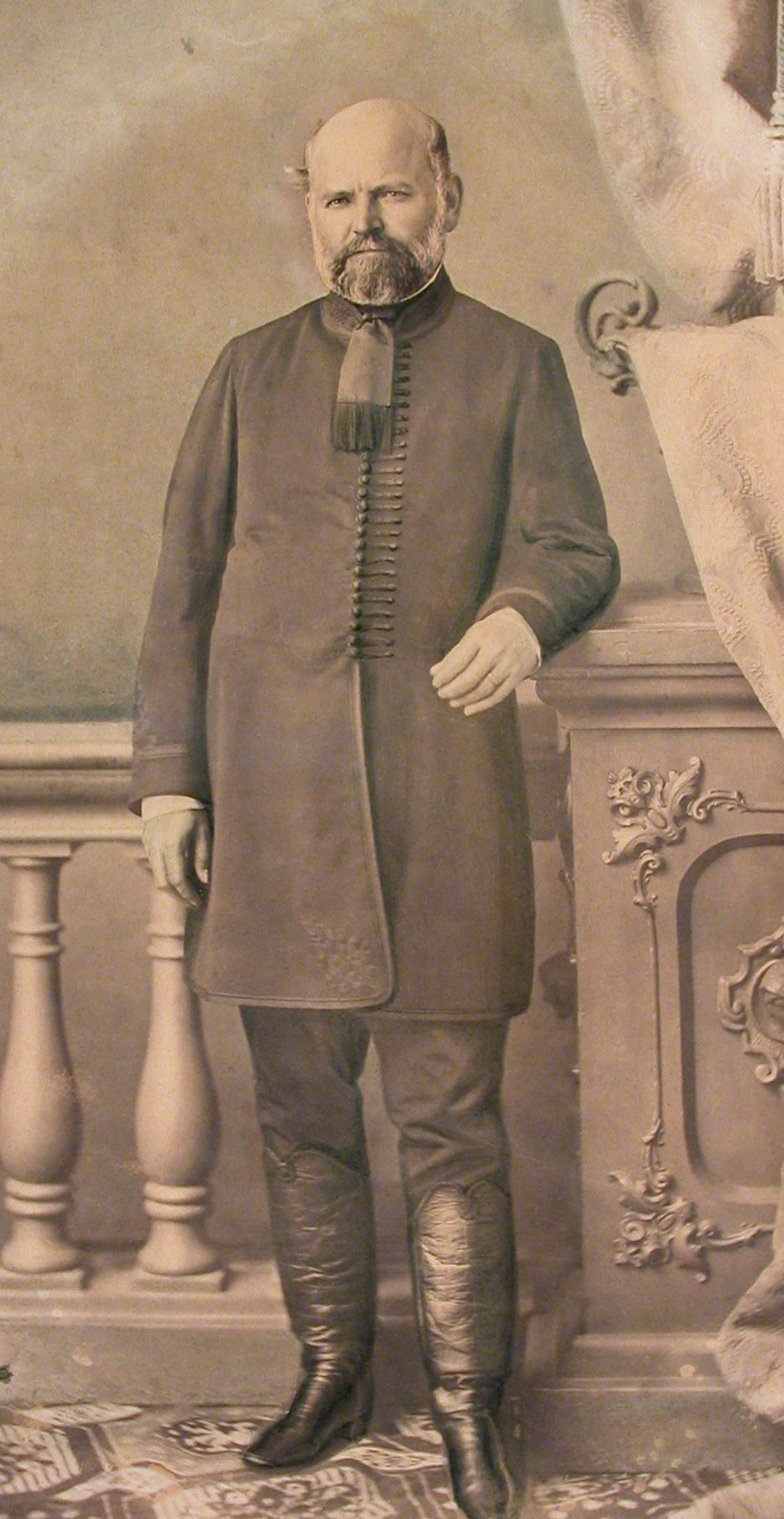
The numbers were there, and handwashing still did not take hold: the prevailing theories put childbed fever down to bad air, constitution, or the season; to say that doctors carried "cadaveric particles" on their hands was to say the doctors were the killers. Semmelweis himself admitted as much: "only God knows the number of patients who went prematurely to their graves because of me."50 In March 1849 his contract was not renewed, and his successor did not enforce the washing. He went to Budapest and did not publish his five-hundred-page book until 1861. When it was ignored, he began writing open letters calling Europe's leading obstetricians irresponsible murderers.5149 In July 1865 he was tricked into entering an asylum in Vienna, beaten by guards when he tried to leave, and died of the resulting infection on 13 August, aged forty-seven.5150
He was later turned into a martyr killed by ignorance, and that version is not quite right either. He was dogmatic and nearly intolerant of criticism; others had argued before him that childbed fever was contagious; and antisepsis in obstetrics spread through Lister's methods, while Lister heard of Semmelweis only much later.49 The right conclusion waited twenty years to get through: the old theory stood in the way, and his temper and his way of talking did not help either.
9. Five Monkeys
Almost every discussion of why unreasonable things persist gets to this story. Five monkeys are in a cage with a ladder and bananas at the top. Whenever one climbs the ladder, all of them are sprayed with cold water. Soon, any monkey that goes for the ladder is beaten by the others. Then the researchers replace one monkey; the newcomer climbs and gets beaten. One by one the monkeys are swapped out, until none of them has ever been sprayed, yet none dares touch the ladder and none knows why.
The experiment never happened:52 the earliest printed version that can be traced appears in a management bestseller of the 1990s, with four monkeys and a pole and no source; when someone asked the author's office, the reply was that the original source was not at hand.53 The ladder and bananas come from Wolfgang Köhler's chimpanzee experiments of the 1920s; the other elements come from various places and were never combined in a single experiment before 1995.52
The closest real study was done in 1967 by Gordon Stephenson at the University of Wisconsin. He used eight laboratory-reared rhesus monkeys, four males and four females, in same-sex pairs. The objects in the cage were plastic kitchen utensils: a sieve, a cup, a mustard jar. A "demonstrator" monkey got a blast of air whenever it touched one; two or three blasts were usually enough. Then it was paired with a monkey that had never been blasted. In three male pairs, the demonstrator pulled its partner away from the objects, and the avoidance passed on and lasted. In three female pairs, the opposite happened: the demonstrator watched its partner play safely with the objects, and its own fear faded.54
The story that survived kept only the first half: it has no source and its details keep shifting, but it is shared again and again, because it is useful, it is easy to tell, and everyone who hears it feels they already knew it.
10. Before You Take Down the Fence
In 1929 G. K. Chesterton wrote, in The Thing, the passage now known as Chesterton's fence. Suppose there is a fence or gate across a road. "The more modern type of reformer goes gaily up to it and says, 'I don't see the use of this; let us clear it away.' To which the more intelligent type of reformer will do well to answer: 'If you don't see the use of it, I certainly won't let you clear it away. Go away and think. Then, when you can come back and tell me that you do see the use of it, I may allow you to destroy it.'"55
The passage is often used to defend whatever exists, but the lines that follow are rarely quoted. The fence did not grow there, Chesterton wrote; it was not set up by somnambulists who built it in their sleep. Some reformers assume their fathers were all fools, "but if that be so, we can only say that folly appears to be a hereditary disease." And if a man knows how the fence arose and what it was for, "he may really be able to say that they were bad purposes, or that they have since become bad purposes, or that they are purposes which are no longer served."55 He was asking for understanding before demolition, not for preservation.
People in China meet a fence like this every year: in September 1999, after the Asian financial crisis and with an eye to boosting spending, the State Council revised the national holiday rules: Spring Festival, Labour Day, and National Day each got three days off, and by borrowing the weekends before and after, each became a seven-day "golden week."5657 Those borrowed days—tiaoxiu, working a weekend to make up for a weekday off—have been with China for more than twenty years, and every time a holiday schedule is published the internet argues about them. In April 2023, China Newsweek ran a poll on Weibo; of 58,000 people who took part, 89 percent chose "too sleepy, my work suffers."58 That October, the National Development and Reform Commission, explaining the next year's schedule, said: "Overall, tiaoxiu is better than no tiaoxiu, and we have no choice but to do it." Spring Festival, Dragon Boat, and Mid-Autumn follow the lunar calendar, New Year, Labour Day, and National Day the solar one, and Qingming a solar term; none line up with weekends, and without make-up days there would be scattered single days off.59
This fence has a real use: hundreds of millions of people need to travel home at the same time, and a lone day off is no use to them. In November 2024 the State Council amended the rules again. New Year's Eve and 2 May became public holidays, raising the total from eleven days to thirteen, and a new Article 7 says that "except in a few special cases, consecutive working days before and after a public holiday generally shall not exceed six."60 Tiaoxiu was not abolished, but for the first time its cost was written into the rules, with a limit.

11. "Prove Your Mother Is Your Mother"
In April 2015 Mr Chen, a man from Jiangxi working in Beijing, was planning a trip abroad with his family. The travel agency handling the paperwork asked for an emergency contact, so he wrote down his mother—and was then told to supply a document proving that his mother was his mother. His Beijing household register listed only him, his wife, and their child; his parents' register back home had long since dropped him. Someone suggested he go to the police station in his home town for a certificate, a round trip of nearly a thousand kilometres. In the end he paid the travel agency 60 yuan, and the certificate was no longer needed.61
On 6 May Premier Li Keqiang told the story at an executive meeting of the State Council: "I saw a media report that a citizen going abroad as a tourist had to fill in an 'emergency contact.' He wrote his mother's name, and the department concerned asked him for documents proving 'your mother is your mother'!" The room, according to the report, burst out laughing. "How can you prove that? It's a complete joke! He just wanted to go on holiday and relax, and then what?… Are these offices acting out of responsibility to the public, or deliberately putting obstacles in their way?" At the same meeting he told of a grassroots worker in Hainan nominated as a national model worker who needed eight official seals just to submit his materials, spent days running around without getting them all, and in the end needed special approval from a provincial leader. "When he finally got the stamps, he burst into tears on the spot."62
The clean-up after the laughter took years: in June 2018 the General Office of the State Council ordered that "all certification requirements not provided for in laws and regulations be abolished," with departments' self-created requirements to go by the end of the year.63 By the end of April 2019, more than 13,000 certification requirements had been cancelled—over 12,000 by local governments and over 1,100 by central departments—and more than 300 set by laws and administrative regulations had been proposed for cancellation.64 In November 2020 the State Council extended a "notification and commitment" system nationwide: the agency tells applicants once what conditions they must meet, the applicant signs a promise that they meet them and accepts legal liability if the promise is false, and the agency "no longer demands the relevant certificates."65
Why did certificates like "your mother is your mother" appear at all? One expert interviewed at the time said the core problem was that verification which should have been the agency's job had been pushed onto the public—or, as the saying goes, "one word from the department, and the people run their legs off."66 For each counter, asking for one more piece of paper means that if something goes wrong, it is not their fault; the cost of that paper is paid by the applicant in train fares and time. And a certificate that could be waived for 60 yuan was never strictly necessary.
12. Seals, Faxes, and Floppy Disks
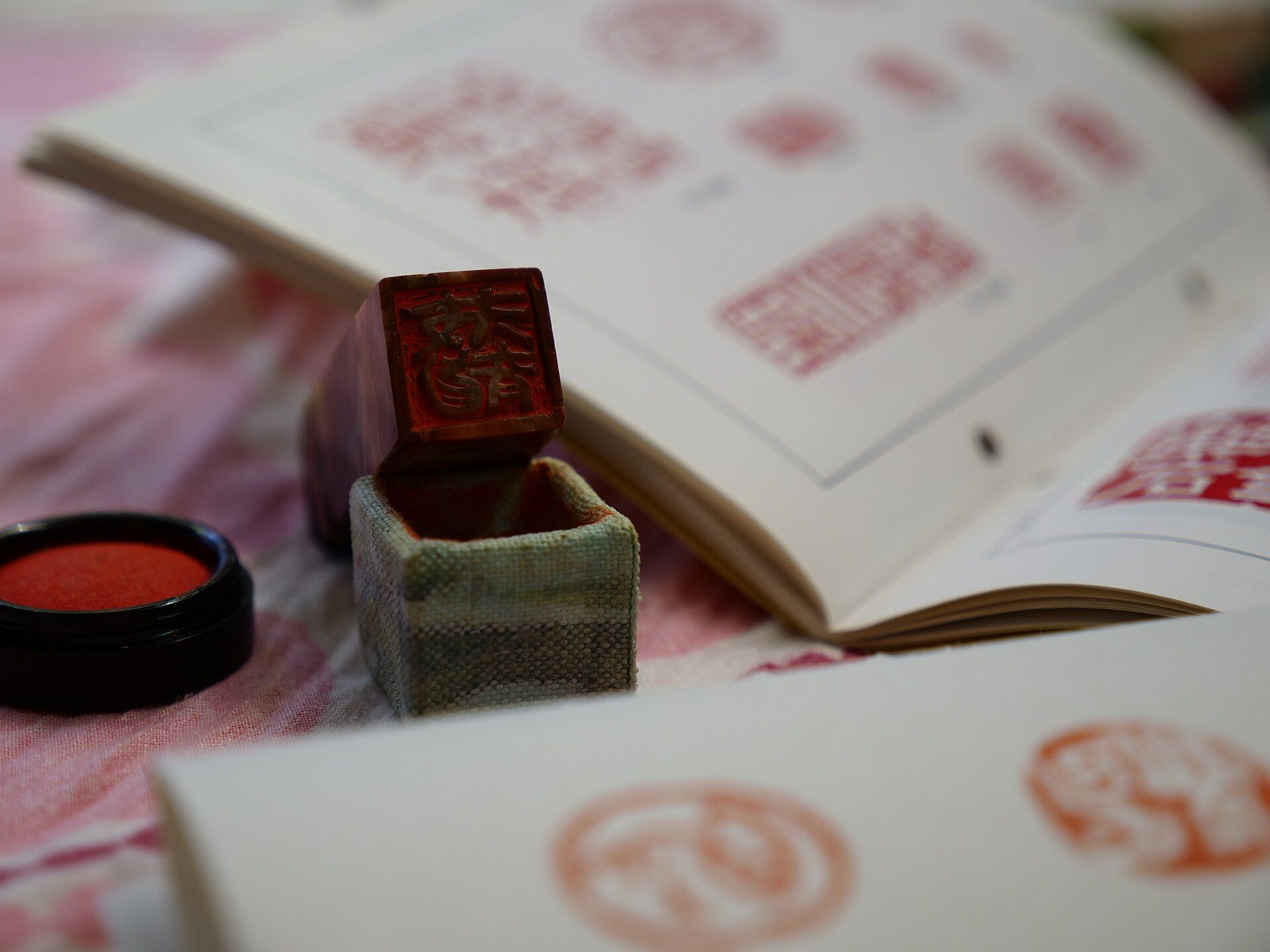
Japan's case is more concrete: in September 2020 Taro Kono, the administrative reform minister in Yoshihide Suga's cabinet, began counting the seal-stamping requirements in government procedures. The pandemic had sent many people to work from home, yet some still had to go into the office just to stamp documents. On 13 November Kono announced the results at a press conference: of 14,992 administrative procedures requiring a seal, including attachments, 14,909—more than 99 percent—would have the requirement abolished or were being prepared for abolition, leaving 83. The ordinary unregistered seal, he said, had never actually confirmed anyone's identity, yet it had been kept going; once documents no longer needed stamping, procedures could move online.67 The All Japan Seal Industry Association protested.68 A later recount raised the number of procedures keeping a seal from 83 to 118, mostly ones such as patent filings where identity really matters.69
The same approach failed with the fax: in June 2021 Kono asked central ministries to stop using fax machines, in principle, by the end of the month and switch to email: "Those using fax out of inertia, please stop."70 About four hundred objections came back. Email risked leaks through cyberattacks; regional offices had poor connections; Diet members communicated by fax, and "the ministries can't change that on their own"; court rules on civil procedure accepted only hand delivery, post, and fax; hospitals used fax too. The fax survived.71 One Japanese commenter described the workflow: print the PDF, fax it, and have the recipient scan the paper back into a computer, like "a ritual handed down in some mysterious tribe."71
The floppy-disk story has an ending: in 2022 Japan's Digital Agency found 1,894 rules requiring submissions on recording media such as disks, CDs, or similar; 1,034 of them specified floppy disks.7273 Sony had stopped making floppy disks in 2011. On 28 June 2024 the last of those rules, an environment ministry ordinance on record-keeping by vehicle recyclers, was scrapped. "We have won the war on floppy disks on June 28!" Kono told Reuters.7372 The Digital Agency's own verdict was that regulations assuming paper and in-person processes had been so widely accepted in society that there was a "lack of momentum" to abolish them.73

Seals and floppy disks could be removed and the fax could not, and the difference was this: the seal and floppy rules lived in the government's own regulations, so one office could count them and one minister could decide. The fax involved the Diet, the courts, and the hospitals, all of which would have had to move at once.
13. Six Years of Turning the Clock
China once had daylight saving time: in April 1986 the General Offices of the Party Central Committee and the State Council announced that from 2 a.m. on 4 May, clocks across the country would go forward an hour, and go back on 14 September. The notice said this would make full use of natural light and save electricity for lighting, and "can also encourage people to form the good habit of early to bed and early to rise." It also contained a line very much of its time: "The spirit of a billion people rising early and sleeping early to save energy matters far more than the energy figures themselves."74
Among those who had pushed for it was an engineer at the Ministry of Communications' highway research institute, who had written to the central government for years; in early 1986 an adviser at a State Council research centre wrote urging that it be adopted "in the spirit of reform," and in early April the Central Secretariat discussed and approved it.75 According to the official figures, it saved 627 million kilowatt-hours in 1986 and 754 million in 1987. Problems appeared quickly too. In urban Guangzhou, traffic accidents in July 1986 were up 36.7 percent on the same month a year earlier, mostly because drivers were short of sleep; bus drivers said they had to get up after three in the morning (after four, by the new clock) and "really couldn't take it"; railway timetables had to be redone twice a year; and in Yunnan some farmers simply refused to recognise the new time.75
On 3 March 1992 the General Office of the State Council issued a notice. China's north and south differ greatly in temperature and its east and west in solar time, while the whole country uses Beijing time; daylight saving brought no electricity savings in the north-west, the south-west, or south of the Yangtze, and caused much inconvenience to daily life and to the railways. "The State Council has decided to suspend daylight saving time from 1992."76 It had lasted six years.
Europe is still changing its clocks: in the summer of 2018 the European Commission held an online consultation on daylight saving time and received 4.6 million responses, the most it had ever received; 84 percent wanted the clock changes to stop.77 It was a self-selected online consultation rather than a poll, and about 70 percent of the responses came from Germany.77 On 26 March 2019 the European Parliament voted 410 to 192 for a final clock change in 2021.78 Since then the Council of member states has never agreed a common position; the difficulty is whether to keep summer or winter time permanently, and how to avoid neighbouring countries ending up on different times.79 In the United States, the Senate passed a permanent daylight saving time bill by unanimous consent in March 2022; the House never voted and the bill died. In July 2026 the House passed a new version 308 to 117, and this time it stalled in the Senate, where Majority Leader John Thune said on 6 October that there was "no clear path forward."808182
China started daylight saving time with one notice in 1986 and ended it with another in 1992; few people made the decision, and it was undone quickly. In Europe and America, almost no one publicly defends changing the clocks. But stopping requires dozens of countries, or both houses, to agree at the same time, and any one of them can say "wait."
14. Within a Generation
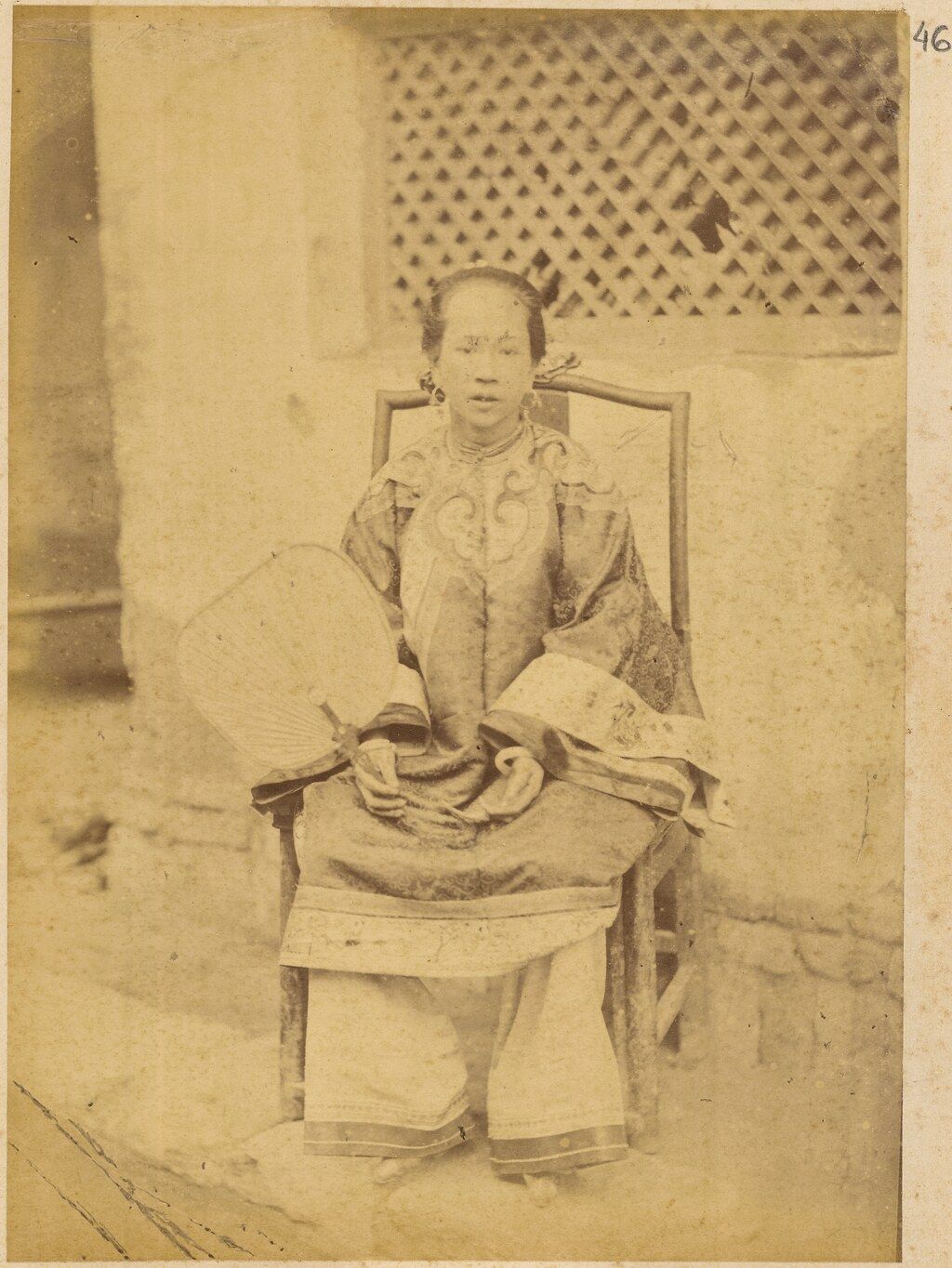
Footbinding lasted in China for about a thousand years: around 1835, between half and four-fifths of women were bound, depending on the place. After the Manchu conquest, the Qing banned it in 1665; even harsh penalties failed. An edict in 1847 failed too.83 Many parents knew footbinding was useless and bound their daughters anyway, because an unbound daughter could not marry, and as long as other families kept binding, no family dared stop. It was a convention held in place by everyone's expectations on the marriage market: whoever stopped first, their daughter paid.83
In 1874 missionaries set up the first anti-footbinding society for their converts, borrowing the pledge from the American temperance movement: members promised not to bind their daughters and not to let their sons marry women with bound feet. In 1895 the Natural Foot Society appeared in Shanghai; in 1897 a Chinese-run Anti-Footbinding Society was headquartered there and eventually had 300,000 members. In 1912 the Republic banned footbinding.83 One place left a complete record. In Tinghsien (Dingxian), about 125 miles south of Beijing, 99 percent of girls born in 1889 had their feet bound; for those born in 1899 it was 94 percent; for those born in 1919, none.83
Once enough people had pledged, "an unbound daughter can still marry" became true, so more people dared to stop; the more who stopped, the more bound feet became the exception. A thousand-year custom turned over in twenty or thirty years, so fast it looked as if it had never been that solid.
15. Concorde
On 29 November 1962 Britain and France signed an agreement in London to build a supersonic airliner, Concorde, sharing the development costs equally. The agreement had no exit clause. Development was then estimated at £150–170 million.84 In October 1964 Britain's new Labour government decided to pull out and sent word to Paris. France responded by cutting off diplomatic communication with London, and Britain backed down. In 1969 the Attorney General warned the cabinet that unilateral withdrawal carried a "fifty-fifty chance" of unacceptable costs; the technology minister, Tony Benn, reminded it that 16,000 workers were building Concorde, 8,000 of them in Bristol.85
Concorde entered commercial service in 1976, three years late, at a cost of more than £1.3 billion, and no airline other than British Airways and Air France ever bought it.85 That same year Richard Dawkins wrote in The Selfish Gene that a businessman should never say "I have already invested so much in the Concorde airliner… that I cannot afford to scrap it now," but should ask whether it would pay him in the future to cut his losses.86 Spending more because of what has already been spent became known as the Concorde fallacy.
Concorde does not entirely deserve the name—it kept flying not merely because no one could bear to waste the money already spent: the treaty had no exit clause, France was applying pressure, sixteen thousand jobs hung in the balance, and two countries had their pride. Past a certain size, a sunk cost stops being a figure in someone's head; it grows into contracts, jobs, and diplomatic relations that hold people in place. Concorde flew until 2003.

16. The Twentieth of May
Looking back over these stories, what gets changed is usually whichever side is cheapest to change. It was easier for typewriter makers to fit their machines to typists' hands than to retrain every typist; easier for geneticists to rename twenty-seven genes than for Microsoft to change Excel; easier for the GWR to tear up its broad gauge than for 1,900 miles of narrow gauge to make way. The broad gauge really was faster. Being faster was not enough; the 1,900 miles already in the ground weighed more.
The things that do get removed usually have someone who can decide alone, and a list that turns a vague "culture" into items that can be ticked off: 13,000 certificates, 14,992 stamping procedures, 1,034 floppy-disk rules. The things that stay usually need many parties to move at once, or carry costs spread so thinly that no one finds it worth a trip, and benefits concentrated enough that someone finds it worth paying lobbyists. And some, like make-up workdays, are solving a real problem, and the most that can be done is to write the cost down and set a limit.
On the evening of 20 May 1892, someone photographed the last broad-gauge train at Truro in Cornwall: a wooden train shed, two locomotives nosing out of it one behind the other, a gas lamp and a water tower beside them, a few men standing by the front of the engine, a poster for Pears soap on the shed wall. Two days later the rails had been moved by four thousand men living on porridge, and no broad-gauge train ever came in again.
The 28th General Conference on Weights and Measures meets at Versailles from 13 to 15 October 2026, and in the drafts it will vote on, another 20 May appears: from 20 May 2027 the maximum allowed difference between UTC and UT1 would be raised substantially. If the draft passes, no clock will show 23:59:60 again.24
Footnotes
-
James Vincent, "Scientists rename human genes to stop Microsoft Excel from misreading them as dates," The Verge, 6 August 2020 (updated 24 October 2023). https://www.theverge.com/2020/8/6/21355674/human-genes-rename-microsoft-excel-misreading-dates ↩ ↩2
-
Mark Ziemann, Yotam Eren & Assam El-Osta, "Gene name errors are widespread in the scientific literature," Genome Biology 17:177 (2016). https://genomebiology.biomedcentral.com/articles/10.1186/s13059-016-1044-7 ↩ ↩2 ↩3
-
Chirag Fifadra, "Control data conversions in Excel for Windows and Mac," Microsoft 365 Insider Blog, 19 October 2023. https://insider.microsoft365.com/en-us/blog/control-data-conversions-in-excel-for-windows-and-mac ↩
-
Mandhri Abeysooriya, Megan Soria, Mary Sravya Kasu & Mark Ziemann, "Gene name errors: Lessons not learned," PLoS Computational Biology 17(7): e1008984 (2021). https://journals.plos.org/ploscompbiol/article?id=10.1371/journal.pcbi.1008984 ↩
-
"The Question of the Gauges," House of Lords debate, 17 July 1846, Hansard vol. 87, cc1223–9. https://api.parliament.uk/historic-hansard/lords/1846/jul/17/the-question-of-the-gauges ↩ ↩2 ↩3 ↩4
-
Network Rail, "Why the end of the gauge war didn't standardise Britain's railway." https://www.networkrail.co.uk/stories/why-the-end-of-the-gauge-war-didnt-standardise-britains-railway ↩
-
David Mikkelson, "Are U.S. Railroad Gauges Based on Roman Chariots?" Snopes (2001, updated 2023). https://www.snopes.com/fact-check/railroad-gauge-chariots/ ↩ ↩2 ↩3
-
"The Break of Gauge at Gloucester," The Illustrated London News, 6 June 1846 (Wikimedia Commons). https://commons.wikimedia.org/wiki/File:The_Break_of_Gauge_at_Gloucester.jpg ↩
-
An Act for regulating the Gauge of Railways, 9 & 10 Vict. c.57 (18 August 1846). https://www.legislation.gov.uk/ukpga/Vict/9-10/57/pdfs/ukpga_18460057_en.pdf ↩
-
Mike Peart, "The End of the Great Western Railway's Broad Gauge," Friends of the National Railway Museum, 2022. https://www.nrmfriends.org.uk/post/the-end-of-the-great-western-railway-s-broad-gauge ↩ ↩2 ↩3 ↩4
-
"All change ... Victorians did it faster," The Guardian, 30 August 2002. https://www.theguardian.com/uk/2002/aug/30/transport.world2 ↩
-
Heritage NSW, State Heritage Register listing for Albury railway station (SHR 01073). https://apps.environment.nsw.gov.au/dpcheritageapp/ViewHeritageItemDetails.aspx?ID=5045002 ↩ ↩2 ↩3 ↩4
-
Mark Twain, Following the Equator (1897), ch. XIV. Project Gutenberg. https://www.gutenberg.org/cache/epub/2895/pg2895.txt ↩
-
Albury & District Historical Society, "Rail to Albury District." https://alburyhistory.org.au/wp-content/uploads/2016/12/Rail-to-Albury-District.pdf ↩
-
Smithsonian National Museum of American History, "Sholes & Glidden Type-Writer," object nmah_850542. https://www.si.edu/object/sholes-glidden-type-writer%3Anmah_850542 ↩
-
Paul A. David, "Clio and the Economics of QWERTY," American Economic Review 75(2): 332–337 (1985). https://faculty.econ.ucsb.edu/~tedb/Courses/Ec100C/DavidQwerty.pdf ↩ ↩2 ↩3
-
Koichi Yasuoka & Motoko Yasuoka, "On the Prehistory of QWERTY," ZINBUN 42: 161–174 (2011). https://repository.kulib.kyoto-u.ac.jp/server/api/core/bitstreams/dc434be9-80cd-499b-a984-f9fa35954c3b/content ↩ ↩2 ↩3
-
August Dvorak & William L. Dealey, "Typewriter keyboard," US Patent 2,040,248 (filed 21 May 1932, granted 12 May 1936). https://patents.google.com/patent/US2040248A/en ↩
-
S. J. Liebowitz & Stephen E. Margolis, "The Fable of the Keys," Journal of Law and Economics 33(1): 1–25 (1990). https://doi.org/10.1086/467198 ↩ ↩2 ↩3
-
Oleg Obleukhov & Ahmad Byagowi, "It's time to leave the leap second in the past," Engineering at Meta, 25 July 2022. https://engineering.fb.com/2022/07/25/production-engineering/its-time-to-leave-the-leap-second-in-the-past/ ↩ ↩2
-
BIPM, Resolution 4 of the 27th CGPM (2022), "On the use and future development of UTC." https://www.bipm.org/en/cgpm-2022/resolution-4 ↩ ↩2
-
Robert McMillan & Cade Metz, "The Inside Story of the Extra Second That Crashed the Web," Wired, 2 July 2012. https://www.wired.com/2012/07/leap-second-glitch-explained/ ↩ ↩2 ↩3
-
"Air passengers hit by delays in global computer malfunction," The Sydney Morning Herald, 2 July 2012. https://www.smh.com.au/traveller/travel-news/air-passengers-hit-by-delays-in-global-computer-malfunction-20120701-21b55.html ↩
-
BIPM, 28th CGPM (2026), Draft Resolution C, "On the technical actions needed to ensure the continuity of UTC." https://www.bipm.org/documents/d/guest/cgpm-2026-draft-resolution-c-en ↩ ↩2 ↩3
-
Alicia Lee, "Wanted: People who know a half century-old computer language so states can process unemployment claims," CNN, 8 April 2020. https://www.cnn.com/2020/04/08/business/coronavirus-cobol-programmers-new-jersey-trnd ↩
-
William Samuelson & Richard Zeckhauser, "Status Quo Bias in Decision Making," Journal of Risk and Uncertainty 1(1): 7–59 (1988). https://web.mit.edu/curhan/www/docs/Articles/biases/1_J_Risk_Uncertainty_7_(Samuelson).pdf ↩ ↩2 ↩3
-
Brigitte C. Madrian & Dennis F. Shea, "The Power of Suggestion: Inertia in 401(k) Participation and Savings Behavior," Quarterly Journal of Economics 116(4): 1149–1187 (2001); NBER Working Paper 7682. https://www.nber.org/system/files/working_papers/w7682/w7682.pdf ↩
-
Eric J. Johnson & Daniel Goldstein, "Do Defaults Save Lives?" Science 302(5649): 1338–1339 (2003). https://www.science.org/doi/10.1126/science.1091721 ↩
-
Eric J. Johnson & Daniel G. Goldstein, "Defaults and Donation Decisions," Transplantation 78(12): 1713–1716 (2004). https://hods.org/pdf/Defaults%20and%20Donation%20Decisions.pdf ↩
-
Mattea Dallacker et al., "Opt-out defaults do not increase organ donation rates," Public Health 236: 436–440 (2024). https://www.sciencedirect.com/science/article/pii/S003335062400355X ↩
-
Rafael Matesanz et al., "Spanish experience as a leading country: what kind of measures were taken?" Transplant International 24: 333–343 (2011). https://www.frontierspartnerships.org/articles/10.1111/j.1432-2277.2010.01204.x/pdf ↩
-
United States Mint, "United States Mint Hosts Historic Ceremonial Strike for Final Production of the Circulating One-Cent Coin," press release, 12 November 2025. https://www.usmint.gov/news/press-releases/united-states-mint-hosts-historic-ceremonial-strike-for-final-production-of-the-circulating-one-cent-coin ↩ ↩2
-
Associated Press, report on the final penny strike at the Philadelphia Mint, 12 November 2025. https://apnews.com/article/us-mint-treasury-department-penny-end-production-86139df5644ef0885a9baf98e9677380 ↩
-
United States Mint, 2024 Annual Report. https://www.usmint.gov/content/dam/usmint/reports/2024-annual-report.pdf ↩
-
Associated Press, report on President Trump's instruction to stop minting pennies, February 2025. https://apnews.com/article/trump-penny-treasury-mint-192e3b9ad9891d50e7014997653051ba ↩
-
Royal Canadian Mint, "Ten Years After: The Legacy of the Penny," 2022. https://www.mint.ca/en/blog/2022-06-legacy-of-the-penny ↩
-
Center for Public Integrity, "Saving the penny makes cents for zinc-backed front group," 2 July 2014. https://publicintegrity.org/politics/saving-the-penny-makes-cents-for-zinc-backed-front-group ↩
-
Mancur Olson, The Logic of Collective Action: Public Goods and the Theory of Groups (Cambridge, MA: Harvard University Press, 1965), p. 2. https://users.ssc.wisc.edu/~peoliver/SOC924/Articles/olsonlogic.pdf ↩
-
U.S. Government Accountability Office, Sugar Program: Alternative Methods for Implementing Import Restrictions Could Increase Effectiveness, GAO-24-106144 (October 2023). https://www.gao.gov/products/gao-24-106144 ↩ ↩2
-
American Sugar Alliance, "American Sugar Alliance Responds to Inaccuracies in GAO Sugar Report," 1 November 2023. https://sugaralliance.org/american-sugar-alliance-responds-to-inaccuracies-in-gao-sugar-report/39631 ↩
-
European Commission, "Estonian electronic tax filing system E-Tax," Digital Building Blocks blog, 29 July 2019. https://ec.europa.eu/digital-building-blocks/sites/spaces/DIGITAL/blog/2019/07/29/533365967/Estonian+electronic+tax+filing+system+E-Tax ↩
-
Congressional Research Service, Insight IN11992 (22 August 2022). https://www.everycrsreport.com/files/2022-08-22_IN11992_eed98999fa13a453cf6e53a7770d678d7d5e8a20.pdf ↩
-
Justin Elliott & Paul Kiel, "Inside TurboTax's 20-Year Fight to Stop Americans From Filing Their Taxes for Free," ProPublica, 17 October 2019. https://www.propublica.org/article/inside-turbotax-20-year-fight-to-stop-americans-from-filing-their-taxes-for-free ↩ ↩2 ↩3 ↩4
-
Senator Elizabeth Warren et al., letter to Intuit, 18 April 2022. https://www.warren.senate.gov/wp-content/uploads/media/doc/2022.04.18%20Warren%20Intuit%20Letter.pdf ↩
-
OpenSecrets, "IRS free tax filing rollout faces hurdles after multimillion-dollar lobbying campaign," 3 November 2023. https://www.opensecrets.org/news/2023/11/irs-free-tax-filing-rollout-faces-hurdles-after-multimillion-dollar-lobbying-campaign/ ↩
-
Internal Revenue Service, "Direct File pilot officially closes after more than 140,000 taxpayers successfully use direct e-filing system in 12 states," IR-2024-122, 26 April 2024. https://www.irs.gov/newsroom/direct-file-pilot-officially-closes-after-more-than-140000-taxpayers-successfully-use-direct-e-filing-system-in-12-states-including-integration-with-4-state-tax-systems ↩
-
U.S. Government Accountability Office, Decision B-337954, 12 May 2026. https://www.gao.gov/products/b-337954 ↩
-
U.S. Department of the Treasury, Report on the Replacement of Direct File (October 2025). https://home.treasury.gov/system/files/131/Report-Replacement-of-Direct-File-2025.pdf ↩
-
Irvine Loudon, "Ignaz Phillip Semmelweis' studies of death in childbirth," James Lind Library / Journal of the Royal Society of Medicine 106: 461–463 (2013). https://www.jameslindlibrary.org/articles/ignaz-phillip-semmelweis-studies-of-death-in-childbirth ↩ ↩2 ↩3 ↩4
-
T. D. Noakes et al., "Semmelweis and the aetiology of puerperal sepsis 160 years on: an historical review," Epidemiology and Infection 136(1): 1–9 (2008). https://www.cambridge.org/core/journals/epidemiology-and-infection/article/semmelweis-and-the-aetiology-of-puerperal-sepsis-160-years-on-an-historical-review/93B60B7A592D3FF29814CF6DEF0926BF ↩ ↩2 ↩3 ↩4
-
Hilary J. Lane, Nava Blum & Elizabeth Fee, "Oliver Wendell Holmes (1809–1894) and Ignaz Philipp Semmelweis (1818–1865): Preventing the Transmission of Puerperal Fever," American Journal of Public Health 100(6): 1008–1009 (2010). https://ajph.aphapublications.org/doi/full/10.2105/AJPH.2009.185363 ↩ ↩2
-
Dario Maestripieri, "What Monkeys Can Teach Us About Human Behavior: From Facts to Fiction," Psychology Today, 20 March 2012. https://www.psychologytoday.com/us/blog/games-primates-play/201203/what-monkeys-can-teach-us-about-human-behavior-facts-fiction ↩ ↩2
-
Skeptics Stack Exchange, question 6828 (on the origin of the "five monkeys" story). https://skeptics.stackexchange.com/questions/6828/ ↩
-
Gordon R. Stephenson, "Cultural Acquisition of a Specific Learned Response Among Rhesus Monkeys," in D. Starck, R. Schneider & H.-J. Kuhn (eds.), Progress in Primatology (Stuttgart: Fischer, 1967), pp. 279–288. https://erikbuys.files.wordpress.com/2012/04/cultural-acquisition-of-a-specific-learned-response-among-rhesus-monkeys-gordon-r-stephenson.pdf ↩
-
G. K. Chesterton, "The Drift from Domesticity," in The Thing (1929). https://www.chesterton.org/taking-a-fence-down ↩ ↩2
-
新华社:有关方面负责同志就修改《全国年节及纪念日放假办法》答记者问(“六问”),中国政府网,2024年11月12日。https://www.gov.cn/zhengce/202411/content_6986415.htm ↩
-
国家发展改革委:对十三届全国人大四次会议建议的答复(关于节假日安排),2021年7月。https://www.ndrc.gov.cn/xxgk/jianyitianfuwen/qgrddbjyfwgk/202107/t20210708_1288439.html ↩
-
腾讯新闻:《近9成网友表示调休影响工作效率:人造长假还不如不放》(引《中国新闻周刊》微博投票),2023年4月24日。https://news.qq.com/rain/a/20230424A0A6RC00 ↩
-
央视网:《国家发改委解读明年放假安排亮点:史上最长春节假期 调休更人性化》,2023年10月25日。https://news.cctv.com/2023/10/25/ARTIzNoTkZoUwSBKhzu9wSrH231025.shtml ↩
-
《国务院关于修改〈全国年节及纪念日放假办法〉的决定》(国务院令第795号),2024年11月12日公布,2025年1月1日施行。https://www.gov.cn/zhengce/content/202411/content_6986380.htm ↩
-
新华网:《“证明自己还活着”式尴尬如何破除?》,2015年5月11日。http://www.xinhuanet.com/politics/2015-05/11/c_127784346.htm ↩
-
中国政府网:《李克强痛斥某些办事机构:办个事儿咋就这么难?》,2015年5月6日国务院常务会议报道(国家能源局网站转载)。http://www.nea.gov.cn/2015-05/07/c_134216810.htm ↩
-
《国务院办公厅关于做好证明事项清理工作的通知》(国办发〔2018〕47号),2018年6月15日。https://www.gov.cn/zhengce/content/2018-06/28/content_5301838.htm ↩
-
中国网:《司法部:4月底前共取消证明事项13000余项 13省市将试点证明事项告知承诺制》,2019年5月14日。http://news.china.com.cn/txt/2019-05/14/content_74783318.htm ↩
-
《国务院办公厅关于全面推行证明事项和涉企经营许可事项告知承诺制的指导意见》(国办发〔2020〕42号),2020年11月9日发布。https://www.gov.cn/zhengce/content/2020-11/09/content_5559658.htm ↩
-
新华社:《多部门合力破解公民出境游“证明难”困局》,2015年6月14日(国家能源局网站转载)。http://www.nea.gov.cn/2015-06/15/c_134326234.htm ↩
-
河野太郎内閣府特命担当大臣記者会見要旨,2020年11月13日,内閣府。https://www.cao.go.jp/minister/2009_t_kono/kaiken/20201113kaiken.html ↩
-
"Signed, sealed, discarded: Japan to all but scrap hallowed hanko," The Japan Times / Reuters, 13 November 2020. https://www.japantimes.co.jp/news/2020/11/13/national/hanko-stamping-paperwork ↩
-
河野太郎「押印見直しの最新状況」,ごまめの歯ぎしり(公式ブログ),2021年4月10日。https://www.taro.org/2021/04/押印見直しの最新状況.php ↩
-
ITmedia NEWS「霞が関で6月末にFAXを原則廃止、電子メールに切り替え 各省庁からの意見も募集」,2021年6月16日。https://www.itmedia.co.jp/news/article/2106/16/1210616157/ ↩
-
J-CAST会社ウォッチ「河野行革相「ファクス廃止」に霞が関が猛反撃」,2021年7月30日(『読売新聞』2021年7月26日報道を引用)。https://www.j-cast.com/kaisha/2021/07/30417295.html?p=all ↩ ↩2
-
"Japan's government is (finally) done with floppy disks," Popular Science, July 2024. https://www.popsci.com/technology/floppy-disk-japan/ ↩ ↩2
-
Digital Agency (Japan), "Scrapping of Regulations Governing the Use of Floppy Disks and Other Recording Media," July 2024. https://www.digital.go.jp/en/news/d0d894b1-9d2e-4e0a-a538-dab1acee296d ↩ ↩2 ↩3
-
《中共中央办公厅、国务院办公厅关于在全国范围内实行夏时制的通知》,《人民日报》1986年4月19日第1版。https://cn.govopendata.com/renminribao/1986/04/19/1/ ↩
-
光明网/《文摘报》:《六年夏时制:向时间要金钱的试验》,2008年4月24日。https://www.gmw.cn/01wzb/2008-04/24/content_766018.htm ↩ ↩2
-
《国务院办公厅关于暂停实行夏时制的通知》(国办发〔1992〕8号),1992年3月3日,载《国务院公报》1992年第5号。https://zh.wikisource.org/wiki/国务院办公厅关于暂停实行夏时制的通知 ↩
-
European Commission, "Summertime consultation: 84% want Europe to stop changing the clock," press release IP/18/5302, 31 August 2018; Commission Staff Working Document SWD(2018) 406. https://eur-lex.europa.eu/legal-content/EN/TXT/?uri=celex%3A52018SC0406 ↩ ↩2
-
European Parliament, "Parliament backs proposal to end switch between summer and winter time in 2021," press release, 26 March 2019. https://www.europarl.europa.eu/news/en/press-room/20190321IPR32107/parliament-backs-proposal-to-end-switch-between-summer-and-winter-time-in-2021 ↩
-
European Parliament, "Taking stock of the seasonal clock change," plenary news, 16 October 2025. https://www.europarl.europa.eu/news/en/agenda/plenary-news/2025-10-20/10/taking-stock-of-the-seasonal-clock-change ↩
-
Congress.gov, S.623, Sunshine Protection Act of 2021, all actions. https://www.congress.gov/bill/117th-congress/senate-bill/623/all-info ↩
-
Congress.gov, H.R.139, Sunshine Protection Act of 2025. https://www.congress.gov/bill/119th-congress/house-bill/139 ↩
-
The Hill, report on Senate Majority Leader John Thune and the Sunshine Protection Act, 6 October 2026. https://thehill.com/homenews/senate/6131222-john-thune-sunshine-protection-act-path-unclear-permanent-daylight-saving-time/ ↩
-
Gerry Mackie, "Ending Footbinding and Infibulation: A Convention Account," American Sociological Review 61(6): 999–1017 (1996). https://www.cognitionandculture.net/wp-content/uploads/5_Mackie_Footbinding.pdf ↩ ↩2 ↩3 ↩4
-
"Aviation (Government Expenditure)," House of Commons debate, 17 February 1964, Hansard. https://hansard.parliament.uk/Commons/1964-02-17/debates/502f7aad-6920-4d81-a7b0-35391f5e7858/Aviation(GovernmentExpenditure) ↩
-
Keith McLoughlin, "Concorde's first British test flight 50 years on," History of Government blog (UK Government), 9 April 2019. https://history.blog.gov.uk/2019/04/09/concordes-first-british-test-flight-50-years-on/ ↩ ↩2
-
Richard Dawkins & H. Jane Brockmann, "Do digger wasps commit the Concorde fallacy?" Animal Behaviour 28: 892–896 (1980), quoting Dawkins, The Selfish Gene (1976). https://gwern.net/doc/psychology/cognitive-bias/sunk-cost/1980-dawkins.pdf ↩